Building a fantasy sports app can be a highly rewarding opportunity, but many founders struggle to understand where to begin. From choosing the right tech stack to planning features, estimating development costs, and defining a launch strategy, the process can quickly become overwhelming.
With the continued growth of platforms like Dream11, MPL, and My11Circle, the demand for high-performing fantasy sports platforms is stronger than ever. Businesses looking to enter this market need a clear understanding of fantasy sports app development, including the development process, required technologies, budget, timelines, and must-have features.
If you are planning to build a fantasy sports app, this guide will help you understand:
- how to build a fantasy sports app from scratch
- the best tech stack for performance and scalability
- the difference between MVP and full-scale app development
- the estimated cost and timeline for development
- the key features needed for long-term success
This blog covers everything you need to know about fantasy sports app development in 2026 in a clear, practical, and business-focused way.
Why Business’s Need to Build a Fantasy Sports App in 2026?
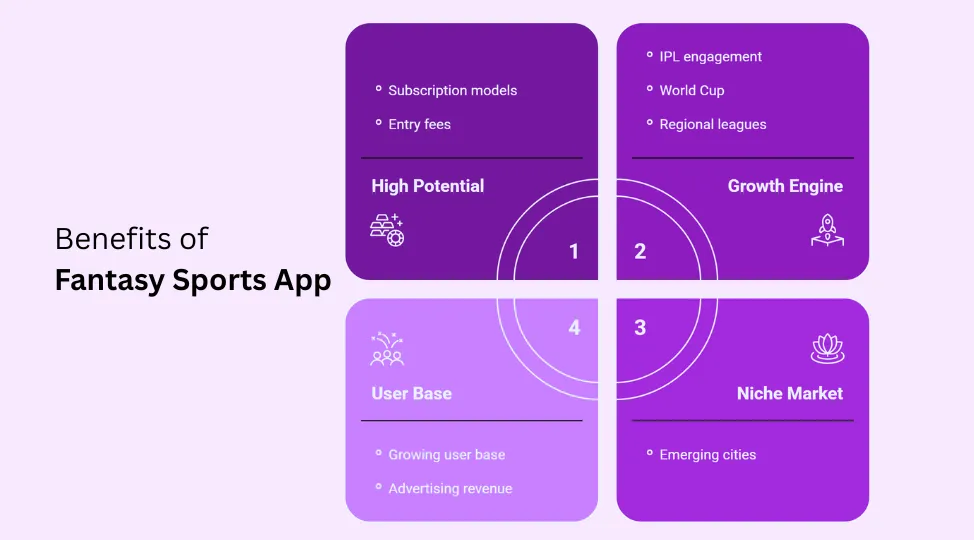
Before we go deep into the dev process, here's why fantasy app development is still booming:
-
The fantasy sports industry in India is projected to cross $5B by 2027
-
India’s fantasy sports market still shows strong long-term potential, with the player base projected to reach 430 million by 2030. (Source)
-
User base is growing at 30% CAGR, especially in Tier 2/3 cities
-
Live matches and major tournaments continue to be the biggest drivers of user engagement across fantasy platforms.
-
Leading platforms like Dream11 have reported around 10 million daily active users, reflecting the scale of audience interest in sports-based digital experiences.
-
Monetization is easier than ever via subscriptions, entry fees, ads & more
If you're planning to build a fantasy sports app, there's plenty of room to niche down and grow. So, if you're still on the fence, yes, now is the time to build your platform.
Understanding the Core of Fantasy Sports App Development
Fantasy sports app development isn't just about coding an app. It involves complex game logic, real-time data processing, and secure money handling, all running on a clean and engaging UI.
Here's what your app needs to support:
-
Live match feeds and player data integration
-
Team creation and player selection logic
-
Scoring engine that updates in real-time
-
Secure user login, wallets, and withdrawals
-
Admin dashboards, contest management
-
Anti-fraud & fair play checks
And of course, it should be built for both Android and iOS, ideally cross-platform to save time.
Fantasy Sports App Development: Choosing the Right Tech Stack
Picking the right tech stack is the foundation of any successful fantasy sports app development project. Here's a breakdown of the core components you'll need.
Frontend Technologies
Your app's user interface must be snappy, responsive, and consistent across devices.
| Technology |
Description |
Actionable |
| React Native or Flutter |
Build truly native experiences on both iOS and Android from a single codebase. |
Prototype your main screens in React Native first; it offers a vast ecosystem of UI libraries. |
| TypeScript |
Adds type safety to JavaScript, reducing runtime errors. |
Enforce strict typing in your React Native components to catch bugs early. |
| GraphQL |
Fetch only the data you need, reducing payload sizes. |
Define a GraphQL schema that mirrors your fantasy league data model. |
Backend Technologies
The server side powers your game logic, realtime scoring, and user data. This is where fantasy sports software development decisions directly impact performance and scale.
| Technology |
Description |
Actionable |
| Node.js + Express.js |
Non-blocking I/O for handling thousands of concurrent connections. |
Structure your Express routes around RESTful principles for clarity. |
| Go (Golang) |
Superb performance and easy concurrency handling, ideal for live scoring engines. |
Use Go for modules that ingest and process real-time sports feeds. |
| Python + Django |
Python is great for rapid development, especially if you plan heavy data analysis or AI-driven insights. |
Leverage Django's ORM for quick database interactions when building admin dashboards. |
Database & Caching
Data storage and retrieval speed are critical for daily fantasy sports apps where scores update by the second.
| Technology |
Description |
Actionable |
| PostgreSQL |
ACID compliance for financial transactions (entry fees, payouts). |
Use JSONB columns to store flexible player statistics without schema changes. |
| Redis |
In-memory caching for leaderboard calculations and session storage. |
Cache the top 100 leaderboard entries in Redis and update every few seconds to reduce database load. |
| MongoDB |
Document-based storage for user profiles and match histories. |
Index commonly queried fields like user ID and match ID for lightning-fast lookups. |
Real-Time Data & Messaging
Live updates separate a fantasy sports app like Dream11 from the rest, especially in fantasy football app development where every second counts.
| Technology |
Description |
Actionable |
| WebSockets (Socket.IO) |
Push score updates, chat messages, and notifications in real time. |
Implement a pub/sub model where your score ingestion service publishes to a Redis channel that Socket.IO servers subscribe to. |
| Kafka |
Handle high-volume event streams from sports data providers. |
Use Kafka topics for each sport (cricket, football, etc.) to organize and scale your ingestion pipeline. |
Cloud & DevOps
A robust infrastructure ensures uptime and scalability, especially during big tournaments.
| Technology |
Description |
Actionable |
| AWS / Google Cloud / Azure |
Auto-scaling compute (EC2, GKE, AKS) to handle traffic spikes during match days. |
Configure horizontal pod autoscaling (HPA) on Kubernetes based on CPU and custom metrics like active WebSocket connections. |
| Terraform |
Infrastructure as code for reproducible environments. |
Version-control your Terraform scripts and review changes via pull requests. |
| Docker & Kubernetes |
Containerize microservices for consistent deployments. |
Define health checks and readiness probes to ensure zero-downtime rollouts. |

Fantasy Sports App Development: Step-by-Step Breakdown
A clear, phased process keeps your project on track. Here's a roadmap from concept to launch.
1. Discovery & Planning
Define Your MVP
-
Identify core features: user registration, team creation, live scoring, and payment integration.
-
Actionable: Create a MoSCoW prioritization chart (Must, Should, Could, Won't) to scope your MVP. This is a smart starting point for fantasy app development.
Market Research
-
Analyze competitors: Dream11, MPL, and other daily fantasy sports apps.
-
Actionable: List 5 features you love in competitor apps and 5 pain points you'd solve better.
Technical Feasibility
2. UX/UI Design
Wireframes & User Flows
-
Map out every screen, from signup to match result pages.
-
Actionable: Use tools like Figma to prototype critical flows and test with 5–10 users for feedback.
Visual Design
-
Establish a consistent brand look: colors, typography, iconography.
-
Actionable: Create a style guide and component library to speed up development. This is equally valuable in fantasy sport app development projects focused on retention.
3. Agile Development Sprints
Sprint 0: Setup
-
Configure your repositories, CI/CD pipelines, and development environments.
-
Actionable: Write an initial set of automated tests covering user registration and login.
Sprint 1–3: Core Functionality
-
Implement user registration, profile management, and basic team creation.
-
Actionable: Merge PRs only after passing unit tests and peer reviews.
Sprint 4–6: RealTime & Payments
-
Integrate WebSockets for live scoring and a payment gateway for entry fees.
-
Actionable: Simulate match events in a staging environment to test your WebSocket flow. This stage is crucial in fantasy soccer app development where live gameplay drives engagement.
Sprint 7–8: Analytics & Admin
4. Testing & Quality Assurance
Unit & Integration Tests
-
Cover critical modules: scoring engine, payment processing, and user flows.
-
Actionable: Aim for 80% code coverage on backend services. Strong QA is a major part of fantasy software development.
Load & Stress Testing
-
Simulate peak loads—e.g., 100,000 concurrent users during an IPL final.
-
Actionable: Use tools like JMeter or k6 to generate WebSocket and HTTP traffic.
Security Audits
5. Deployment & Launch
Staged Rollout
App Store Submission
-
Prepare App Store and Google Play assets: icons, screenshots, and descriptions.
-
Actionable: Follow each store's guidelines to avoid rejections. This matters in fantasy baseball app development as much as in other fantasy categories.
6. PostLaunch & Continuous Improvement
Monitor & Iterate
-
Track KPIs: daily active users (DAU), retention rates, and revenue per user.
-
Actionable: Set up automated alerts for key metrics and schedule biweekly sprint planning.
User Feedback Loop
Regular Updates
-
Add new game modes, seasonal events, and performance improvements.
-
Actionable: Release minor updates every two weeks and major updates quarterly.
Cost of Fantasy Sports App Development in 2026
| Type |
Timeframe |
Estimated Cost |
| MVP Fantasy App |
3–4 months |
$20,000 – $35,000 |
| Full App with Advanced Features |
5–7 months |
$40,000 – $80,000 |
| Enterprise Grade App |
7–12 months |
$90,000+ |
Note: Pricing depends on complexity, number of sports supported, payment handling, and the fantasy sports app development company you hire. Many businesses also compare costs across fantasy sports software development models before making a decision.
Want to know the estimated pricing for your specific features? Contact us and get a free consultation to find out.

Key Considerations for Sports Fantasy App Success
Beyond tech and process, these factors make or break your fantasy sports app.
Security & Compliance
-
Data Encryption: Protect user data both at rest and in transit.
-
Regulatory Compliance: Adhere to local gaming and data protection laws.
-
Fraud Prevention: Monitor for suspicious activity, multiple accounts, and bot behavior.
Scalability
-
Microservices Architecture: Isolate services so you can scale scoring engines separately from user profiles.
-
AutoScaling: Configure Kubernetes HPA or AWS Auto Scaling for unpredictable matchday traffic.
-
Database Sharding: Split user data across multiple database instances to avoid bottlenecks.
User Experience
-
Low Latency: Aim for sub200ms response times on core actions like lineup changes.
-
Intuitive Design: Regularly test with real users to identify friction points.
-
Offline Support: Cache key data so users can view past scores even with spotty connections.
Analytics & Growth
-
InApp Events: Track every tap, swipe, and transaction to understand user behavior.
-
A/B Testing: Experiment with UI tweaks and feature placements to optimize engagement.
-
Referral & Loyalty Programs: Encourage users to invite friends with in-app rewards. This is often a strong growth lever in fantasy sport app development.
Must-Have Features to Include Fantasy Sports App Development
-
Every successful fantasy sports app needs:
-
Seamless onboarding & login
-
Multiple game formats (H2H, leagues, mega contests)
-
Real-time updates
-
Secure payment & withdrawal & more...
Want a deeper list? Check out our blog on Essential Fantasy App Features.
Hire the Right Fantasy Sports App Developers
Selecting the right team is just as important as choosing the right tech.
Qualities to Look For
-
Domain Expertise: Prior experience building daily fantasy sports apps or fantasy sports app like Dream11 clones. Hiring a proven fantasy football developer can also help if your product focuses on football-first experiences.
-
FullStack Capabilities: Ability to handle frontend, backend, DevOps, and QA.
-
Agile Mindset: Comfortable with iterative development and frequent releases.
Hiring Options
-
InHouse Team: Offers deep integration with your company culture but can be costly.
-
Outsourced Agency: Quokka Labs provides end-to-end fantasy sports app development services, from consultation to launch. Businesses looking for fantasy app development support often prefer this model for speed and expertise.
-
Freelancers: Good for niche tasks, but requires strong project management on your end.
Collaboration Best Practices
-
Clear Roadmap: Share detailed specs, timelines, and acceptance criteria.
-
Regular CheckIns: Daily standups and weekly demos keep everyone aligned.
-
Transparent Communication: Use tools like Slack, Jira, and GitHub for realtime updates.
At Quokka Labs, we've helped startups and sports brands build fantasy platforms that scale. As a top-rated fantasy sports app development company, our team provides free consultations to help you shape the right product roadmap. We also work with businesses seeking fantasy software development expertise across multiple sports formats.
Final Thoughts
Building a fantasy sports app that stands out whether it's a sports fantasy app for cricket, football, or multigame platforms requires the right blend of technology, process, and people. By choosing a scalable tech stack, following a structured development process, and partnering with experienced fantasy sports app developers, you'll avoid common pitfalls and accelerate time to market. Working with a reliable fantasy app developer can make that journey much smoother.
Ready to start your project? Quokka Labs offers free consultations to help you map out your mobile app development journey. Let's discuss your vision, tackle your biggest pain points, and build a platform that users love. This is especially relevant for brands exploring fantasy baseball app development or other niche opportunities.
Book your free consultation now and turn your dream into the next big fantasy sports app like Dream11!
FAQs: Fantasy Sports App Development
1. How to start building your first fantasy sports app ?
To build a fantasy sports app from scratch, you need to start with market research, feature planning, and MVP definition. After that, the process usually includes:
A strong fantasy app development process focuses on scalability, security, and real-time performance from day one.
2. How much does fantasy sports app development cost in 2026?
The cost of fantasy sports app development in 2026 depends on the app’s complexity, supported sports, feature set, and tech stack. A basic MVP may cost significantly less than a full-featured enterprise product with:
Businesses usually start with an MVP and expand based on user demand and market fit.
3. How long does it take to develop a fantasy sports app?
A basic MVP can take around 3 to 4 months, while a more advanced platform may take 5 to 9 months or longer. The timeline depends on features such as:
-
live score updates
-
payment systems
-
multi-sport support
-
custom admin controls
-
AI-based recommendations
A well-planned fantasy sports software development roadmap helps reduce delays and improve launch readiness.
4. What features are essential in fantasy sport app development?
Some of the most important features in fantasy sport app development include:
-
easy onboarding and login
-
team creation and contest joining
-
live score updates
-
leaderboards
-
wallet and withdrawal system
-
notifications
-
admin panel
-
fraud detection and fair play controls
These features help improve user engagement, retention, and platform trust.
5. What is the best tech stack for fantasy app development?
The best tech stack for fantasy app development usually depends on your product goals, budget, and expected scale. Many businesses use:
-
React Native or Flutter for mobile apps
-
Node.js, Go, or Django for backend development
-
PostgreSQL or MongoDB for databases
-
Redis for caching
-
WebSockets for real-time updates
-
AWS or Google Cloud for infrastructure
The right stack should support speed, stability, and growth.
6. Do I need a fantasy football developer for a football-focused app?
Yes, hiring a specialized fantasy football developer can be a smart choice if your app is focused on football leagues, player stats, and live match engagement. Football-first platforms often need:
-
sport-specific scoring logic
-
player performance tracking
-
live event syncing
-
contest structures tailored to football users
A domain-focused developer can help create a stronger product experience.
7. What is the difference between fantasy football app development and fantasy soccer app development?
In many markets, these terms are used interchangeably, but search behavior varies by region. Fantasy football app development is commonly searched in some countries, while fantasy soccer app development is often preferred in others. From a product perspective, both usually involve:
-
team selection
-
player-based scoring
-
contest entry
-
live match integration
-
leaderboard updates
8. Can one platform support cricket, football, and fantasy baseball app development needs?
Yes, a well-architected platform can support multiple sports, including cricket, football, and fantasy baseball app development requirements. Multi-sport apps typically use a flexible backend that can handle:
This makes it easier to launch new sports without rebuilding the entire app.
9. How do I choose the right fantasy app developer or development company?
Choosing the right fantasy app developer or agency depends on technical capability, industry experience, and execution quality. Look for a team that offers:
-
proven work in sports or gaming apps
-
strong frontend and backend expertise
-
knowledge of real-time systems
-
secure payment integration experience
-
post-launch support
A reliable company should also help with planning, testing, and scaling.
10. Why is fantasy software development important for scaling a fantasy sports platform?
Strong fantasy software development is critical because fantasy sports apps rely on speed, real-time data, secure transactions, and high user concurrency. As your user base grows, your software foundation must support:
-
performance during traffic spikes
-
accurate live scoring
-
smooth wallet transactions
-
reliable notifications
-
long-term feature expansion
Without the right architecture, even a promising app can struggle to retain users.