Wearables are no longer a side trend. They now sit at the center of many fitness, healthcare, and connected product ideas. That is why the cost of wearable app development is now a serious planning question for startups, SMEs, and enterprises.
The market is moving fast too. IDC reported global wearables shipments of 136.5 million units in Q2 2025, up 9.6% year over year. Grand View Research estimated the wearable technology market at USD 92.9 billion in 2025, with strong long-term growth ahead.
Before you set a budget, it helps to know what you are really paying for, where costs rise, and which decisions shape the final quote.
Quick Answer
The wearable app development cost usually falls between $20,000 and $300,000+. The real number depends on app complexity, supported devices, data sync, mobile companion apps, backend systems, security needs, and compliance work. A simple activity tracker costs much less than a connected healthcare platform. Android wearable app development, wearable app for iPhone, BLE connectivity, analytics, and cloud architecture all push the budget up or down.
Now let’s break that range into useful and practical numbers.
Wearable App Development Cost Breakdown by Project Stage
A strong budget starts with understanding each stage of the build.
Discovery And Product Planning
This stage shapes the entire project. Teams define the audience, use cases, supported wearable devices, success metrics, feature scope, and release roadmap. They also check technical risks early, which can save a lot of money later.
Typical work includes:
-
market and competitor research
-
user flow mapping
-
feature prioritization
-
device and platform selection
-
rough architecture planning
Estimated cost: $3,000 to $12,000
UI UX Design
Wearable UI UX design is not the same as mobile design. Screens are smaller, glance based, and less forgiving. Buttons, flows, and alerts need to feel simple and fast. If the product also includes a phone app, the design scope grows.
Typical work includes:
Estimated cost: $5,000 to $20,000
👉 Get Estimates for custom UI/UX Design with our expert UI/UX Design Services
Frontend Development
This is where the team builds the visible product. It may include the wearable app itself, the mobile companion app, or both.
Typical work includes:
Estimated cost: $10,000 to $60,000
Backend Development
A lot of wearable products need cloud support. Data sync, analytics, user management, device sessions, and admin tools usually live in the backend.
Typical work includes:
-
user accounts
-
APIs
-
cloud storage
-
admin dashboard
-
analytics and reporting
-
notification services
Estimated cost: $8,000 to $70,000
Device Connectivity and Data Sync
This is one of the biggest cost drivers in wearables app development. Many apps need Bluetooth Low Energy pairing, sensor data ingestion, and reliable background sync.
Typical work includes:
Estimated cost: $5,000 to $30,000
QA Testing and Performance Checks
Testing matters more than many teams expect. Wearable apps must handle battery limits, small screens, unstable network conditions, and device specific behavior. Google’s Wear OS guidance also emphasizes design, debugging, offline behavior, and quality checks for wearable apps.
Typical work includes:
-
functional testing
-
device compatibility testing
-
battery and performance checks
-
sync stability testing
-
bug fixes and release testing
Estimated cost: $4,000 to $20,000
Launch And Post Launch Support
Shipping is not the finish line. Wearables need ongoing support for OS changes, store updates, new device versions, and user feedback.
Typical work includes:
-
release support
-
store submission
-
monitoring
-
bug patches
-
version upgrades
-
maintenance
Estimated cost: 15 to 25 percent of initial build per year
So yes, the wearable app development cost is really a stack of smaller cost blocks, not just one line item.
Suggested Read: How much does it cost to develop an app like Fitbit?
Cost To Develop Wearable Tracker App by Complexity
The cost to develop wearable tracker app changes mostly with complexity. Here is a realistic breakdown.
Basic Wearable Tracker App
This works best for startups validating an idea.
Typical features:
-
sign up and profile
-
step tracking
-
calories burned
-
simple dashboard
-
push alerts
-
basic device sync
Estimated cost to develop wearable tracker app: $20,000 to $45,000
Mid-Level Wearable Tracker App
This is a better fit for SMEs launching a more polished commercial product.
Typical features:
-
real time tracking
-
history and trends
-
multi device syncing
-
third party integrations
-
workout plans
-
stronger security
-
cloud backup
Estimated cost to develop wearable tracker app: $45,000 to $100,000
Advanced Wearable Tracker Platform
This is common in enterprise, healthcare, or premium consumer products.
Typical features:
-
predictive insights
-
real time streaming
-
advanced analytics
-
clinician or admin views
-
custom APIs
-
multi role access
-
compliance workflows
Estimated cost to develop wearable tracker app: $100,000 to $300,000+
Complexity is only half the story though. Platform strategy changes the budget too.
Wearable App Development Cost by Business Type
Startups
Startups should focus on an MVP, one platform, and a tight feature set.
Recommended focus:
-
one wearable flow
-
basic tracking
-
simple dashboard
-
limited integrations
Estimated budget: $20,000 to $60,000
SMEs
SMEs usually need a more stable and market ready product.
Recommended focus:
-
polished UI UX
-
better analytics
-
subscriptions
-
moderate integrations
-
scalable backend
Estimated budget: $60,000 to $150,000
Enterprises
Enterprises often need multi platform support, stronger reporting, and security heavy architecture.
Recommended focus:
Estimated budget: $150,000 to $300,000+
Platform Wise Wearable App Development Cost
Platform choice has a direct effect on timeline, testing effort, and maintenance.
Android Wearable App Development
Wearable Android app development usually covers Wear OS devices plus the Android phone app that supports them. Google’s developer docs show that Wear OS apps involve platform specific UI patterns, testing flows, policies, and device behaviors. That usually means more QA work across brands and device models.
Estimated cost for android wearable app development: $25,000 to $120,000+
It is often the right choice when:
-
your audience is Android heavy
-
hardware flexibility matters
-
you want broader wearable compatibility
Wearable App For iPhone
A wearable app for iPhone usually means an Apple Watch experience plus an iPhone companion app under iOS app development. Apple’s HealthKit framework allows apps to access and manage health and fitness data with user permission, which is helpful for health and activity use cases. That can improve experience quality, but it can also add work around permissions, health data mapping, and privacy handling.
Estimated cost for wearable app for iPhone: $30,000 to $130,000+
It is often the right choice when:
-
your users are in the Apple ecosystem
-
you want tighter device consistency
-
your app depends on Apple Watch or HealthKit features
Cross Platform Strategy
A cross platform approach can reduce cost in some cases, mostly when you share business logic or companion app features. But many wearable experiences still need native work for device features, health data handling, or UI polish. So it can save money, but not always as much as teams expect.
A smart rule is this: go cross platform for speed, but go native when the wearable experience is the product.
Key Factors That Affect Wearables App Development Cost
No matter the industry, these are the biggest budget drivers.
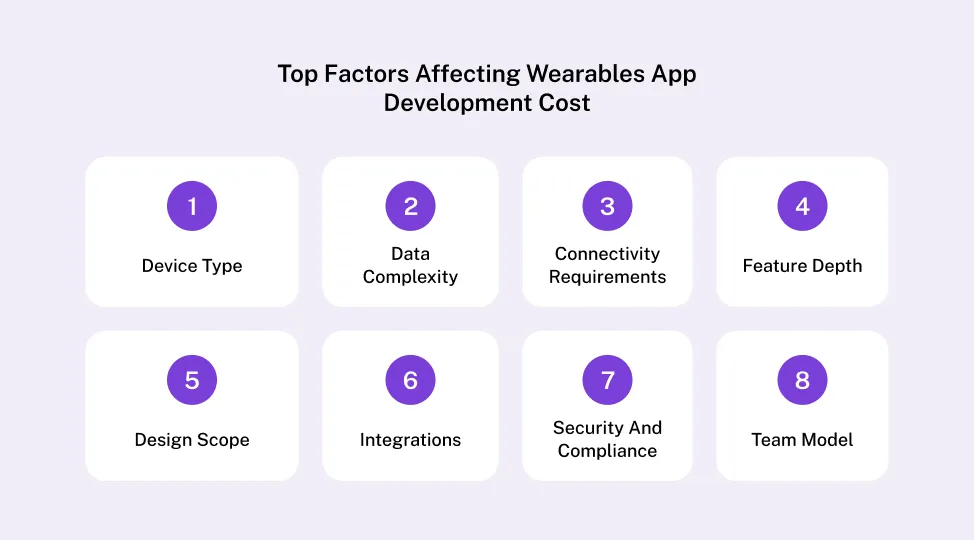
1. Device Type
A smartwatch app is different from a smart ring or medical wearable. Different hardware means different pairing behavior, data formats, and UI decisions.
2. Data Complexity
Simple step counts cost less. Real time streaming of biometric data costs more. The more data your app processes, stores, and visualizes, the higher the budget.
3. Connectivity Requirements
BLE pairing, offline mode, cloud sync, and real time updates all increase technical effort. Connectivity problems are also expensive to debug.
4. Feature Depth
A basic alert app is cheap. A product with analytics, recommendations, payments, subscriptions, or social engagement is not.
5. Design Scope
A wearable only product costs less than a full ecosystem with a wearable app, mobile app, web admin panel, and backend.
6. Integrations
Apple Health, Google Fit, EHR systems, payment tools, and CRM systems all add time and testing.
7. Security And Compliance
Enterprise and healthcare apps need more effort here. That usually means higher discovery, engineering, QA, and maintenance cost.
8. Team Model
Freelancers may cost less upfront. In house teams give more control. Agencies or offshore partners can speed up delivery, but pricing varies based on experience and scope discipline.
Feature Wise Wearable App Development Cost
| Feature Or Module |
Estimated Cost Range |
| User login and profile |
$1,000 to $4,000 |
| Wearable device pairing |
$3,000 to $10,000 |
| Activity and health tracking |
$5,000 to $20,000 |
| Real time alerts |
$2,000 to $8,000 |
| Analytics dashboard |
$4,000 to $15,000 |
| Admin panel |
$5,000 to $18,000 |
| Cloud sync and APIs |
$5,000 to $25,000 |
| Subscription and payments |
$3,000 to $10,000 |
| Security and encryption |
$4,000 to $20,000 |
| QA across devices |
$4,000 to $20,000 |
These numbers make more sense once you line them up with business size.
Hidden Costs Many Businesses Miss
This is where a lot of budgets slip.
Common hidden costs include:
A low initial quote can become very expensive later if post launch support is ignored. That happens a lot in wearables app development because devices, phone OS versions, and connectivity layers keep changing.
How To Reduce Wearable App Development Cost Without Hurting Quality
You can control cost without cutting the product to pieces.
Start With An MVP
Build the core use case first. Remove nice to have features from phase one.
Prioritize One Platform First
Choose android wearable app development or a wearable app for iPhone based on your actual audience. Do not launch everywhere just because you can.
Reuse Proven Services
Use tested tools for auth, analytics, notifications, and cloud services where possible.
Limit Device Support Early
Support a short list of devices first. Expand only after user demand is clear.
Build In Phases
A smart rollout looks like this:
Choose The Right Partner
Ask wearable app development company for real wearable case studies, testing process details, and device integration experience. That matters more than a low quote.
Cost matters, yes. But the right product plan usually saves more money than the cheapest vendor.
Final Verdict
The final wearable Mobile app development cost depends on five things more than anything else: app complexity, platform choice, integrations, compliance needs, and long term support. A basic tracker app can stay in the lower budget range. A healthcare or enterprise grade system will cost much more because it carries more technical and operational weight.
The smartest way to budget is simple:
-
define must have features first
-
choose one platform based on audience
-
map integrations early
-
plan launch and maintenance together
That is how startups avoid waste, SMEs avoid rework, and enterprises avoid expensive surprises.
If you are planning to build a wearable product and want a team that understands AI led product engineering, connected ecosystems, and scalable app delivery, Quokka Labs can be a strong partner to consider. As an AI native engineering company that develops wearable apps, Quokka Labs helps businesses turn product ideas into practical, market ready solutions with the right balance of speed, usability, and long term scalability.
Frequently Asked Questions
How Much Does Wearable App Development Cost?
The wearable app development cost usually ranges from $20,000 to $300,000+. A simple app with basic tracking sits at the lower end, while a healthcare or enterprise platform with strong backend systems, security, and integrations sits at the higher end.
What is the Cost to Develop Wearable Tracker App?
The cost to develop wearable tracker app is often $20,000 to $45,000 for a basic version, $45,000 to $100,000 for a mid level product, and $100,000 to $300,000+ for an advanced platform.
What Is Wearable App in Simple Terms?
If you are asking what is wearable app, it is simply an app made for devices like smartwatches, fitness bands, smart rings, or medical wearables. It can run on the device itself or work with a phone app and backend.
How Much Does It Cost to Build a Fitness Wearable App?
The cost to build a fitness wearable app is usually $25,000 to $120,000+. Cost rises with features like real time tracking, workout plans, coaching, subscriptions, analytics, and Apple Health or Google Fit integration.
What is The Healthcare Wearable App Development Cost?
The healthcare wearable app development cost usually starts around $50,000 and can exceed $300,000. That is because healthcare apps often need stronger security, data protection, audit trails, and workflow specific integrations.
Is Android Wearable App Development Cheaper Than A Wearable App For iPhone?
Not always. Android wearable app development can cost less or more depending on hardware coverage and testing scope. A wearable app for iPhone may benefit from a tighter ecosystem, but HealthKit and Apple Watch specific workflows can still add effort. The cheaper option depends on your use case, not the platform name.
Tags
wearable app
App Development Cost