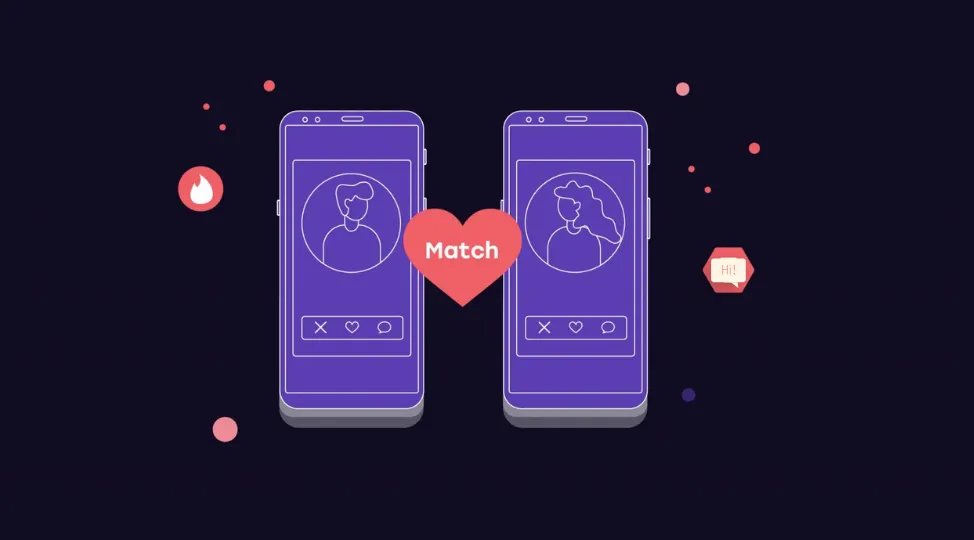
If you want to know how to build an app like Tinder, the answer is simple: define your niche, validate the idea, choose the right features, build a secure and scalable architecture, and launch with a strong retention strategy. The real challenge is not just launching an online dating app - it is creating a product people trust, enjoy, and return to every day.
Today, dating apps are no longer limited to casual matching. Users expect smart recommendations, verified profiles, real-time chat, privacy controls, video calling, safety features, and premium experiences. That means dating app development requires much more than swipe functionality. It demands thoughtful UX, strong backend engineering, moderation systems, and long-term product strategy.
So, building a dating app that is modern, scalable, and ready for real-world adoption through our specialized dating app development services is a great idea!
Let's explore how to develop dating apps like Tinder/Bumble & Hinge and find love in this digital age.
Why Now is the Right Time to Invest in Dating App Development
Investing in developing a dating app like Tinder, Bumble, & Hinge can be a promising venture for several compelling reasons. According to the survey by Statista-
- The Online Dating market will reach approximately US$1.35 billion in 2023.
- The revenue is projected to exhibit a Compound Annual Growth Rate (CAGR) of 2.15% between 2023 and 2027, resulting in an estimated market size of US$1.47 billion by 2027.
- The Online Dating market is expected to attract around 64.5 million users by 2027.
- User penetration is predicted to be 17.6% in 2023 and will increase to 18.8% by 2027.
- The average revenue generated per user (ARPU) is projected to be approximately US$22.77.
- Compared to a global scale, most of the revenue will originate from the United States, reaching US$1,347.00 million in 2023.
- The United States is set to have the highest user penetration in the Online Dating market, with a projected rate of 17.6%.
Make 2026 the Year of Connection! Build your dating app that brings people together. Elevate your matchmaking game with us- a leading & prominent mobile app development company.

Top Benefits to Develop an app like Tinder/Bumble/Hinge in 2026
Building an online dating app in 2026 offers strong business potential for startups, enterprises, and digital-first brands. As user behavior continues shifting toward mobile-first relationships and social discovery, dating app development has become one of the most promising opportunities in the app economy.
Here are the top benefits of creating a dating app like Tinder or Bumble in 2026:
1. Growing Market Demand
The global demand for dating apps continues to rise as more users rely on digital platforms to meet new people, build relationships, and explore compatible matches. This makes making a dating app a smart investment for brands looking to enter a high-engagement market.
2. Strong Revenue Potential
One of the biggest reasons businesses want to build a dating app is the monetization opportunity. From premium subscriptions and in-app purchases to profile boosts and paid features, a well-designed dating platform can generate recurring revenue and strong lifetime user value.
3. Mobile-First User Behavior
Today’s users prefer convenience, speed, and accessibility. That is exactly why online dating app usage continues to grow. People want to connect anytime, anywhere, directly from their smartphones, making this the ideal time to invest in dating app development.
4. Multiple Monetization Models
If you are exploring how to make a dating app, the good news is that the business model can be highly flexible. Dating platforms can monetize through:
- subscriptions
- freemium upgrades
- in-app advertising
- profile visibility boosts
- premium messaging features
- virtual gifts and exclusive access
This variety makes it easier to build dating app products with scalable business potential.
5. Opportunity to Target Niche Audiences
A major advantage of creating a dating app today is the ability to serve specific communities or demographics. Instead of competing broadly, businesses can build for professionals, faith-based users, LGBTQ+ audiences, serious relationships, hobby-based communities, or regional markets. Niche positioning often improves acquisition, retention, and brand loyalty.
6. Global Scalability
A dating platform is not limited by physical geography. Once you build a dating app, you can expand city by city, region by region, or even globally. With the right architecture and localization strategy, scaling becomes much faster than in many traditional business models.
7. Data-Driven Product Growth
Another major benefit of dating app development is access to valuable behavioral insights. User data can help improve matchmaking, optimize onboarding, personalize recommendations, refine monetization, and strengthen retention strategies. This allows product teams to make informed decisions and continuously improve app performance.
8. Innovation With AI and Smart Matching
Modern dating apps are no longer just swipe-based platforms. Businesses now have the opportunity to use AI-powered matching, fraud detection, personalized recommendations, smart filters, profile verification, and safety systems. For founders researching how to build an app like Tinder, this creates room for meaningful differentiation.
9. High User Engagement and Retention Potential
A well-built dating platform encourages frequent interaction through matches, messages, notifications, profile activity, and recommendation loops. This makes making a dating app especially attractive for businesses looking to launch products with high daily and weekly engagement.
10. Strong Brand and Community Building
Successful dating products do more than enable matches — they create trust, belonging, and emotional connection. When you build a dating app with the right user experience, privacy, and community standards, it can evolve into a powerful digital brand with long-term loyalty.
11. Positive Social Impact
Beyond business value, dating app development can help people form meaningful relationships, reduce loneliness, and connect with like-minded individuals. It can also create safe spaces for underserved or niche communities to meet and interact more confidently.
12. Long-Term Adaptability
The dating industry continues to evolve with user expectations, social behaviors, and technology trends. Businesses that invest in how to make an app like Tinder today can continue enhancing the product with new features such as video dating, AI compatibility scoring, voice-first interactions, and stronger moderation systems over time.
How to Develop a Dating App Like Tinder/Bumble And Hinge?
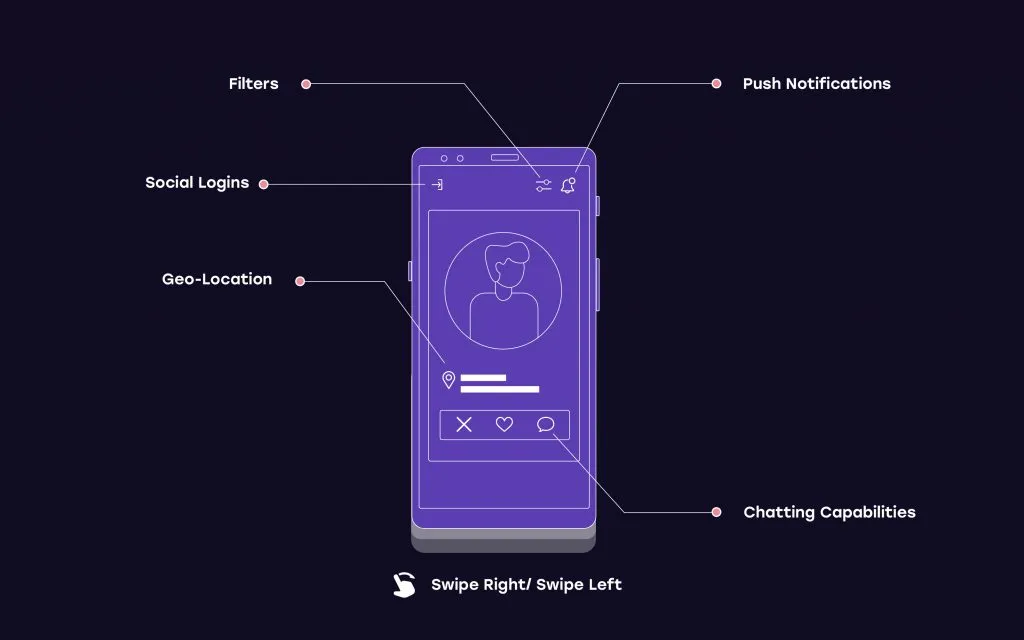 If you're wondering how to build an app like Tinder or make a dating app users love, the answer goes far beyond coding. Successful dating app development requires the right mix of product strategy, user experience, safety, personalization, and scalable technology.
Today’s users expect more from dating apps than just swiping. They want secure profiles, smart matchmaking, smooth onboarding, real-time communication, and features that make online connections feel natural and trustworthy. That is why creating a dating app like Tinder, Bumble, or Hinge requires a thoughtful step-by-step approach.
Below are the essential steps to build a dating app that stands out in a competitive market.
1. Start With Market Research
The first step in dating app development is understanding your audience. Before you begin designing or developing, research the market carefully.
Ask questions like:
-
Who is your target audience?
-
- What age group are you targeting?
-
What type of relationships are they looking for?
-
What are their interests, behaviors, and pain points?
-
What do existing online dating app users like or dislike?
Strong research helps you make informed product decisions and create a more user-focused app.
2. Define a Unique Value Proposition
If you want to build dating app products that succeed, you need a clear reason for users to choose your platform over others. Instead of copying Tinder or Bumble exactly, define what makes your app different.
Your unique value proposition could be based on:
A strong differentiator is essential when making a dating app in a competitive market.
3. Design a User-Friendly Interface
A smooth, intuitive interface is one of the most important parts of dating app development. Users should be able to create a profile, browse matches, message others, and manage preferences without confusion.
A good dating app UI should offer:
-
Clean navigation
-
Fast onboarding
-
Simple profile setup
-
Easy swipe or match interactions
-
Smooth messaging experience
-
Clear privacy and settings controls
When you build a dating app, design directly affects retention, engagement, and user trust.
4. Prioritize Safety and Privacy
Safety is not optional in an online dating app. Users share personal information, images, and location details, so strong privacy and security features are essential.
Important safety features include:
If you are planning how to make a dating app, build trust into the product from the beginning.
5. Build Smart Matching Functionality
One of the core elements of how to build an app like Tinder is the matching engine. Users expect relevant suggestions based on preferences, location, interests, and behavior.
Your matching system can use:
-
Age and gender preferences
-
Location-based recommendations
-
Shared interests
-
Activity patterns
-
Compatibility signals
-
Ai-powered recommendations
Better matching improves engagement and keeps users coming back.
6. Add Real-Time Communication Features
Messaging is at the heart of all successful dating apps. Once users match, they need easy ways to connect and start conversations.
Useful communication features include:
-
Real-time chat
-
Push notifications
-
Conversation prompts
-
Media sharing
-
Voice notes
-
Video calling
A strong communication layer is essential if you want to make an app like Tinder that supports meaningful interactions.
7. Allow Detailed Profile Customization
Profiles play a major role in matchmaking. The more relevant information users can share, the better the app can recommend suitable matches.
Good profile options may include:
-
Photos
-
Bio
-
Interests
-
Lifestyle details
-
Prompts and preferences
-
Location
-
Relationship goals
This is a key part of creating a dating app that feels more personal and effective.
8. Use Geolocation to Improve Discovery
Location is a major part of most online dating app experiences. Geolocation helps users find potential matches nearby and makes real-world meetings easier to arrange.
Geolocation can support:
For many businesses researching how to make an app like Tinder, geolocation is one of the first features included in the MVP.
9. Build Feedback and Improvement Loops
No app gets everything right at launch. That is why feedback mechanisms are important in dating app development.
You should collect input through:
-
In-app surveys
-
App store reviews
-
User interviews
-
Behavior analytics
-
Support conversations
-
Feature feedback forms
This helps you improve the product based on real user needs instead of assumptions.
10. Plan Your Monetization Strategy Early
If you want to build a dating app as a profitable business, you need a clear monetization model. The best revenue strategy depends on your target users and product type.
Common monetization options include:
-
Premium subscriptions
-
In-app purchases
-
Profile boosts
-
Paid visibility
-
Virtual gifts
-
Premium filters
-
Ad-based revenue
When making a dating app, monetization should feel natural and not interrupt the user experience.
11. Create a Sense of Community
Modern dating apps often perform better when they feel like more than just match engines. Community features can improve trust, belonging, and long-term retention.
Depending on your app model, this can include:
This can be especially valuable for niche or interest-based dating platforms.
12. Make Accessibility a Priority
Accessibility helps ensure your app can be used by a wider audience, including people with disabilities. This is an important part of building inclusive digital products.
Accessibility best practices include:
Keyboard-friendly interactions where relevant
A more accessible app often leads to a better experience for all users.
13. Offer Reliable Customer Support
Support is an important but often overlooked part of dating app development. Users may need help with account access, reporting, payments, technical issues, or safety concerns.
Responsive support helps:
If you build dating app products for long-term growth, support should be part of the experience.
14. Use Data Analytics to Improve Performance
Analytics help you understand how users interact with your app and where improvements are needed.
Track metrics such as:
This is one of the smartest ways to improve dating app development over time.
15. Invest in Marketing and User Acquisition
Even the best app needs a launch strategy. If you are learning how to make a dating app, remember that product development and user acquisition go hand in hand.
Marketing channels may include:
-
App store optimization
-
Paid campaigns
-
Influencer marketing
-
Social media
-
Referral programs
-
PR and partnerships
-
Community-led growth
Growth planning should begin before launch, not after.
16. Think About Localization and Scalability
If you plan to grow beyond one city or one region, localization matters. This includes language support, cultural relevance, regional matchmaking preferences, and scalable infrastructure.
Localization can help with:
This is especially important if your goal is to build a dating app for national or global audiences.
Discover- Common Languages Used for Dating App Development
How Much Does It Cost to Develop a Dating App in 2026?
The cost of dating app development in 2026 depends on the type of app you want to build, the features you need, and how complex the overall product is.
If you are planning how to build an app like Tinder or how to make an app like Tinder, the final budget will usually depend on factors such as:
- The number of features
- The design complexity
- Ios, android, or both platforms
- Native or cross-platform development
- Backend infrastructure
- Real-time chat and matching functionality
- AI-based recommendations
- Safety and moderation features
- Third-party integrations
- Post-launch maintenance and updates
Estimated Cost of Dating App Development
As a general estimate:
- A basic dating app with essential features like user registration, profile creation, matching, chat, and notifications may cost around $30,000 to $60,000
- A mid-level or feature-rich online dating app with advanced filters, premium features, subscriptions, geolocation, and stronger UI/UX can cost around $60,000 to $120,000 or more
If you want to build a dating app with advanced capabilities such as AI-based matchmaking, video calling, profile verification, fraud prevention, and detailed admin dashboards, the cost can go even higher depending on the product scope.
Factors That Affect Dating App Development Cost in 2026
If you are planning how to make a dating app or researching how to build an app like Tinder, one of the first questions you will ask is: how much will it cost?
The truth is, there is no one fixed price for dating app development. The total cost depends on your app’s features, design, platform, technology, security needs, and long-term goals.
Cost Breakdown for Dating App Development
| Factor |
How It Impacts Cost |
Examples |
| App Features & Complexity |
More features require more development time, testing, and backend support |
Matching algorithm, chat, video calls, subscriptions, AI recommendations |
| Platform Choice |
Building for one platform costs less than launching on both iOS and Android at the same time |
iOS only, Android only, or cross-platform |
| UI/UX Design |
A polished, easy-to-use design improves retention but adds design and research effort |
Onboarding flow, swipe screens, profile design, chat interface |
| Development Team |
Experienced developers, designers, and testers may cost more but improve quality and speed |
Product strategists, mobile developers, QA engineers, UI/UX designers |
| Team Location |
Rates vary depending on where your development team is based |
US, Europe, India, remote global teams |
| Security & Privacy |
Strong protection for user data increases development effort but is essential |
Secure login, data encryption, privacy settings, secure payments |
| User Verification & Safety |
Safety tools require added features and moderation systems |
ID verification, profile review, report/block options, moderation dashboards |
| Backend Infrastructure |
A scalable backend is needed to manage matching, messages, user data, and app performance |
Cloud hosting, databases, APIs, real-time messaging servers |
| Third-Party Integrations |
External services can improve functionality but add setup and maintenance cost |
Payment gateways, maps, social login, push notifications, analytics |
| Testing & QA |
Thorough testing helps ensure a smooth and bug-free experience before launch |
Device testing, performance testing, bug fixing, usability testing |
| Marketing & Launch |
Development is only part of the investment; promotion also needs budget |
ASO, paid ads, influencer campaigns, launch promotion |
Here are the main factors that influence the cost of creating a dating app:
1. Features and App Complexity
The biggest cost factor is the feature set. A simple MVP with basic profile creation, matching, and chat will cost much less than an advanced online dating app with video calling, AI-based recommendations, premium subscriptions, and safety tools.
Common features that affect cost include:
The more advanced the functionality, the more time and resources are needed to build a dating app successfully.
2. Platform Choice
Your platform strategy also impacts the budget. Building for a single platform, like iOS or Android, is usually more affordable than launching on both at the same time.
Many businesses start with one platform and expand later, while others choose cross-platform development to reduce cost and speed up launch. This decision plays a major role in dating app development planning.
3. UI/UX Design
A dating app needs to be simple, attractive, and easy to use. Users expect smooth onboarding, intuitive swiping, fast interactions, and a visually engaging interface.
That is why design is not something to overlook. A basic interface may cost less, but a polished user experience helps improve retention, trust, and conversions. When you are making a dating app, investing in design often pays off in the long run.
4. Development Team Expertise
The experience and size of your team directly affect the total development cost. A skilled team of developers, designers, QA engineers, and product strategists may cost more upfront, but they can help you avoid delays, technical issues, and expensive rework later.
If you want to build dating app products that are secure and scalable, choosing the right development partner is critical.
5. Location of the Development Team
Development costs can also vary depending on where your team is based. Teams in different regions may charge different hourly or project rates, which can significantly impact your overall budget.
That is why many businesses compare agencies based not only on price, but also on experience, communication, product understanding, and delivery quality.
6. Security and Privacy Requirements
Security is a major part of dating app development because users share personal details, photos, messages, and location data. Adding secure authentication, encrypted messaging, privacy controls, and secure payment systems can increase cost, but these are essential investments.
A dating app without strong privacy and security measures can quickly lose user trust.
7. User Verification and Safety Features
If you are serious about creating a dating app, safety should be part of the product from the start. Features like profile verification, reporting tools, moderation systems, and user blocking require additional development effort, but they are important for building a trusted platform.
These features may increase the initial budget, but they help support long-term growth and retention.
8. Backend Infrastructure
A dating app needs a reliable backend to manage user profiles, match logic, messaging, notifications, subscriptions, and analytics. If your app is expected to scale quickly, the backend architecture must be strong enough to support that growth.
This is one of the most important technical costs when planning how to build an app like Tinder.
9. Third-Party Integrations
Many dating apps rely on external tools and services to improve functionality. These can include:
Each integration can add to the overall development cost, depending on setup complexity and usage needs.
10. Testing and Quality Assurance
No matter how good the design or code is, your app must be properly tested before launch. Quality assurance helps identify bugs, improve performance, and ensure a smooth user experience across devices and platforms.
For online dating app products, testing is especially important because even small issues in onboarding, matching, or messaging can affect user trust and retention.
11. Marketing and Launch Budget
Development is only one part of the investment. Once your app is built, you also need a strategy to attract users. Marketing, app store optimization, paid campaigns, influencer partnerships, and launch promotions all add to the total project cost.
This is often overlooked when businesses think about how to make an app like Tinder, but user acquisition is just as important as product development.
It's important to note that dating mobile or iOS app development costs can range from thousands to millions of dollars, depending on the scale and ambition of your dating app project. To get an accurate estimate, it's advisable to consult with an experienced web & mobile app development company that can provide a tailored cost assessment based on your specific requirements and objectives.
Let’s Start Building Your Very Own Dating App!
If you are asking how to build an app like Tinder, the best answer is this: do not just copy Tinder. Instead, define your niche, solve a meaningful problem, launch with the right MVP, and build around trust, relevance, and retention. For brands planning to turn that idea into a scalable product, Quokka Labs’ mobile app development services can help lay the right technical foundation.
The future of dating apps belongs to products that feel safe, match better, reduce friction, and create real user value. That is why user journeys, onboarding, profile flows, and interaction design matter just as much as the technology behind the app. A strong product experience often starts with thoughtful UI/UX design services.
If you are ready to make an app like Tinder, build dating app products with better UX, or launch a next-generation online dating app, Quokka Labs can help you design, build, and scale the right product from the ground up through its dedicated dating app development services.
Contact us Today for a free quote and a personalized, trustworthy, and quality service experience.
Explore the Dating App Development Projects at Quokka Labs
Are you ready to dive into the world of dating app development projects at Quokka Labs? We've worked hard to create innovative and user-friendly dating apps that bring people together excitingly. We'll take you through some of our recent projects, highlighting the features and unique elements that set them apart in online dating.
Down Dating
Unlock the discreet path to connect with people in your vicinity! Love and excitement are just around the corner – discover like-minded locals nearby. Join the ever-growing community of singles in your area, with over 4 million people already embracing Down Dating!
HiToMe
HiTome is an app that connects you to people in your area. View their profile and see if you’re a match. If you are, swipe and lock it to meet that person in the real world. You can approach and engage with them by asking questions, sharing something in common, or introducing yourself. It’s a way to break the ice and meet someone new.
City Dating
The city dating app is a new way to meet singles in your area. It’s a free and subscription-based app that allows you to connect with potential matches in your city. Swipe, match, chat, and date for free!
These are just a glimpse of the dating app development projects that Quokka Labs has been working on. Each project is a testament to our commitment to creating unique, secure, and user-friendly dating experiences. Whether connecting travelers, fostering cultural connections, or providing a space for mature hearts to find love, our team continues to innovate in the world of dating apps. Stay tuned for more exciting developments from Quokka Labs!
FAQs About Dating App Development
1. How to build an app like Tinder?
To build an app like Tinder, start with a clear niche, an MVP feature list, and a strong user journey. Most successful dating apps do not begin with dozens of features. They start with the essentials and improve over time.
A practical roadmap looks like this:
define your audience
validate the market
choose your core features
design the onboarding and matching flow
build the backend and real-time chat
add safety, moderation, and verification
test, launch, and improve using user feedback
If your goal is to build a dating app that can scale, the most important priorities are trust, speed, usability, and matching quality. Quokka Labs’ dating app service page also emphasizes cross-platform app development, AI-powered matchmaking, QA, and scalable architecture for modern dating products.
2. How to make an app like Tinder without copying Tinder?
The best way to make an app like Tinder is to learn from the core model without creating a clone. A swipe mechanic alone is not enough anymore. Users now expect better recommendations, profile trust, privacy controls, and more personalized experiences.
To stand out, focus on:
a niche audience
better onboarding
stronger safety features
smarter matching logic
a unique communication flow
premium features that feel useful, not forced
For example, some apps differentiate through serious relationships, local communities, faith-based matching, voice-first interactions, or AI-driven compatibility. That is why creating a dating app today is more about product strategy than just code.
3. What features are required for dating app development?
Strong dating app development starts with the right feature stack. You do not need every feature on day one, but your MVP should cover the basics well.
Must-have features for an online dating app
user registration and login
profile creation and editing
preferences and filters
swipe or discovery feed
matching engine
real-time chat
push notifications
report and block tools
admin panel
privacy settings
Advanced features for feature-rich dating apps
video or voice calling
AI-powered recommendations
profile verification
premium subscriptions
social login
geolocation
conversation prompts
fraud prevention
moderation dashboards
4. How much does dating app development cost?
The cost of dating app development depends on your scope, platform choice, design depth, backend complexity, and safety requirements. A lean MVP costs much less than a fully featured online dating app with AI matching, video calling, subscriptions, and advanced moderation.
In most cases, cost is shaped by:
feature complexity
iOS, Android, or both
native vs cross-platform development
chat and notification systems
profile verification
backend scalability
third-party integrations
testing and maintenance
A founder asking how to make a dating app should think beyond launch cost alone. You also need to budget for updates, analytics, infrastructure, safety improvements, and user acquisition after release.
5. How long does it take to build a dating app?
The timeline depends on whether you are building a basic MVP or a full-scale platform. In general, a simple version can take a few months, while an advanced product can take much longer.
A typical breakdown is:
discovery and planning: 1–2 weeks
UX/UI design: 2–4 weeks
MVP development: 8–14 weeks
testing and launch prep: 2–4 weeks
advanced feature expansion: ongoing
Quokka Labs generally delivered MVPs in roughly 10–14 weeks, while more advanced products may take 4–8 months depending on feature complexity.
6. What is the best tech stack to build dating app products?
The best tech stack depends on your timeline, budget, scalability goals, and team structure. If speed and cost-efficiency matter, many businesses choose cross-platform frameworks. If platform-specific performance is the top priority, native development may be the better route.
Common choices include:
- For Frontend Development: React Native, Flutter, Swift, Kotlin
- For Backend Development: Node.js, Python, Java, Go
- Database and infrastructure: cloud hosting, scalable databases, CDN, messaging systems
- Integrations: payments, geolocation, notifications, analytics, moderation tools
7. How do dating apps make money?
If you want to build a dating app, you need a monetization strategy early. Most successful dating apps use a freemium model, where the app is free to join but premium features are paid.
Popular monetization models include:
- monthly or yearly subscriptions
- profile boosts
- super likes or priority likes
- premium filters
- read receipts
- ad-free experience
- virtual gifts
curated matchmaking or concierge services
The best model depends on your audience. A niche relationship app may monetize differently than a swipe-heavy social discovery platform. When making a dating app, the goal is to create value people are genuinely willing to pay for.
8. What safety features should an online dating app include?
Safety is one of the most important parts of online dating app success. Users share photos, profile data, messages, and often location details, so your product must build trust from the first session.
Key safety features include:
- profile verification
- report and block options
- moderation tools
- secure login
- data encryption
- privacy controls
- anti-spam detection
- suspicious behavior monitoring
- content review systems
This is becoming even more important across the industry. Tinder has been expanding facial verification and anti-scam measures in several markets to reduce fake profiles and fraudulent activity.
9. Can AI improve dating app development?
Yes - AI can significantly improve dating app development when it is used to support trust, personalization, and relevance rather than replacing real human connection.
Useful AI applications include:
- smarter match recommendations
- profile ranking and compatibility scoring
- toxic language detection
- fake account detection
- onboarding personalization
- conversation suggestions
- churn prediction
- fraud prevention
At the same time, AI should be applied carefully. Recent industry reporting shows dating platforms see stronger value in AI for safety, recommendations, and conversation support than in fully automating flirting or pretending to be the user.
10. Should I hire a dating app development company?
If you are serious about how to build an app like Tinder, working with a specialized partner can save time, reduce product mistakes, and improve launch quality. Dating products are more complex than many founders expect because they involve real-time chat, recommendation systems, privacy, moderation, subscriptions, and long-term retention mechanics.
A specialized team can help with:
- product discovery
- feature prioritization
- UX for onboarding and matching
- scalable architecture
- QA and testing
- launch planning
- post-launch iteration
That is where a focused dating app development company can help. Quokka Labs positions this service around product strategy, cross-platform engineering, AI-powered matchmaking, safety systems, and scalable growth-focused delivery for dating products.
Tags
Dating App Development
App Development