RAG Development Services for Accurate, Governed Enterprise AI
Quokka Labs engineers production-ready RAG systems that connect enterprise data and knowledge sources through secure ingestion, hybrid retrieval, reranking, permission-aware access, source citations, and continuous evaluation.
RAG-Powered AI Solutions for Knowledge-Intensive Workflows
Quokka Labs builds configurable AI products that apply trusted business knowledge across governance, software testing, customer support, and internal operations. Each solution can be adapted to existing data sources, user roles, workflows, and application environments.
LangProtect
Secure AI Usage, Applications, and Autonomous Workflows
LangProtect provides runtime visibility and policy enforcement across employee AI usage, RAG applications, AI agents, and non-human identities. It helps organizations detect sensitive data exposure, govern prompt and response activity, enforce AI access policies, and maintain audit-ready oversight as AI adoption grows.
Accelerate Software Testing with AI-Powered Automation
EverTest is an AI-powered, no-code web test automation platform that enables QA teams, developers, and product managers to create, document, execute, and manage automated tests using natural-language instructions and recorded workflows. It supports cross-browser execution, AI-assisted assertions, CI/CD integration, and continuous application validation.
Connect Business Systems with a Context-Aware AI Assistant
A configurable AI chatbot that connects with websites, knowledge bases, CRMs, ERPs, support platforms, databases, and APIs. Using retrieval-augmented generation, it accesses relevant business information to deliver accurate, contextual responses across customer support, employee assistance, product discovery, and operational workflows.
Custom RAG Development Services Across the Complete AI Application Stack
Quokka Labs helps product teams and enterprises architect, build, integrate, and scale RAG systems that deliver accurate answers from proprietary knowledge. Our expertise spans knowledge engineering, advanced retrieval, LLM orchestration, evaluation, security, and production optimization.
01
RAG Strategy and Architecture Consulting
Identify high-value use cases, assess knowledge readiness, and define retrieval patterns, model choices, security boundaries, deployment architecture, evaluation criteria, and a practical roadmap for production implementation.
02
Custom RAG Application Development
Build domain-specific knowledge assistants, enterprise search platforms, AI copilots, support systems, and RAG APIs with conversational context, citations, workflow actions, human review, and application-level controls.
03
Knowledge Ingestion and Indexing Engineering
Connect documents, databases, SaaS platforms, websites, and APIs through pipelines for parsing, semantic chunking, metadata enrichment, embedding generation, permission synchronization, versioning, and incremental re-indexing.
04
Advanced Retrieval and Reranking Architecture
Engineer dense, sparse, hybrid, metadata-aware, graph-based, and multi-hop retrieval using query transformation, contextual filtering, reranking, context compression, and source prioritization to improve answer relevance.
05
LLM, Agentic and Multimodal RAG Integration
Orchestrate foundation models, tools, agents, and structured data across text, tables, images, databases, and APIs. Implement model routing, tool calling, agentic retrieval, and fine-tuning where business and performance requirements justify it.
Transforming Organizational Knowledge into Trusted AI Outcomes
Explore how Quokka Labs delivers custom RAG development services that modernize knowledge retrieval, improve response quality, connect distributed information, and support reliable AI adoption across complex business operations.
Run The Day
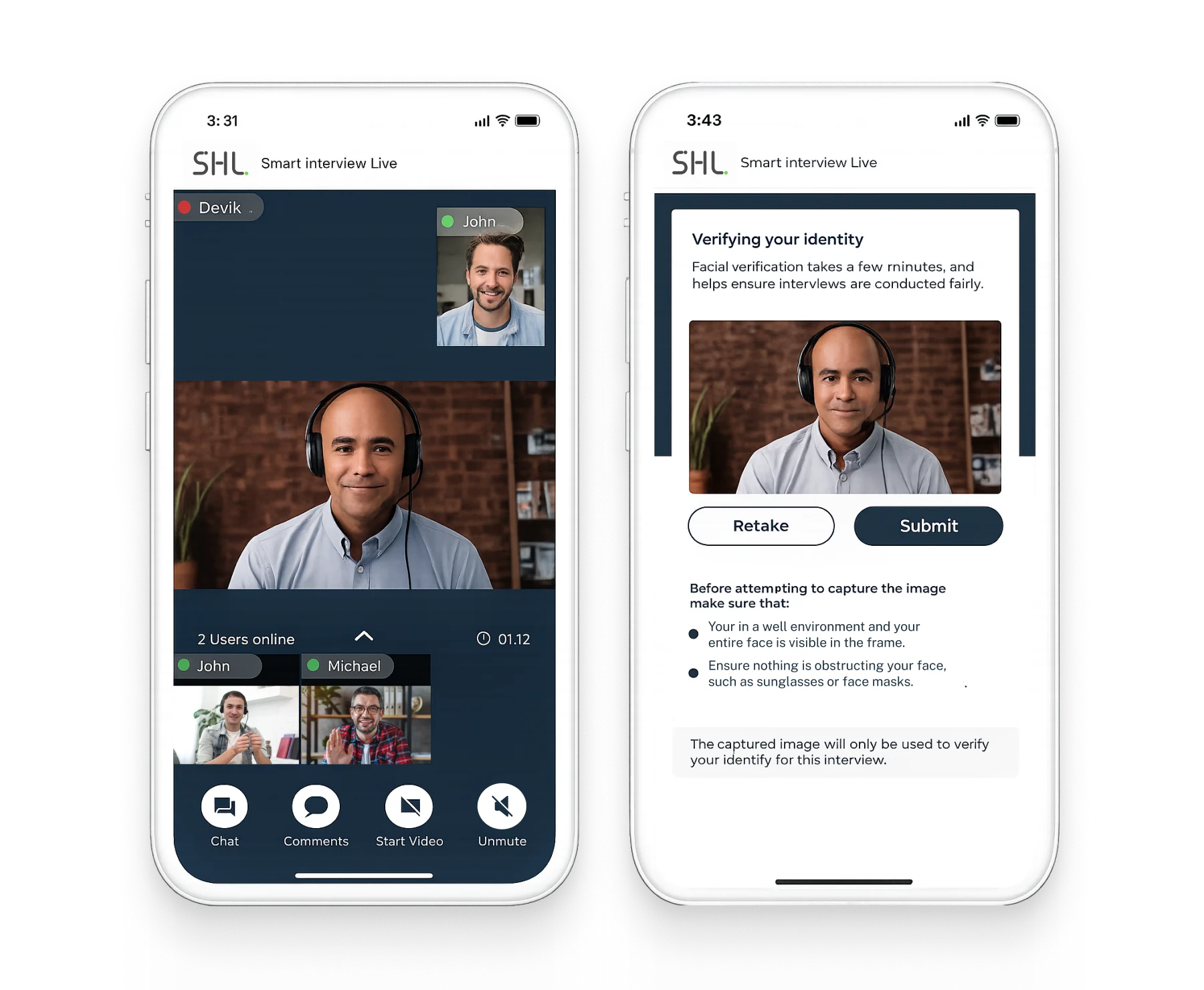
Quokka Labs established a centralized knowledge foundation for race operations, giving organizers instant access to participant information, operational guidance, and event intelligence across every stage of execution.
Quokka Labs empowered hiring teams with contextual access to assessment knowledge, making workforce intelligence easier to discover, navigate, and apply across high-volume talent operations.
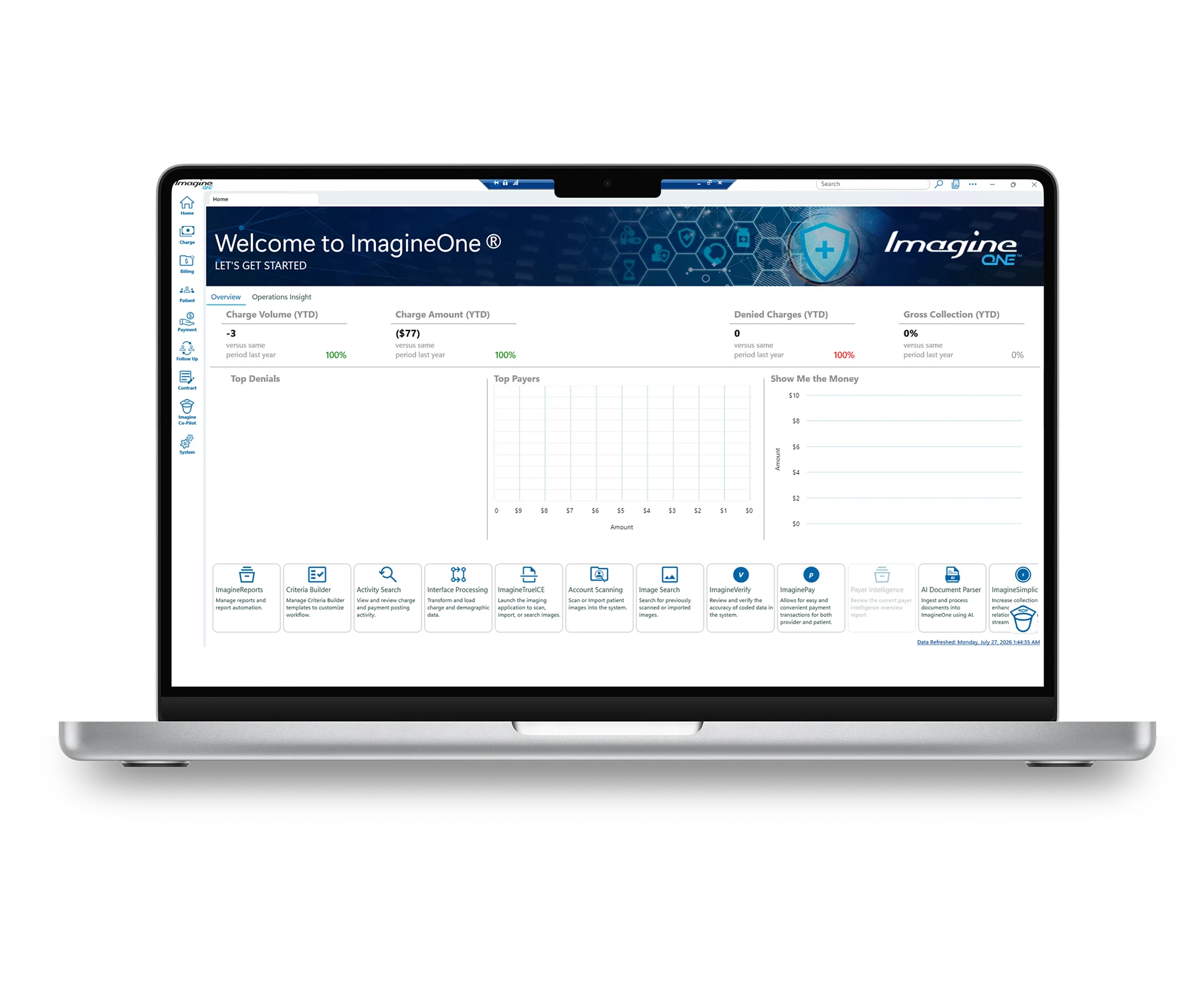
Quokka Labs connected claims data, payer policies, and clinical documentation into a unified knowledge layer, enabling healthcare teams to access trusted context for faster reimbursement, compliance, and operational decisions.
How We Engineer Trusted RAG Systems from Knowledge to Production
We follow a structured RAG engineering approach that combines knowledge architecture, retrieval engineering, AI integration, and continuous optimization to deliver trusted, production-ready AI systems.
1
Knowledge Corpus Assessment
We evaluate organizational knowledge repositories, document quality, retrieval objectives, metadata maturity, governance requirements, and AI use cases to establish a scalable knowledge foundation for Retrieval-Augmented Generation.
2
Retrieval Architecture
Our engineers design the retrieval architecture, selecting chunking strategies, embedding models, hybrid search approaches, metadata schemas, vector databases, and retrieval workflows that maximize contextual relevance and response accuracy.
3
Knowledge Ingestion & Vector Indexing
Business knowledge is extracted, transformed, enriched, and embedded into vector indexes through structured ingestion pipelines, enabling consistent retrieval, source attribution, and continuous synchronization across connected knowledge systems.
4
RAG Pipeline Engineering
We engineer end-to-end RAG pipelines by integrating retrieval workflows, prompt orchestration, reranking models, LLMs, APIs, and business applications to deliver grounded, context-aware AI experiences.
5
Retrieval Evaluation
We evaluate retrieval precision, contextual relevance, grounding quality, citation accuracy, latency, and hallucination rates through structured testing and continuous optimization to improve AI response reliability before production rollout.
6
Production Readiness
We prepare the RAG solution for production by validating performance, implementing governance controls, enabling monitoring, synchronizing knowledge sources, and establishing continuous evaluation to ensure reliable, scalable AI operations.
RAG Development for Industry-Specific Knowledge Workflows
We engineer RAG systems around each industry’s terminology, data models, access policies, and regulatory requirements, enabling accurate and traceable AI assistance across operational, customer-facing, and compliance-intensive workflows.
Connect clinical guidelines, EHR and EMR data, FHIR and HL7 resources, payer policies, medical literature, and care protocols. Our RAG solutions support clinical knowledge access, prior authorization, claims review, and care operations with permission-aware retrieval and source citations.
Connect clinical guidelines, EHR and EMR data, FHIR and HL7 resources, payer policies, medical literature, and care protocols. Our RAG solutions support clinical knowledge access, prior authorization, claims review, and care operations with permission-aware retrieval and source citations.
Unify KYC and AML policies, lending rules, risk models, transaction data, regulatory updates, and financial product knowledge. RAG-powered assistants support compliance investigations, underwriting, analyst research, policy interpretation, and customer service through controlled and auditable retrieval.
Unify policies, SOPs, service records, process documentation, and operational knowledge across HR, finance, procurement, IT, legal, and compliance functions. RAG systems support employee assistance, service-desk operations, process consistency, and cross-functional knowledge access across global teams.
Deliver Trusted RAG Systems with Security and Governance at the Core
Security and governance are fundamental to reliable RAG systems. Quokka Labs embeds identity controls, retrieval policies, source traceability, auditability, and compliance safeguards to protect organizational knowledge and improve AI reliability at scale.
Microsoft Entra ID
Okta
Auth0
OAuth 2.0
OpenID Connect
Microsoft Entra ID
Okta
Auth0
OAuth 2.0
OpenID Connect
HashiCorp Vault
AWS KMS
Azure Key Vault
Google Cloud KMS
TLS
AES-256
HashiCorp Vault
AWS KMS
Azure Key Vault
Google Cloud KMS
TLS
AES-256
LangSmith
Langfuse
NVIDIA NeMo Guardrails
Llama Guard
LangSmith
Langfuse
NVIDIA NeMo Guardrails
Llama Guard
SOC 2
ISO 27001
GDPR
HIPAA
PCI DSS
NIST AI RMF
SOC 2
ISO 27001
GDPR
HIPAA
PCI DSS
NIST AI RMF
Pinecone
Weaviate
ChromaDB
Elasticsearch
pgvector
Milvus
Pinecone
Weaviate
ChromaDB
Elasticsearch
pgvector
Milvus
AWS
Microsoft Azure
Google Cloud
Docker
Kubernetes
Terraform
AWS
Microsoft Azure
Google Cloud
Docker
Kubernetes
Terraform
Grafana
Prometheus
Datadog
New Relic
ELK Stack
OpenTelemetry
Grafana
Prometheus
Datadog
New Relic
ELK Stack
OpenTelemetry
Why Quokka Labs
One RAG Engineering Partner Across the Complete Production Stack
Quokka Labs combines product strategy, knowledge engineering, retrieval science, GenAI application development, cloud platform engineering, security, and quality assurance within one delivery team. Startups, scale-ups, and enterprises can move from fragmented knowledge and early RAG experiments to integrated, evaluated, and production-operated AI products without coordinating multiple specialist vendors.
Product and Knowledge Architecture
We begin with the users, decisions, and workflows the RAG product must support, then define knowledge boundaries, taxonomies, source authority, access models, conversation design, and measurable acceptance criteria. This ensures the architecture is built around a viable product experience rather than an isolated retrieval pipeline.
Retrieval Science and Relevance Engineering
Our engineers do not default to basic vector similarity. We test chunking strategies, embedding models, sparse and dense retrieval, metadata filtering, query decomposition, reranking, graph and structured-data retrieval, and context assembly against representative domain queries.
Full-Stack Application and Integration Delivery
Quokka Labs engineers the complete application layer around RAG, including interfaces, APIs, orchestration services, connectors, workflow actions, authentication, and integrations with websites, SaaS products, databases, CRMs, ERPs, SharePoint, Confluence, and internal platforms.
Evaluation and Reliability Engineering
We establish golden datasets, retrieval benchmarks, answer-faithfulness checks, citation validation, human-review workflows, regression suites, and production feedback loops. Retrieval and generation quality are measured continuously instead of being judged through a limited demonstration.
Security, Governance and Deployment Control
Permission inheritance, tenant isolation, sensitive-data safeguards, encryption, audit trails, prompt-injection controls, retention rules, and source traceability are engineered into the RAG architecture. Solutions can be deployed across public cloud, private cloud, VPC, hybrid, or on-premises environments.
Production Performance and Lifecycle Ownership
We optimize retrieval latency, token consumption, context size, caching, model routing, concurrency, indexing throughput, and infrastructure cost. After deployment, we maintain source synchronization, evaluation pipelines, observability, model upgrades, and retrieval performance as data and usage patterns change.
From product discovery and knowledge preparation to retrieval engineering, application delivery, governance, deployment, and continuous optimization, Quokka Labs provides one accountable team for the complete RAG product lifecycle.
Technology Ecosystem for Production-Grade RAG Development
Quokka Labs selects models, retrieval frameworks, vector infrastructure, data pipelines, and deployment platforms based on knowledge complexity, accuracy targets, latency, scalability, and operating requirements.
OpenAI
Insights & Perspectives
Insights on RAG Development, Enterprise AI, and Knowledge Engineering
Explore expert insights on RAG development, retrieval engineering, vector databases, knowledge management, LLM integration, AI governance, prompt engineering, and production AI practices that help teams build reliable AI systems at scale.
What an AI-Native Development Team Actually Builds: Inside the Product,..
AI adoption is no longer the hard part. Building AI that survives real users, messy data, security reviews, and production pressure is. McKinsey's 2025 global survey...
How to Develop Custom Generative AI Models for Your...
Learn how to develop custom generative AI models for your business with this step-by-step guide. Discover when to go beyond generic tools, how to prepare data,...
What an AI-Native Development Team Actually Builds: Inside the Product,..
AI adoption is no longer the hard part. Building AI that survives real users, messy data, security reviews, and production pressure is. McKinsey's 2025 global....
How to Develop Custom Generative AI Models for Your...
Learn how to develop custom generative AI models for your business with this step-by-step guide. Discover when to go beyond generic tools, how to prepare data,...
Trusted by Teams Advancing Secure and Intelligent Knowledge Operations
Quokka Labs helps organizations establish disciplined AI knowledge practices through custom RAG development services that combine retrieval engineering, knowledge architecture, governance, and continuous evaluation for reliable AI performance.
0+
AI & Software Products Delivered
0+
Years AI Engineering Excellence
0+
Industries Supported
0%
Custom RAG Implementations
Contact Us
Ready to Build RAG Systems That Deliver Trusted AI Outcomes?
Whether you're deploying AI assistants, modernizing knowledge access, or improving decision support, Quokka Labs engineers RAG systems that deliver accurate retrieval, grounded responses, and measurable operational impact across business workflows.
Response Within 24 Hours
Our senior RAG AI experts review your requirements and recommend the next steps.
RAG Architecture Assessment
Assess retrieval architecture, knowledge quality, and AI implementation readiness.
Actionable Roadmap
Receive phased implementation guidance aligned with business priorities and adoption.
Discuss your RAG Requirements
RAG Development Services FAQs
Why is RAG essential and how does it improve AI applications?
RAG enables AI applications to retrieve relevant information from trusted organizational knowledge sources before generating responses. This improves response accuracy, reduces hallucinations, delivers current and context-aware insights, and eliminates the need to continuously retrain foundation models as business knowledge evolves.
What is the difference between a chatbot and a RAG-powered AI assistant?
Traditional chatbots rely on predefined rules or static training data, while RAG-powered AI assistants retrieve relevant information from connected knowledge sources before generating responses. This enables more accurate, contextual, and up-to-date answers across evolving knowledge bases.
How does a RAG system handle sensitive or restricted information?
RAG systems enforce role-based access controls (RBAC), source-level permissions, encryption, and governance policies to ensure AI retrieves only authorized information while maintaining security and regulatory compliance.
When should an organization implement a RAG solution instead of fine-tuning an LLM?
RAG is ideal when AI systems must access frequently changing knowledge, proprietary documents, or regulated information. Unlike fine-tuning, RAG continuously retrieves current information while reducing model maintenance and improving response reliability.
What types of knowledge sources can be integrated into a RAG system?
RAG solutions can connect with document repositories, knowledge bases, cloud storage, SharePoint, Confluence, CRM platforms, ERP systems, databases, APIs, websites, and other structured or unstructured information sources.
How do RAG development services reduce AI hallucinations?
RAG systems retrieve relevant information before generating responses, grounding outputs in verified knowledge instead of relying solely on model memory. This improves factual accuracy, source attribution, and response consistency.
Which technologies are commonly used for custom RAG development?
Custom RAG development typically combines foundation models, embedding models, vector databases, retrieval frameworks, reranking techniques, orchestration frameworks, and enterprise integrations to build reliable AI applications tailored to organizational knowledge.
Can a RAG solution integrate with existing business systems?
Yes. RAG solutions integrate with existing knowledge repositories, business applications, APIs, document management systems, collaboration platforms, and cloud infrastructure while preserving existing governance and security controls.
How do you evaluate the performance of a RAG system?
Performance is evaluated using retrieval accuracy, contextual relevance, citation quality, latency, hallucination rate, response consistency, and user feedback to continuously improve AI reliability and operational performance.
How do you ensure governance and security in RAG development?
Governance is established through role-based access controls, secure knowledge ingestion, data encryption, audit logging, source-level permissions, and policy-driven retrieval to ensure AI systems access only authorized information.











.webp)

.webp)
.webp)