LLM Integration Services That Connect AI to the Systems Driving Your Business
Quokka Labs integrates LLMs with applications, proprietary data, APIs, knowledge systems, and workflows to deliver contextual AI capabilities across products, processes, and enterprise environments.
Engineering LLM Solutions Around Strategic Business Priorities
Quokka Labs engineers LLM solutions that connect language models with applications, data, security controls, and workflows to strengthen AI adoption across strategic business functions while maintaining governance and measurable performance.
LLM Security & Governance Solutions
Control AI Interactions Without Restricting Productive AI Use
Apply runtime policies, guardrails, and security controls across LLM interactions to detect prompt injection, prevent sensitive data exposure, enforce organizational policies, and maintain auditable governance across deployed AI applications.
Connect Conversations With Knowledge, Systems, and User Workflows
Embed LLM-powered conversational experiences that retrieve knowledge, maintain context, summarize interactions, answer requests, and connect with CRMs, helpdesks, databases, and internal tools for responsive support workflows.
Engineering the Integration Layer Behind Production LLM Applications
Quokka Labs connects models, applications, knowledge, APIs, tools, and workflows through purpose-built integration architectures designed for security, scalability, performance, and long-term adaptability.
01
LLM Application Integration
Integrate LLMs into web, mobile, SaaS, and internal applications with contextual interfaces, structured outputs, session management, authentication, and controlled access to business functionality.
02
RAG & Knowledge Integration
Connect documents, databases, repositories, and knowledge sources through ingestion pipelines, embeddings, semantic retrieval, reranking, metadata filtering, access controls, and source-aware response generation.
03
LLM API & Model Integration
Integrate OpenAI, Anthropic, Gemini, Llama, Mistral, and other models through APIs, gateways, routing, structured outputs, fallback strategies, and provider-flexible architectures built around workload requirements.
04
AI Agent & Tool Integration
Connect models with approved APIs, functions, databases, and tools using authorization, schema validation, execution boundaries, approval workflows, retries, and auditable state management for multi-step tasks.
05
Conversational AI Integration
Integrate LLM-powered conversations with knowledge systems, CRM platforms, helpdesks, databases, and internal tools using context management, intent handling, escalation, retrieval, and controlled workflow execution.
06
Multimodal LLM Integration
Integrate multimodal models with applications requiring document understanding, image analysis, speech processing, visual inspection, multimodal retrieval, and cross-modal reasoning across specialized business workflows.
Client Success Stories
LLM Integration That Delivers Real-World Business Outcomes
Quokka Labs applies LLM integration across products, workflows, and technology environments, connecting AI capabilities with existing systems to address complex requirements and measurable business objectives.
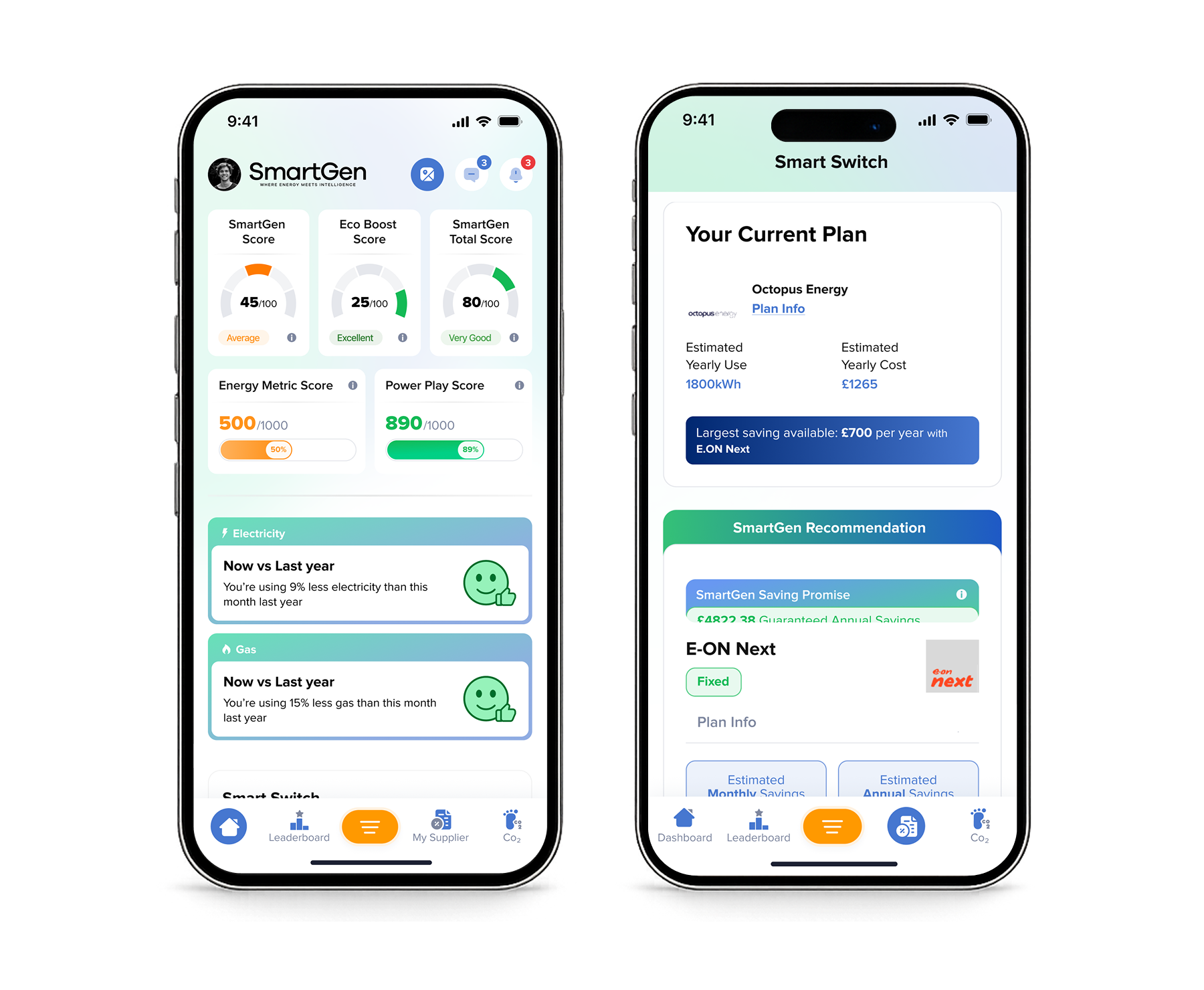
SmartGen Energy
Integrated smart-meter data, real-time insights, secure mobile infrastructure, and intelligent consumption experiences to connect household energy signals with actionable user guidance.
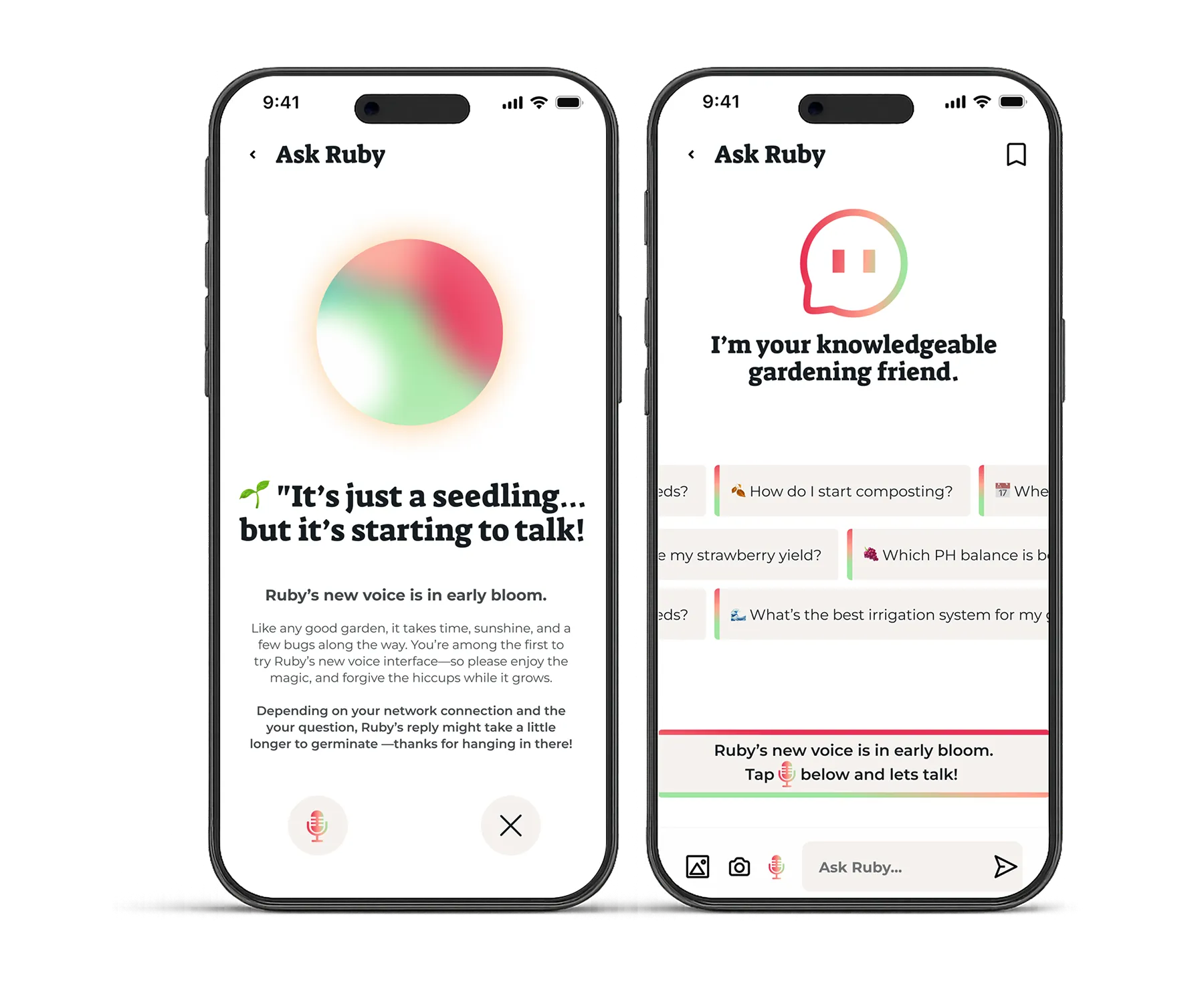
Integrated the GPT-powered assistant with RAG, weather, plant, and scheduling APIs to enable contextual gardening guidance, personalized recommendations, predictive alerts, and automated care routines.
Integrated an OpenAI GPT-powered RAG assistant with the platform’s knowledge base, workflows, contextual memory, and troubleshooting capabilities across registration, pricing, and event operations
Advancing LLM Integration From Strategy Through Production
Quokka Labs advances LLM initiatives from use-case evaluation through architecture, data integration, model connectivity, workflow orchestration, validation, deployment, and continuous performance optimization.
1
Use Case & Integration Assessment
Evaluate business objectives, user journeys, data requirements, model capabilities, latency expectations, security constraints, workload complexity, and success criteria to establish the right LLM integration approach.
2
Integration Architecture
Design application interfaces, model access, data flows, identity controls, retrieval layers, orchestration components, deployment environments, and observability foundations around scalability, resilience, and governance requirements.
3
Data & Knowledge Integration
Connect structured and unstructured information through ingestion pipelines, document processing, embeddings, metadata, search infrastructure, permissions, versioning, and retrieval mechanisms that preserve contextual relevance and traceability.
4
LLM & API Integration
Integrate selected models and business APIs using authentication, structured outputs, routing, retries, rate controls, fallback mechanisms, error handling, and provider abstraction suited to production workloads.
5
RAG, Tools & Workflow Integration
Combine retrieval, tool calling, agents, deterministic workflows, approvals, and event triggers to connect LLM reasoning with controlled actions, business processes, and system-level execution requirements.
6
Validation, Deployment & Optimization
Validate groundedness, task accuracy, latency, reliability, security, throughput, and cost before deployment, then monitor production behavior and refine models, prompts, retrieval, and workflows continuously.
Integrate LLM capabilities with EHR, EMR, HL7/FHIR, PACS, clinical terminology, and PHI workflows to support documentation, patient communication, clinical knowledge access, and administrative operations.
Integrate LLM capabilities with EHR, EMR, HL7/FHIR, PACS, clinical terminology, and PHI workflows to support documentation, patient communication, clinical knowledge access, and administrative operations.
Integrate LLM capabilities with KYC and AML workflows, core banking systems, payment platforms, SWIFT and ISO 20022 data, financial documents, and regulatory reporting processes.
Integrate LLM capabilities with PIM, OMS, POS, ERP, inventory systems, product catalogs, CDPs, payment APIs, and commerce platforms to support contextual product and customer experiences.
Integrate LLM capabilities with TMS, WMS, EDI, carrier APIs, shipment data, procurement systems, inventory platforms, and route information to support exception management and logistics workflows.
Embed LLM capabilities into SaaS products through REST and GraphQL APIs, CRM and ITSM systems, knowledge bases, Git repositories, telemetry, and CI/CD workflows.
LLM Integration Services Built Around Security, Governance, and Control
Quokka Labs embeds security controls, governance frameworks, privacy safeguards, and AI risk management across LLM architectures to protect data, regulate access, and maintain traceable AI interactions.
NIST AI RMF
ISO/IEC 42001
ISO/IEC 23894
OECD AI Principles
NIST AI RMF
ISO/IEC 42001
ISO/IEC 23894
OECD AI Principles
OWASP Top 10 for LLM Applications
MITRE ATLAS™
NIST Cybersecurity Framework
NIST SP 800-53
Zero Trust Architecture
OWASP Top 10 for LLM Applications
MITRE ATLAS™
NIST Cybersecurity Framework
NIST SP 800-53
Zero Trust Architecture
GDPR
HIPAA
CCPA/CPRA
EU AI Act
DPDP Act
GDPR
HIPAA
CCPA/CPRA
EU AI Act
DPDP Act
MLflow
Arize AI
Fiddler AI
Evidently AI
WhyLabs
LangSmith
MLflow
Arize AI
Fiddler AI
Evidently AI
WhyLabs
LangSmith
OAuth 2.0
OpenID Connect
SSO
RBAC
Encryption
Data Loss Prevention
OAuth 2.0
OpenID Connect
SSO
RBAC
Encryption
Data Loss Prevention
Partner With Us
Why Quokka Labs for Resilient and Adaptable LLM Integration
Quokka Labs builds resilient LLM architectures that adapt across models, data sources, APIs, tools, and workloads while optimizing integration reliability, contextual performance, scalability, and long-term technology flexibility.
Model Interoperability
Standardized model interfaces enable teams to evaluate providers, introduce new models, and switch capabilities without requiring major changes across application logic and integration layers.
Context Engineering
Enterprise knowledge, retrieval, memory, metadata, and context windows are structured around business objectives so LLMs receive relevant information and produce more reliable outputs.
Integration Resilience
Resilient integration layers use fallbacks, retries, timeouts, circuit breakers, asynchronous processing, and graceful degradation to maintain service continuity when models, APIs, or dependencies fail.
Provider-Agnostic Architecture
Provider-independent architecture separates application logic from model vendors through abstraction, routing, and standardized interfaces, allowing technology choices to evolve without costly application redesign.
Tool & API Connectivity
Governed tool and API connectivity allows LLMs to interact with approved business systems and databases while enforcing authentication, authorization, validation, execution boundaries, and auditability.
LLM Performance Optimization
Workload benchmarks guide optimization across response quality, latency, throughput, token consumption, retrieval efficiency, and infrastructure usage to balance technical performance with financial objectives.
Build an LLM architecture designed to evolve with your technology and business priorities.
Technology Infrastructure Built for Adaptable LLM Integration
Quokka Labs selects models, orchestration frameworks, data platforms, cloud infrastructure, integration technologies, and observability tools around workload requirements, architecture, security, scalability, and cost.
OpenAI
Insights
Perspectives on LLM Integration, Architecture, and Production AI
Explore practical perspectives on LLM architecture, model integration, RAG, AI agents, security, evaluation, observability, and the technology decisions shaping scalable AI adoption.
How AI & ML Can Transform The Mobile App Industry?
To tap into the next move of your users and mold them, artificial intelligence and machine learning services help you attain all the
Trusted by Teams Turning LLM Capabilities Into Production Systems
Quokka Labs helps technology teams integrate LLMs with applications, proprietary data, APIs, knowledge systems, and workflows to create scalable AI capabilities aligned with real business requirements.
0+
Years of Engineering Excellence
0+
AI Models Deployed & Integrated
0+
Engineers, Architects & AI Specialists
0+
Industries Served
Ready to Integrate LLMs?
Move Beyond Chatbots and Connect AI to Real Business Workflows
Whether you are scaling an existing LLM initiative or moving beyond isolated chatbot use cases, Quokka Labs connects AI with applications, data, APIs, knowledge systems, and workflows to create measurable business value.
LLM Integration Assessment
Evaluate use cases, model requirements, data readiness, architecture, security considerations, and measurable success criteria.
Integration Architecture Roadmap
Define model strategy, RAG architecture, APIs, tools, deployment patterns, observability, and optimization priorities.
Production LLM Engineering
Build resilient integrations with governance, evaluation, monitoring, lifecycle management, and cost-aware production architecture.
Take Your LLM Strategy Further
LLM Integration Services FAQs
What is LLM integration?
LLM integration connects large language models with applications, databases, APIs, knowledge sources, tools, and workflows so models can use relevant information and perform defined tasks.
Why is LLM integration important for businesses?
LLM integration allows AI capabilities to work within existing technology and business processes, enabling contextual assistance, knowledge retrieval, automation, decision support, and interaction with connected systems.
What systems can be integrated with an LLM?
LLMs can integrate with CRM and ERP platforms, databases, SaaS applications, APIs, document repositories, search systems, cloud services , internal tools, and workflow management platforms.
How does an LLM connect to an application?
An application typically communicates with an LLM through an API or integration layer that manages authentication, prompts, structured inputs, responses, error handling, rate limits, and application-specific business logic.
How can LLM integration improve workflow automation?
An integrated LLM can interpret natural-language requests, retrieve relevant information, classify content, generate structured outputs, invoke approved tools, and pass results between defined workflow steps.
What is model interoperability in LLM integration?
Model interoperability allows an application to work with different LLM providers or models through compatible interfaces, abstraction layers, routing mechanisms, or standardized input and output structures.
What is context engineering in LLM integration?
Context engineering involves deciding what information an LLM receives, how that information is retrieved and structured, and how prompts, memory, metadata, and context windows influence model performance.
Can an LLM use APIs and external tools?
Yes. Function calling and tool-use mechanisms allow an LLM application to invoke approved APIs, databases, search services, or business tools when the integration provides appropriate authentication and execution controls.
What should be considered before integrating an LLM?
Key considerations include the use case, model capabilities, data sensitivity, knowledge sources, integration dependencies, latency, expected traffic, security requirements, evaluation criteria, infrastructure, and ongoing cost.
How is LLM integration secured?
Security measures can include authentication, authorization, encryption, data filtering, prompt-injection defenses, output validation, access controls, runtime policies, audit logging, and monitoring of model interactions.














.webp)