Responsible AI Deployment Services for Trusted, Production-Ready AI Systems
Quokka Labs embeds governance, AI safety, policy controls, explainability, human oversight, and continuous monitoring into AI deployments, helping organizations achieve secure, compliant, auditable, and resilient AI operations throughout the deployment lifecycle.
AI Solutions That Strengthen Responsible AI Deployment
Deploying AI responsibly requires more than governance policies. Our AI solutions introduce runtime safeguards, validation mechanisms, oversight controls, and monitoring capabilities that reduce deployment risk across AI systems.
AI Governance & Runtime Protection
Protect Every AI Interaction Before It Reaches Production
Prevent prompt injection, data leakage, jailbreak attempts, unsafe outputs, and policy violations through runtime guardrails, AI firewall controls, prompt validation, continuous monitoring, and audit-ready governance.
Release Reliable Software Through Intelligent Quality Validation
Strengthen deployment quality through AI-assisted test recording, intelligent regression validation, release verification, CI/CD testing, cross-browser execution, and continuous software validation before production rollout.
Deliver Trusted AI Interactions Across Every Conversation
Develop AI assistants that retrieve verified knowledge, provide explainable responses, respect access permissions, escalate sensitive requests, and maintain governance controls across customer and internal interactions.
Responsible AI Deployment Services for Secure and Compliant AI
Our responsible AI deployment services integrate governance frameworks, runtime controls, deployment validation, and AI observability to establish trustworthy AI systems throughout their production lifecycle.
01
AI Safety Engineering
Identify unsafe model behavior through adversarial testing, hallucination analysis, toxicity detection, safety evaluations, and deployment validation before AI systems process sensitive requests or generate production responses.
02
AI Guardrails Implementation
Implement runtime guardrails that validate prompts, filter responses, detect and mitigate jailbreak attempts, reduce the risk of sensitive data exposure, and enforce AI usage policies throughout interactions with deployed models.
03
Human-in-the-Loop AI
Design approval workflows, escalation paths, confidence thresholds, and intervention mechanisms that preserve human accountability for sensitive decisions while allowing AI to support complex business processes.
04
AI Reliability Engineering
Evaluate hallucination rates, model and behavior changes, response consistency, retrieval accuracy, and inference quality to support dependable AI behavior as data patterns, models, and user interactions evolve.
05
AI Observability & Monitoring
Monitor AI behavior through model telemetry, policy violations, latency, audit logs, inference tracing, and behavioral analytics that accelerate issue detection and strengthen AI lifecycle visibility.
06
AI Policy Enforcement
Convert governance requirements into enforceable technical and runtime controls governing data access, model usage, identity permissions, retention, explainability requirements, and AI decision traceability across deployed applications.
07
AI Incident Response
Prepare AI systems for unexpected failures through incident playbooks, forensic logging, rollback procedures, root-cause investigations, remediation workflows, and post-incident reviews that strengthen future deployments.
Client Success Stories
Helping Organizations Deploy AI with Governance, Security, and Control
Discover how Quokka Labs strengthened AI governance, deployment validation, runtime safeguards, and intelligent quality engineering while reducing deployment risks across AI-powered software and digital platforms.
LangProtect
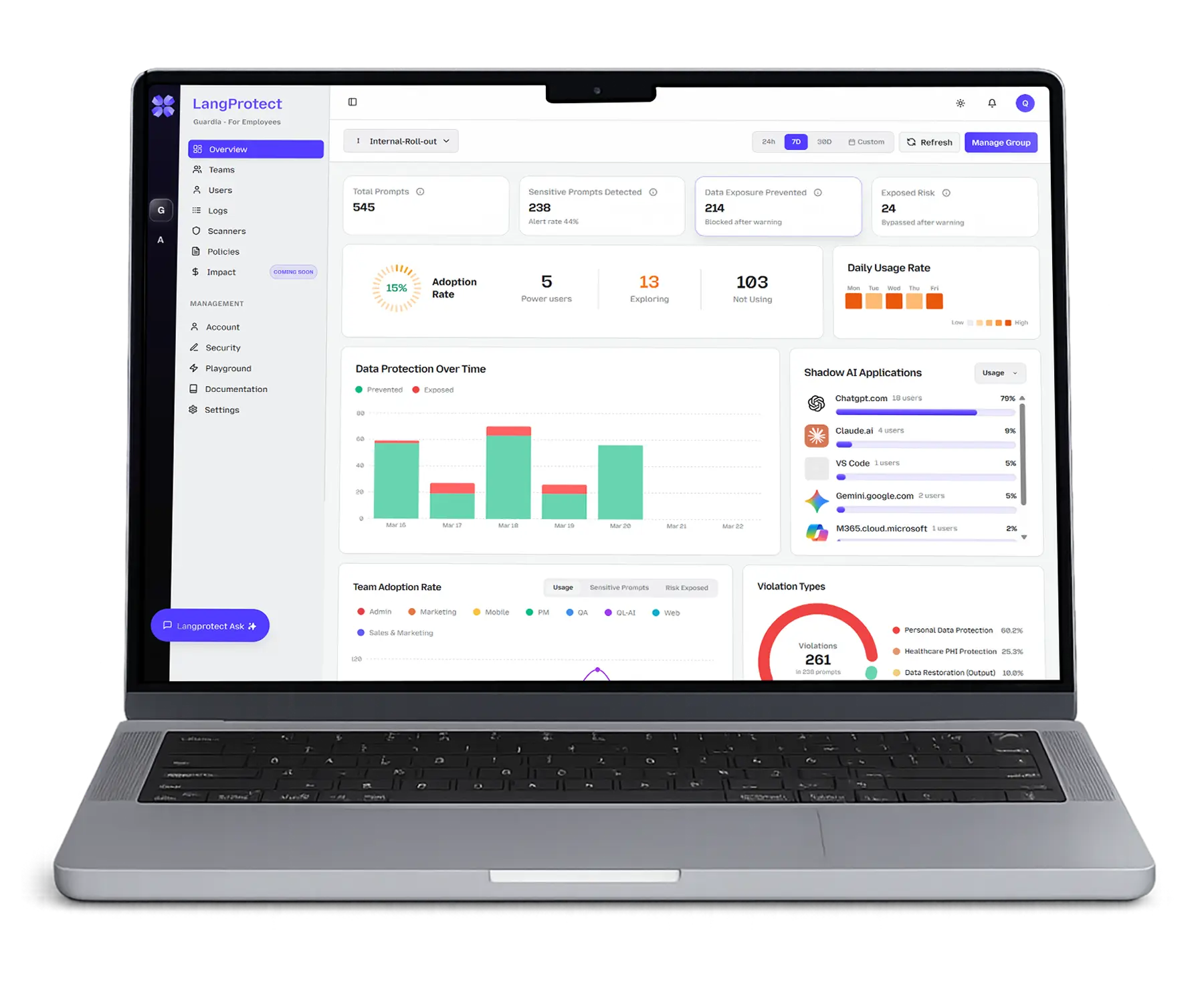
Quokka Labs enabled responsible AI deployment through LLM guardrails, prompt validation, runtime policy enforcement, and continuous risk monitoring, ensuring trusted AI interactions with human oversight and operational accountability.
Quokka Labs delivered responsible deployment of AI-powered security capabilities through intelligent threat detection, phishing protection, breach monitoring, and privacy controls, enabling trusted mobile experiences with continuous user protection.
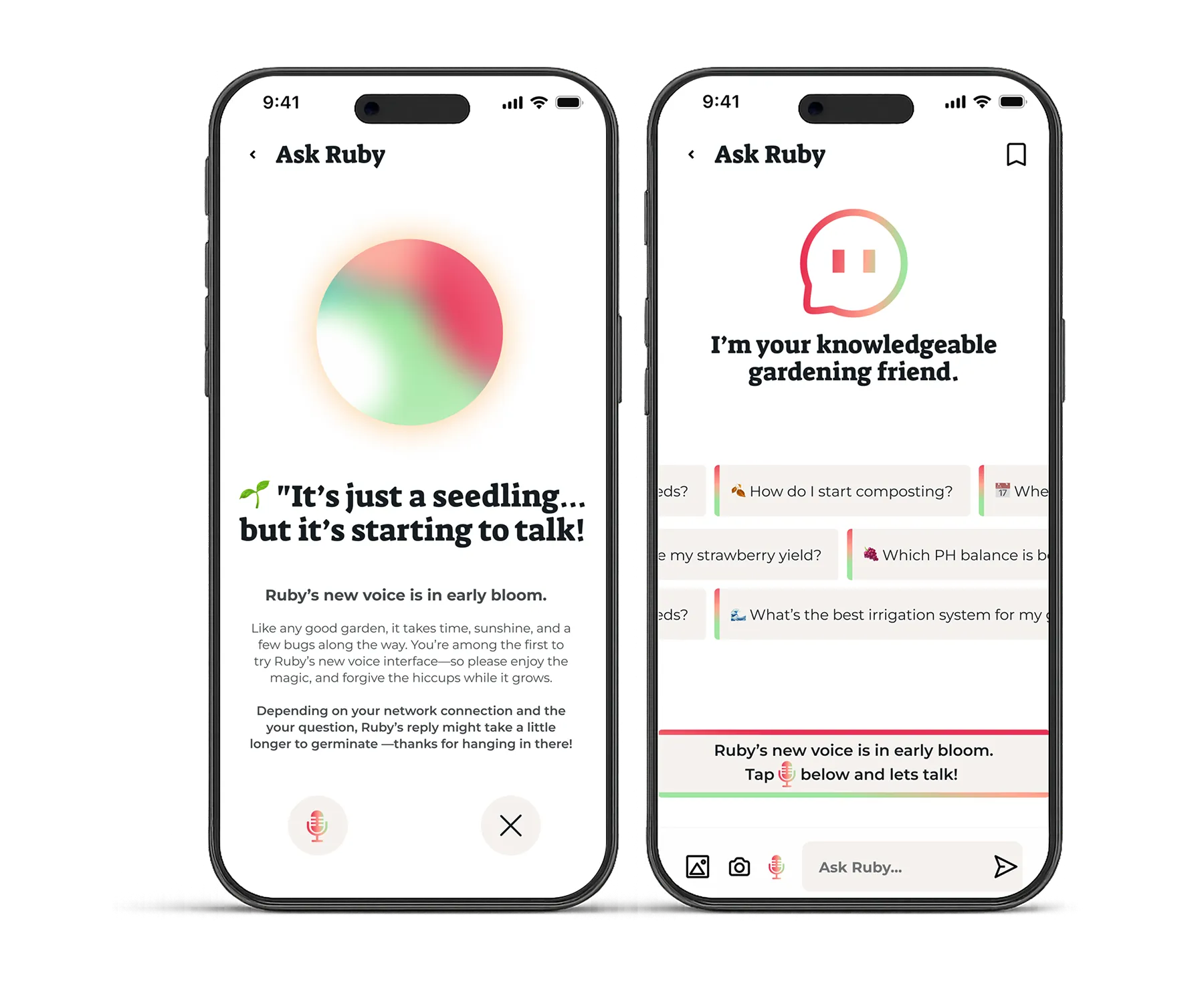
Quokka Labs deployed responsible AI through GPT-based conversational assistance, RAG, personalization, predictive models, and continuous learning, supporting context-aware gardening recommendations with controlled AI behavior and ongoing refinement.
How We Engineer Responsible AI Deployments from Design to Production
Quokka Labs embeds governance, deployment validation, AI assurance, runtime controls, and lifecycle oversight into every engagement, establishing secure, traceable, and policy-aligned AI systems from design through production.
1
Governance & Risk Assessment
We evaluate AI use cases, classify deployment risks, define governance principles, assign accountable owners, and establish approval criteria that align AI deployments with security, regulatory, and organizational requirements.
2
Data Governance & Access Validation
We assess data lineage, consent requirements, identity controls, RBAC policies, sensitive information handling, and ingestion safeguards to support data protection, appropriate access, and governance throughout AI training and inference workflows.
3
AI Safety Testing & Red Teaming
We perform adversarial testing, prompt injection assessments, jailbreak simulations, hallucination analysis, bias evaluations, and model validation to identify safety, security, reliability, and responsible-AI risks before AI systems reach production environments.
4
Guardrails & Deployment Controls
We implement runtime guardrails, policy enforcement, approval workflows, explainability mechanisms, and automated deployment gates that validate defined security, quality, and governance criteria before production releases.
5
Continuous AI Monitoring
We monitor hallucination rates, model and behavior changes, latency, policy violations, AI interactions, audit logs, and behavioral anomalies to support AI reliability after deployment.
6
AI Lifecycle Optimization
We manage model and system updates, retraining or adaptation strategies, version governance, compliance reviews, and performance evaluations that preserve AI quality as regulations, data, and business requirements evolve.
Deploy AI across clinical decision support, medical imaging, EHR workflows, diagnostic assistance, and revenue cycle management through applicable healthcare privacy requirements, PHI governance, HL7/FHIR interoperability, clinician oversight, and appropriate model transparency and explainability mechanisms.
Deploy AI across clinical decision support, medical imaging, EHR workflows, diagnostic assistance, and revenue cycle management through applicable healthcare privacy requirements, PHI governance, HL7/FHIR interoperability, clinician oversight, and appropriate model transparency and explainability mechanisms.
Deploy AI across KYC, AML, credit underwriting, fraud detection, transaction monitoring, and risk scoring through explainability mechanisms, fairness validation, model governance, auditability, regulatory controls, and human review where appropriate.
Govern AI-powered search, product recommendations, dynamic pricing, checkout assistants, fraud prevention, and customer support through applicable payment-security controls such as PCI DSS, identity and access controls, consent management, audit logging, and response validation.
Govern AI tutors, adaptive learning, proctoring, curriculum generation, and student support through applicable student-privacy requirements such as FERPA, learning analytics governance, assessment integrity, explainable recommendations, educator oversight, and learner data protection.
Govern AI for transportation planning, demand forecasting, warehouse automation, fleet management, WMS, TMS, shipment visibility, and route optimization through exception handling, decision traceability, and continuous AI and system monitoring.
Engineering AI That Meets Governance, Security, and Regulatory Standards
Quokka Labs aligns AI deployments with globally recognized governance frameworks, security controls, privacy regulations, and AI assurance practices that strengthen auditability, explainability, accountability, and policy enforcement.
ISO/IEC 42001
ISO/IEC 23894
NIST AI RMF
OECD AI Principles
IEEE 7000 Series
ISO/IEC 42001
ISO/IEC 23894
NIST AI RMF
OECD AI Principles
IEEE 7000 Series
OWASP Top 10 for LLM Applications
MITRE ATLAS
CSA AI Controls Matrix
NIST CSF 2.0
OWASP Top 10 for LLM Applications
MITRE ATLAS
CSA AI Controls Matrix
NIST CSF 2.0
EU AI Act
GDPR
CCPA/CPRA
DPDP Act
HIPAA
EU AI Act
GDPR
CCPA/CPRA
DPDP Act
HIPAA
Azure AI Content Safety
AWS Bedrock Guardrails
Google Model Armor
NVIDIA NeMo Guardrails
Azure AI Content Safety
AWS Bedrock Guardrails
Google Model Armor
NVIDIA NeMo Guardrails
IBM watsonx.governance
OneTrust AI Governance
Arize AI
Fiddler AI
WhyLabs
MLflow
IBM watsonx.governance
OneTrust AI Governance
Arize AI
Fiddler AI
WhyLabs
MLflow
LangSmith
Langfuse
Evidently AI
OpenTelemetry
Grafana
Datadog
LangSmith
Langfuse
Evidently AI
OpenTelemetry
Grafana
Datadog
Microsoft Entra ID
Okta
CyberArk
Keycloak
HashiCorp Vault
AWS IAM
Microsoft Entra ID
Okta
CyberArk
Keycloak
HashiCorp Vault
AWS IAM
ServiceNow IRM
OneTrust
AuditBoard
Archer
MetricStream
Microsoft Purview
ServiceNow IRM
OneTrust
AuditBoard
Archer
MetricStream
Microsoft Purview
Why Quokka Labs
Why Leaders Trust Quokka Labs for Responsible AI Deployment
Quokka Labs brings together AI architecture, governance engineering, security controls, and validation frameworks that reduce deployment risk while supporting explainable, auditable, and policy-aligned AI systems.
AI Deployment Governance
We engineer governance architectures integrating policy orchestration, deployment gates, model lineage, approval workflows, risk classification, and decision traceability to establish accountable AI deployments from development through production.
AI Assurance Frameworks
Our AI assurance frameworks combine safety validation, explainability analysis, fairness benchmarking, model and system evaluation, hallucination evaluation, and continuous assurance to assess AI behavior throughout the deployment lifecycle.
AI Risk & Compliance Management
By aligning AI deployments with regulatory frameworks, risk taxonomies, compliance controls, and governance policies, we reduce deployment exposure while strengthening audit readiness and policy conformance.
Runtime Control Architecture
Runtime control architectures enforce prompt guardrails, response filtering, inference validation, AI security gateway policies, identity-aware authorization, and policy execution across protected AI interactions and model endpoints.
AI Resilience Engineering
Through inference monitoring, model and behavior change detection, hallucination tracking, resilience testing, version governance, and rollback strategies, we support AI reliability as models, data, and usage patterns evolve.
Executive AI Oversight
Executive governance models establish AI ownership, approval authorities, escalation workflows, governance reporting, human review checkpoints, and lifecycle accountability to support transparent, policy-aligned AI system governance.
Every recommendation reflects your governance requirements, security policies, regulatory obligations, AI maturity, and long-term deployment strategy.
Technology Foundation Behind Responsible AI Deployment
Our engineering approach combines foundation models, AI guardrails, observability platforms, evaluation frameworks, cloud infrastructure, and deployment pipelines that strengthen AI reliability, traceability, and lifecycle governance.
OpenAI
Insights
Insights on Responsible AI Deployment and AI Governance
Explore expert perspectives on Responsible AI deployment, AI governance, runtime security, AI assurance, explainability, regulatory compliance, observability, and deployment practices shaping modern AI engineering.
Generative AI Implementation Strategy: From Concept to...
Generative AI only works at scale when you follow a clear strategy, not scattered experiments. This blog walks through a...
Trusted by Teams Building Secure, Governed, and Responsible AI Systems
AI experts at Quokka Labs help teams engineer governed AI deployments through structured validation, runtime safeguards, governance frameworks, and continuous assurance that strengthen explainability, auditability, and long-term AI reliability.
0+
AI Engineering Excellence
0+
AI Models & Intelligent Systems Delivered
0+
AI Governance & Risk Control Implementations
0+
AI Deployment Readiness Success Rate
Contact Us
Transform Responsible AI Principles Into Governed AI Deployments
Whether you're strengthening AI governance, implementing runtime guardrails, or preparing AI for regulatory review, Quokka Labs provides the engineering expertise required for responsible deployment.
AI Readiness Review
Assess governance maturity, deployment risks, and AI validation requirements before implementation.
Risk Validation
Identify vulnerabilities through AI safety testing, policy validation, and runtime assessments.
Specialized AI Engineering
Partner with our AI architects specializing in governance, runtime controls, and AI assurance
Discuss Your AI Governance and Deployment Priorities
Responsible AI development FAQs
What is Responsible AI Deployment, and why does it matter?
Responsible AI Deployment is the process of introducing AI systems into production with governance, security, explainability, human oversight, and continuous monitoring. It helps organizations manage AI risks, address applicable regulatory requirements, protect sensitive data, and support reliable AI performance throughout the AI system lifecycle.
How can organizations determine whether their AI systems are ready for responsible deployment?
Organizations should evaluate governance maturity, model validation, runtime controls, explainability, AI safety testing, deployment risks, and regulatory obligations. A structured AI readiness assessment helps identify gaps before AI systems are introduced into production environments.
What are the biggest risks of deploying AI without governance controls?
AI deployments without governance may introduce hallucinations, prompt injection attacks, data leakage, biased outcomes, policy violations, inconsistent responses, and limited auditability. These issues can affect security, regulatory compliance, customer trust, and decision quality.
Which industries benefit the most from Responsible AI Deployment Services?
Industries handling regulated data or high-impact decisions, including healthcare, financial services, education, logistics, e-commerce, and real estate, can benefit from Responsible AI Deployment by improving governance, explainability, security, and decision accountability.
What capabilities should organizations evaluate when selecting a Responsible AI Deployment partner?
Evaluate expertise in AI governance, runtime guardrails, explainability, AI assurance, deployment validation, observability, human oversight, regulatory compliance, incident response, and model lifecycle management. A capable partner should integrate these capabilities throughout the AI deployment lifecycle.
How do AI guardrails improve Responsible AI Deployment?
AI guardrails validate prompts, inspect model responses, detect or block defined unsafe interactions, enforce governance policies, and reduce risks such as prompt injection, sensitive data exposure, and policy violations across AI workflows.
What is the difference between AI governance and Responsible AI Deployment?
AI governance defines the policies, standards, and accountability models guiding AI usage. Responsible AI Deployment applies those governance principles through engineering controls, deployment validation, runtime safeguards, monitoring, and continuous AI assurance.
How do organizations maintain Responsible AI after deployment?
Responsible AI requires continuous observability, AI performance monitoring, model and behavior change detection, policy validation, audit logging, AI incident response, model or system update strategies, and periodic governance reviews to support reliable AI operations over time.
How do Responsible AI Deployment Services support regulatory compliance?
Responsible AI Deployment Services embed governance controls, audit trails, explainability mechanisms, policy enforcement, and continuous monitoring into AI systems, helping organizations align their deployments with applicable regulations, industry standards, and internal governance requirements throughout the AI lifecycle.
What should an AI deployment roadmap include before production rollout?
A well-defined AI deployment roadmap should include governance policies, risk assessments, data validation, AI safety testing, runtime guardrails, human oversight, deployment approvals, observability, and post-deployment monitoring to support secure and accountable AI adoption.














.webp)