Computer Vision Development Services for Production-Ready Business Systems
We engineer computer vision systems across visual data, models, applications, and infrastructure to automate visual tasks, generate real-time insights, improve decisions, and streamline workflows.
Computer Vision Solutions Built Around Your Visual Data and Business Workflows
We engineer computer vision solutions that interpret images, video, and documents, connecting visual information with intelligent decisions, automated workflows, business applications, and measurable operational outcomes.
Secure Visual Intelligence & Governance
Process Visual Data Without Compromising Control
Build governed vision systems with controlled data access, privacy safeguards, model monitoring, audit trails, human oversight, and policy enforcement across sensitive visual workflows and applications.
Transform Visual Inspection Into Continuous Quality Validation
Automate visual inspection, defect detection, anomaly identification, quality validation, and exception handling with computer vision connected to production workflows and continuous monitoring systems.
Build visual assistants that interpret images, documents, and video, retrieve relevant knowledge, explain findings, answer questions, and connect insights with business applications and workflows.
Computer Vision Development Services Across the Full Visual Intelligence Lifecycle
We deliver computer vision development across data preparation, model development, visual analytics, system integration, deployment, and lifecycle optimization to support reliable performance in production environments.
01
Object Detection & Tracking
Detect and track multiple objects using bounding boxes, confidence thresholds, embeddings, and multi-object tracking to support real-time monitoring, automation, and visual decision-making.
02
Image Recognition & Classification
Classify images, recognize visual patterns, and identify objects or scenes using deep learning models that convert unstructured imagery into structured signals for downstream workflows.
03
Image Segmentation
Separate images into meaningful regions using semantic, instance, and panoptic segmentation to support defect analysis, medical imaging, asset inspection, and precise visual measurement.
04
OCR & Document Intelligence
Extract text, fields, tables, and document structures using OCR, layout analysis, document classification, and intelligent extraction pipelines for high-volume processing and workflow automation.
05
Facial Recognition & Biometrics
Develop facial recognition and biometric systems for identity verification, access control, liveness detection, and matching workflows with privacy safeguards, secure data handling, and auditable processing for sensitive applications.
06
Pose Estimation & Motion Analysis
Analyze body key points, posture, gestures, movement patterns, and spatial relationships to support activity recognition, ergonomics, sports analytics, safety monitoring, and human-centered applications.
Client Success Stories
Proven Computer Vision Engineering Across Real-World Applications
Explore proven applications of computer vision across visual intelligence, automated inspection, video analytics, document processing, and intelligent workflows designed around complex business requirements and measurable outcomes.
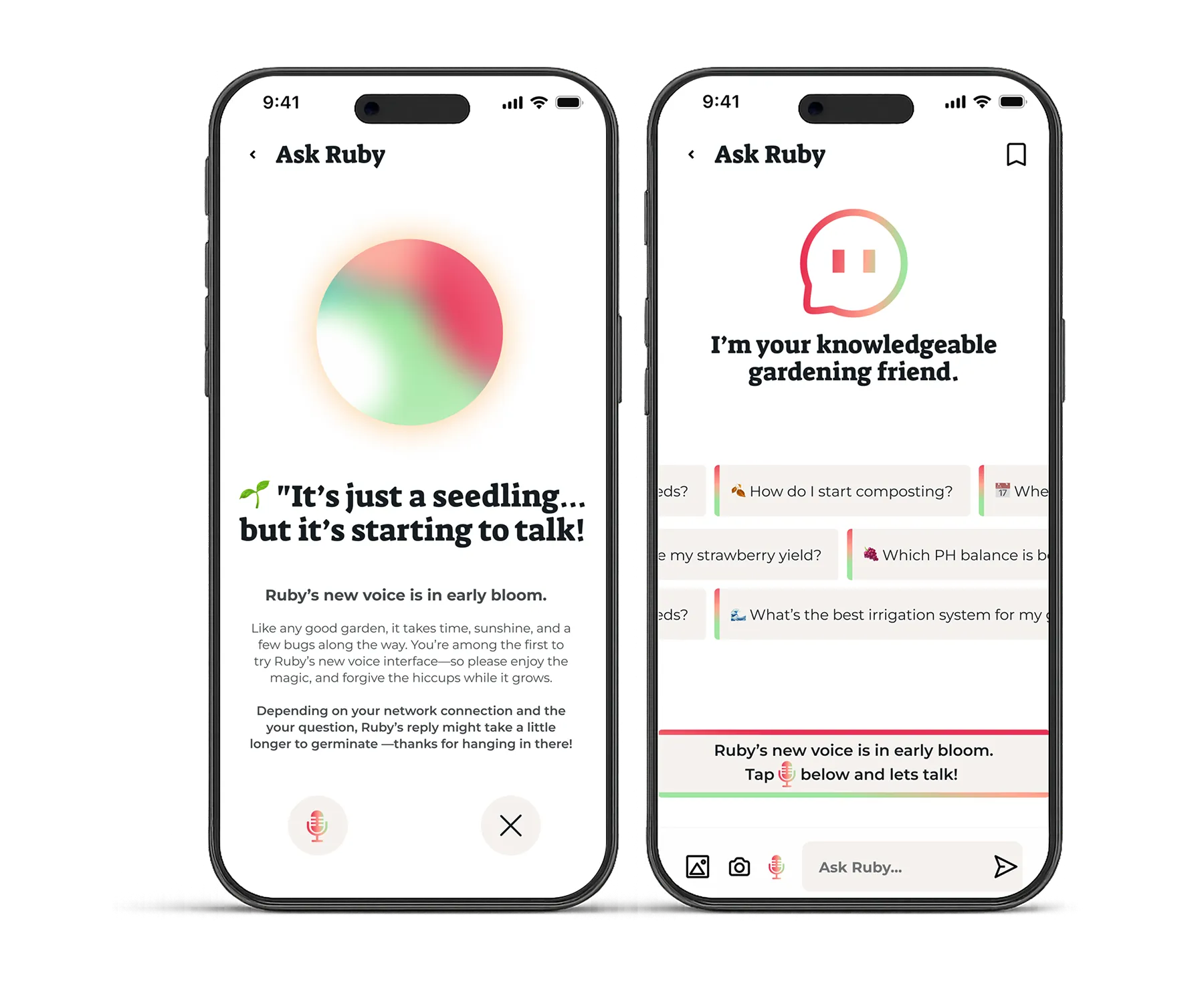
Rhubarb
Rhubarb’s AI-powered gardening experience combines image-based plant identification with contextual AI to support issue diagnosis and personalized care guidance across everyday plant-care workflows.
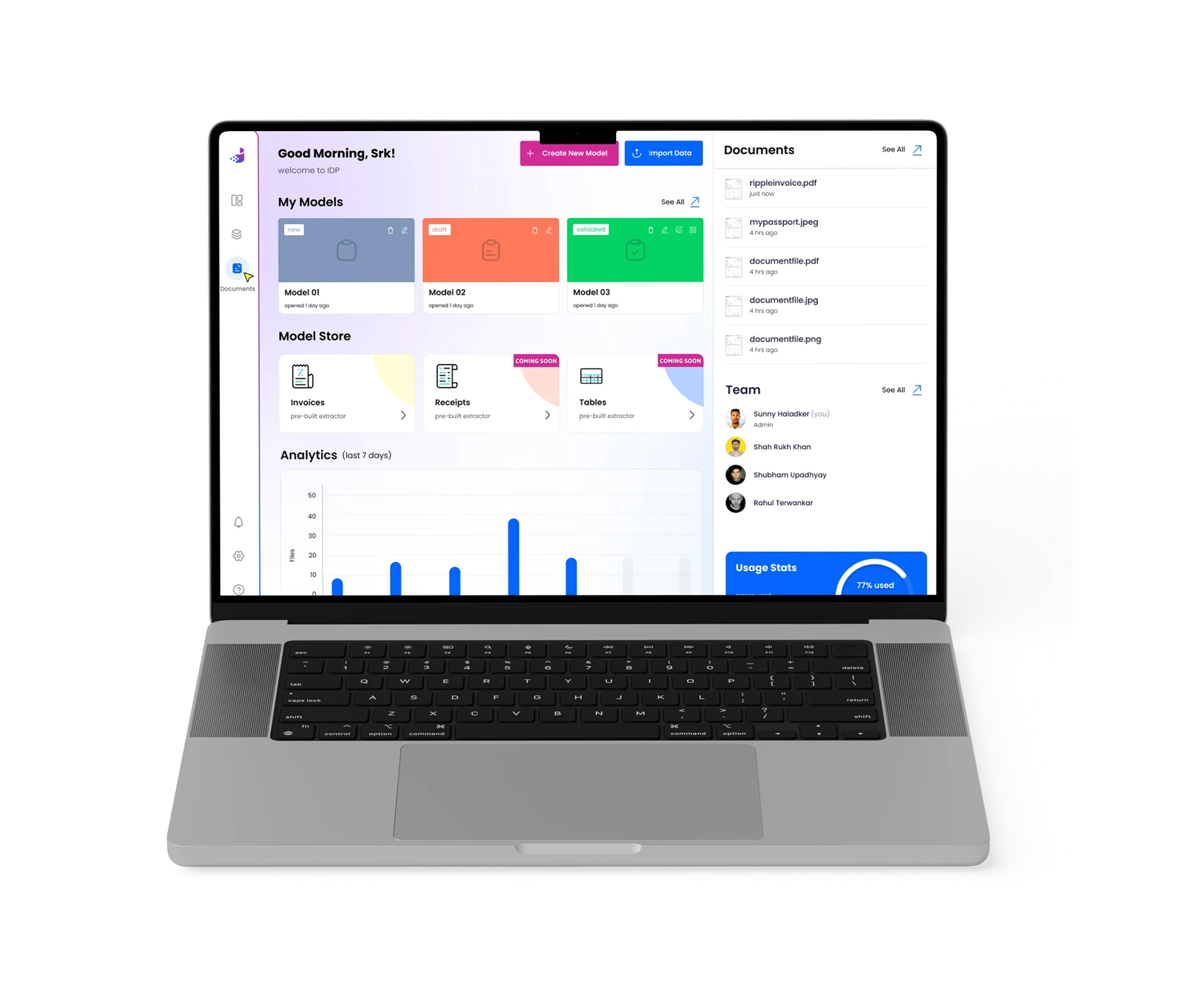
Hamta’s intelligent document processing platform uses automated document extraction and visual document understanding to convert complex documents into structured information for faster, more efficient business workflows.
Quokka Labs engineered SHL’s digital assessment platform using computer vision to analyze visual inputs within assessment workflows, supporting automated evaluation, accessibility, and scalable talent assessment.
Engineering Computer Vision From Visual Use Cases to Production Systems
We follow a structured computer vision development process that connects visual requirements, data quality, model performance, architecture, deployment constraints, and continuous optimization with measurable production objectives.
1
Vision Use Case Assessment
We assess visual requirements, target outcomes, operating conditions, data availability, latency expectations, accuracy thresholds, infrastructure constraints, and workflow dependencies to establish technical feasibility and scope.
2
Data Collection & Annotation
We collect, clean, label, and structure representative visual datasets while addressing class imbalance, annotation quality, environmental variation, rare scenarios, and critical edge cases.
3
Vision Architecture & Model Selection
We evaluate model architectures, pretrained models, inference environments, processing pipelines, edge or cloud deployment, integration patterns, latency, throughput, and resource requirements before implementation.
4
Model Development & Training
We train or fine-tune vision models using transfer learning, augmentation, hyperparameter optimization, dataset iteration, and workload-specific experimentation across representative visual scenarios and difficult edge cases.
5
Evaluation & Validation
We benchmark precision, recall, F1, mAP, IoU, false-positive rates, inference latency, throughput, resource utilization, and workload-specific acceptance criteria using representative validation datasets before production deployment.
6
Deployment & Continuous Optimization
We deploy across edge, cloud, or hybrid environments while monitoring drift, latency, throughput, resource usage, error patterns, and model performance to support controlled optimization and releases.
Apply medical image segmentation, pathology analysis, anomaly detection, and patient monitoring while integrating DICOM, PACS, HL7, and FHIR systems with HIPAA-aligned data protection.
Apply medical image segmentation, pathology analysis, anomaly detection, and patient monitoring while integrating DICOM, PACS, HL7, and FHIR systems with HIPAA-aligned data protection.
Strengthening Computer Vision Security, Governance, and Data Protection
We protect visual data, model integrity, access controls, privacy, and AI governance throughout development and deployment to support secure, compliant, and accountable computer vision systems.
NIST AI RMF
ISO/IEC 42001
ISO/IEC 23894
OECD AI Principles
NIST AI RMF
ISO/IEC 42001
ISO/IEC 23894
OECD AI Principles
MITRE ATLAS™
OWASP Machine Learning Security Top 10
NIST AI RMF
ISO/IEC 23894
MITRE ATLAS™
OWASP Machine Learning Security Top 10
NIST AI RMF
ISO/IEC 23894
GDPR
HIPAA
CCPA/CPRA
EU AI Act
DPDP Act
GDPR
HIPAA
CCPA/CPRA
EU AI Act
DPDP Act
MLflow
Arize AI
Fiddler AI
Evidently AI
WhyLabs
OpenTelemetry
MLflow
Arize AI
Fiddler AI
Evidently AI
WhyLabs
OpenTelemetry
OAuth 2.0
OpenID Connect
SSO
RBAC
Encryption
Data Loss Prevention
OAuth 2.0
OpenID Connect
SSO
RBAC
Encryption
Data Loss Prevention
Partner With Us
Why Choose Quokka Labs for Production-Grade Computer Vision Engineering
Quokka Labs combines computer vision, visual data engineering, infrastructure, and model optimization to build reliable vision systems aligned with real-world conditions, performance requirements, and business workflows.
Real-World Vision Accuracy
Our validation approach accounts for precision, recall, mAP, false positives, false negatives, lighting variation, occlusion, motion blur, camera differences, and difficult edge cases.
Edge & Cloud Vision Expertise
From localized inference to centralized processing, our architectures balance latency, bandwidth, privacy, connectivity, compute availability, and workload distribution across edge, cloud, and hybrid environments.
Vision Model Optimization
We optimize vision models through model selection, preprocessing, quantization, inference runtimes, hardware acceleration, and resource tuning to meet defined latency, throughput, and resource requirements.
Visual Data Engineering
Our data engineering workflows cover collection, cleaning, annotation, augmentation, dataset versioning, class balancing, quality validation, and edge-case coverage to create stronger foundations for evolving visual workloads.
Multimodal Vision Intelligence
By combining computer vision with vision-language models, LLMs, embeddings, RAG, and AI agents, visual information can be connected to contextual reasoning, knowledge retrieval, and downstream workflow execution.
Production Vision Reliability
Throughout the lifecycle, our teams track drift, inference latency, throughput, resource utilization, error patterns, model versions, and deployment changes to maintain predictable performance as visual conditions evolve.
We engineer visual intelligence around your data, workflows, and performance requirements.
Trusted By Teams Engineering Complex Computer Vision Systems
Computer vision engineering combines visual data, AI models, software, and infrastructure to address demanding technical requirements, production constraints, and measurable business objectives across complex operational environments.
0+
Years of AI Engineering Excellence
0%
AI Models Deployed & Integrated
0+
Engineers, Architects & AI Specialists
0+
Industries Served
Start Your Computer Vision Initiative
Ready to Turn Visual Data Into Business Value?
From visual inspection and video intelligence to new vision capabilities, production-ready systems can be engineered around your data, application requirements, performance targets, and operational constraints.
Vision Strategy
Assess use cases, data readiness, feasibility, architecture, and performance requirements before development.
Production Engineering
Build and integrate vision systems across applications, APIs, infrastructure, and business systems.
Lifecycle Optimization
Monitor model performance, data drift, inference efficiency, and changing visual conditions continuously.
Let's Engineer Your Vision Solution
Computer Vision Development Services FAQs
What is computer vision development?
Computer vision development covers visual data engineering, model development, image and video analysis, OCR, system integration, deployment, monitoring, and continuous optimization for production vision workloads.
What types of computer vision solutions can be developed?
Common applications include object detection, image classification, segmentation, OCR, document intelligence, video analytics, visual inspection, facial recognition, biometrics, pose estimation, and motion analysis.
How is computer vision model performance measured?
Common metrics include precision, recall, F1-score, mAP, IoU, false-positive rates, inference latency, throughput, resource utilization, and workload-specific acceptance criteria.
Can computer vision systems run on edge devices?
Yes. Vision workloads can run across edge, cloud, or hybrid architectures depending on latency, bandwidth, privacy, connectivity, compute capacity, and centralized management requirements.
Can computer vision integrate with existing business systems?
Yes. Vision outputs can connect with APIs, applications, cameras, IoT platforms, databases, ERP, MES, WMS, dashboards, and workflow systems through controlled integration architectures.
How is sensitive visual and biometric data protected?
Protection can include access controls, encryption, data minimization, retention policies, audit logging, privacy safeguards, anonymization, and governance controls based on data sensitivity and regulatory requirements.
Can computer vision work with LLMs and multimodal AI?
Yes. Computer vision can combine with vision-language models, LLMs, RAG, embeddings, and AI agents to interpret visual context, support reasoning, retrieve knowledge, and trigger workflows.
How can false positives and false negatives be reduced?
Accuracy can improve through better dataset coverage, annotation refinement, threshold tuning, class balancing, model optimization, edge-case evaluation, and validation against workflow-specific error tolerance.
What happens when a deployed computer vision model starts degrading?
Data and model drift can be investigated, new samples evaluated, models retrained or fine-tuned, updated versions validated, and controlled releases deployed to restore required performance.
How are computer vision models monitored after deployment?
Monitoring can track data drift, model performance, inference latency, throughput, resource utilization, false-positive trends, error patterns, and model versions to identify degradation and guide optimization.














.webp)