AI Workflow Automation Consulting for Complex Business Operations
Quokka Labs evaluates operational workflows, designs AI orchestration strategies, aligns LLMs, AI agents, RAG, human-in-the-loop controls, and business systems to establish governed automation architectures for resilient operations.
AI Workflow Solutions for High-Impact Operational Challenges
From AI governance and quality engineering to intelligent assistants, we help organizations evaluate purpose-built AI workflow solutions that integrate with business systems, operational processes, governance frameworks, and enterprise data.
AI Governance & Policy Automation
Govern AI Workflows Without Slowing Innovation
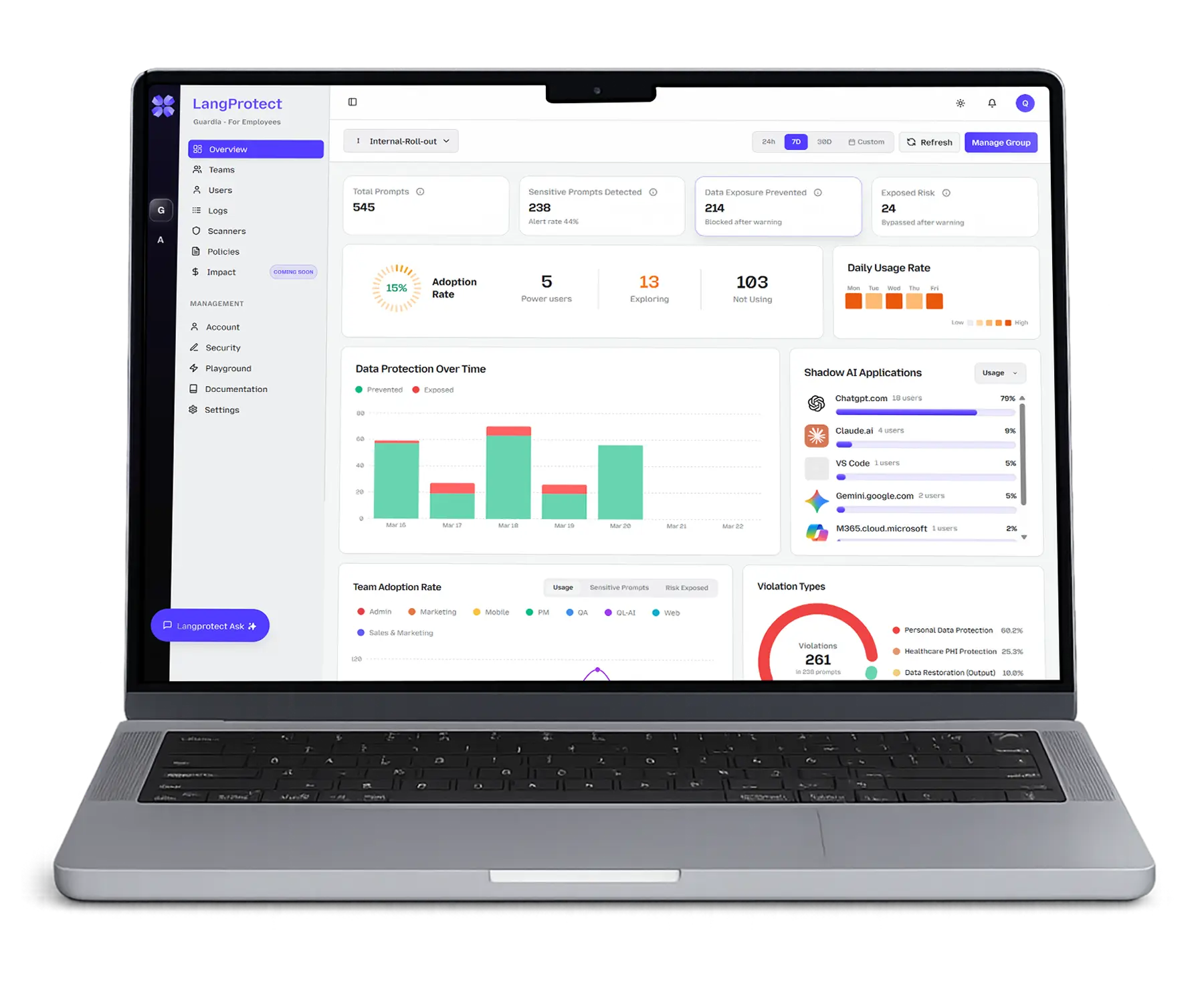
Evaluate AI governance capabilities that automate policy enforcement, monitor AI usage, protect sensitive information, strengthen audit readiness, and establish responsible controls across intelligent business workflows.
Modernize Software Testing Through Intelligent Automation
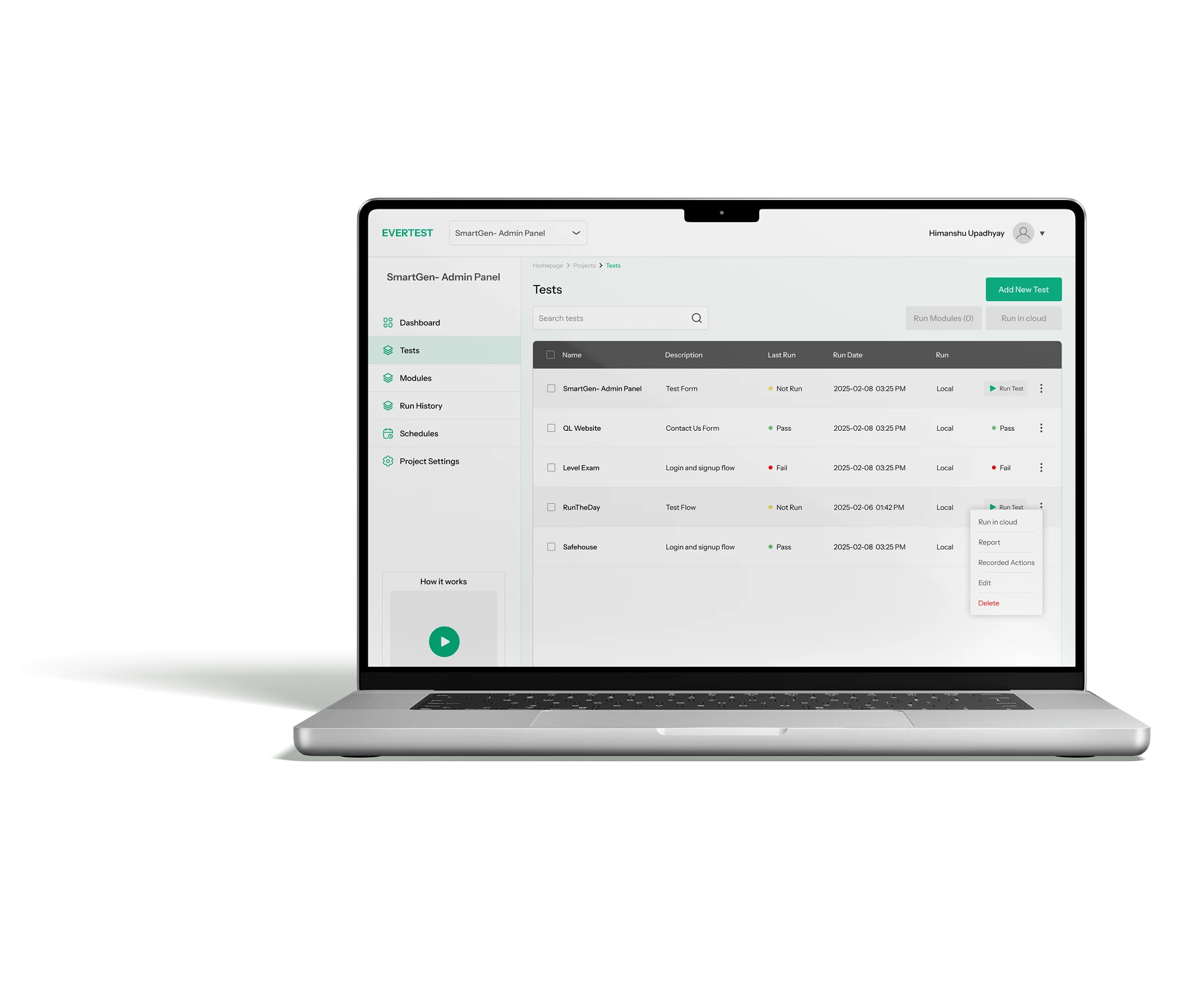
Assess AI-driven testing capabilities that automate workflow validation, regression execution, test maintenance, release verification, and quality reporting across modern software delivery pipelines.
Assess AI assistants that retrieve trusted knowledge, automate business interactions, support operational teams, and orchestrate workflows by connecting enterprise applications, documents, and business data.
Consulting for High-Friction, Cross-System Startup & Enterprise Workflows
Quokka Labs helps operations and technology leaders resolve manual handoffs, processing delays, inconsistent decisions, exception overload, and fragmented systems. We define which workflows should be automated, how people and AI should collaborate, and what architecture, controls, and investment roadmap are required for reliable execution.
01
Workflow Diagnostic & Process Intelligence
Map how work moves across teams, systems, documents, decisions, queues, and approvals. We identify bottlenecks, rework, process leakage, SLA delays, and exception patterns that create the strongest case for automation.
02
Automation Portfolio Prioritization
Evaluate workflows against transaction volume, manual effort, variability, business impact, data readiness, integration complexity, risk, and expected payback. The outcome is a ranked portfolio showing what to automate, redesign, defer, or retain under human control.
03
Human-AI Workflow Redesign
Redesign end-to-end processes around the right combination of employees, AI agents, workflow engines, business rules, and deterministic automation. We define ownership, handoffs, decision boundaries, approvals, and human intervention points.
04
Decision & Exception Architecture
Define how automated workflows should handle confidence thresholds, incomplete information, policy conflicts, failed transactions, sensitive decisions, and non-standard cases. This reduces uncontrolled AI actions while preventing routine exceptions from returning entirely to manual operations.
05
Document & Knowledge Workflow Strategy
Assess workflows dependent on contracts, invoices, forms, emails, policies, records, and internal knowledge. We define the appropriate use of document AI, RAG, extraction, classification, validation, routing, generation, and expert review.
06
Integration & Orchestration Blueprint
Design how workflows should connect ERP, CRM, ITSM, HRIS, content repositories, data platforms, APIs, event streams, and legacy applications. The blueprint defines process state, data exchange, identity context, failure recovery, and system-of-record ownership.
07
Automation Governance & Operating Model
Establish workflow ownership, approval authority, segregation of duties, role-based access, audit requirements, exception accountability, change control, and performance governance. We also define how business, IT, security, risk, and automation teams should operate together.
08
Pilot-to-Scale Roadmap
Convert prioritized opportunities into controlled pilots with defined scope, success metrics, evaluation thresholds, integration dependencies, service levels, cost baselines, and production-readiness gates. The roadmap sequences delivery across rapid wins and cross-functional transformation priorities.
Client Success Stories
Helping Organizations De-Risk AI Workflow Automation Before Implementation Begins
Learn how structured workflow assessments, platform evaluations, governance planning, and AI adoption strategies reduced implementation risks while creating scalable foundations for intelligent business automation initiatives.
Run The Day (RTD)
Quokka Labs automated workflows for a race and event management platform through an AI-powered event assistant that streamlined attendee support, coordinated event operations, and reduced manual administrative tasks across the event lifecycle.
Quokka Labs automated AI governance workflows through real-time policy enforcement, continuous risk monitoring, and intelligent compliance controls, enabling secure AI operations with minimal manual oversight.
How We Transform AI Workflow Opportunities into Enterprise-Ready Strategies
Every engagement begins with understanding your operational workflows before evaluating AI readiness, governance, architecture, and automation opportunities to create an implementation-ready strategy and execution roadmap.
1
Business Context Mapping
We evaluate business priorities, operational workflows, business systems, data ecosystems, governance requirements, and existing AI initiatives to identify organizational constraints, automation opportunities, and strategic transformation priorities.
2
Initiative & Readiness Triage
Our AI workflow automation consultants assess workflow candidates based on business value, operational complexity, AI readiness, data availability, integration feasibility, governance requirements, and expected organizational impact to prioritize automation initiatives.
3
AI Workflow Architecture
We design the target AI workflow architecture across organizational systems, RAG pipelines, AI agents, orchestration platforms, APIs, identity services, and knowledge repositories while defining interoperability and technology standards.
4
Governance & Control Framework
We establish governance models covering AI ownership, decision authority, human-in-the-loop controls, model governance, data access, security policies, auditability, compliance, and operational accountability across automated workflows.
5
Strategic Validation
We assess technical feasibility, workflow dependencies, data quality, integration readiness, AI model suitability, operational risks, and governance requirements to validate automation strategies before business investment decisions.
6
Investment & Transformation Strategy
We translate assessment findings into executive recommendations by defining automation priorities, technology direction, operating principles, investment sequencing, expected business value, and strategic implementation considerations.
7
Enterprise Adoption Roadmap
We develop a phased transformation roadmap covering implementation priorities, governance milestones, organizational readiness, capability development, value measurement, and continuous optimization for scalable AI workflow automation.
Quokka Labs evaluates workflows at the value-chain level connecting operational economics, process dependencies, startup and enterprise systems, regulatory controls, decision accountability, and workforce impact. We help organizations determine where AI should assist, decide, act, escalate, or remain under human control.
Prioritize AI automation across KYC, AML, lending, payment operations, fraud detection, and reconciliation using model governance, explainability, regulatory controls, and transaction-risk frameworks.
Prioritize AI automation across KYC, AML, lending, payment operations, fraud detection, and reconciliation using model governance, explainability, regulatory controls, and transaction-risk frameworks.
-SaaS
Optimize customer onboarding, subscription lifecycle, support operations, DevOps, and billing workflows through AI orchestration, API ecosystems, observability, SLA governance, and operational resilience.
-Healthcare
Align AI workflow strategies for prior authorization, revenue cycle, clinical administration, and medical documentation with HIPAA, EHR integration, HL7, FHIR interoperability, PHI governance, and clinician oversight.
-Real Estate
Modernize lease administration, transaction management, PropTech operations, document workflows, and tenant services through document intelligence, approval orchestration, CRM integration, and governance controls.
-Logistics
Streamline transportation planning, warehouse coordination, shipment visibility, customs documentation, and carrier operations through TMS, WMS, ERP connectivity, exception governance, and orchestration strategies.
-GCCs
Standardize AI workflow governance across finance, HR, procurement, legal, IT, and compliance through shared operating models, automation portfolios, service ownership, and performance accountability.
Establishing Trusted AI Workflows Through Security, Governance, and Compliance
We align AI workflow strategies with recognized security frameworks, governance standards, privacy regulations, and responsible AI practices to support trusted, compliant, and scalable automation initiatives.
HIPAA
SOC 2
ISO 27001
PCI DSS
GDPR
CCPA
DPDP Act
HIPAA
SOC 2
ISO 27001
PCI DSS
GDPR
CCPA
DPDP Act
NIST AI RMF
ISO/IEC 42001
Model Cards
Risk Classification
Human Oversight
Audit Trails
NIST AI RMF
ISO/IEC 42001
Model Cards
Risk Classification
Human Oversight
Audit Trails
OWASP LLM Top 10
Prompt-Injection Defense
Data-Loss Prevention
Adversarial Testing
Agent Guardrails
OWASP LLM Top 10
Prompt-Injection Defense
Data-Loss Prevention
Adversarial Testing
Agent Guardrails
GDPR Consent
CCPA Rights
Data Minimization
PII Protection
Data Retention
Encryption
GDPR Consent
CCPA Rights
Data Minimization
PII Protection
Data Retention
Encryption
SSO
OAuth 2.0
OpenID Connect
SAML
MFA
RBAC
Okta
Auth0
SSO
OAuth 2.0
OpenID Connect
SAML
MFA
RBAC
Okta
Auth0
Secure SDLC
DevSecOps
SAST
DAST
API Security
Dependency Scanning
Secrets Management
Secure SDLC
DevSecOps
SAST
DAST
API Security
Dependency Scanning
Secrets Management
AWS
Microsoft Azure
Google Cloud
Kubernetes
Docker
Terraform
Policy as Code
AWS
Microsoft Azure
Google Cloud
Kubernetes
Docker
Terraform
Policy as Code
LLM Evaluation
Hallucination Monitoring
Model Drift
Agent Tracing
Red Teaming
CI/CD
Regression Testing
LLM Evaluation
Hallucination Monitoring
Model Drift
Agent Tracing
Red Teaming
CI/CD
Regression Testing
Why Quokka Labs
AI Workflow Consulting Backed by Architecture, Engineering, and Delivery Expertise
Quokka Labs combines process consulting, architecture, AI engineering, systems integration, governance, and Agile delivery to turn complex workflow opportunities into secure, implementation-ready transformation programs.
Process Mining & Value Engineering
We evaluate workflow volume, cycle time, rework, exception rates, labour effort, SLA impact, and process leakage to prioritize initiatives with defensible operational and financial value.
Architecture Integration
Our recommendations account for ERP, CRM, ITSM, HRIS, APIs, identity platforms, event streams, data systems, and legacy applications—ensuring workflow designs can operate within the existing technology estate.
Human-in-the-Loop Governance
We define decision thresholds, approval gates, escalation paths, exception ownership, segregation of duties, and audit requirements so AI-driven workflows remain controlled and accountable.
Vendor-Neutral Orchestration
We evaluate AI models, agent frameworks, workflow engines, integration platforms, and RPA technologies against process complexity, interoperability, governance, resilience, and total cost of ownership.
Agile Delivery Methodology
Engagements progress through discovery, workflow sprints, architecture validation, controlled pilots, production gates, and phased rollout—reducing risk while maintaining alignment across business, technology, security, and operations teams.
Workflow Observability & Value Realization
We establish workflow telemetry, SLA monitoring, exception analytics, model evaluation, cost controls, adoption metrics, and value baselines to determine what should be scaled, optimized, redesigned, or retired.
Every recommendation is tailored to your workflows, technology landscape, governance requirements, and long-term AI strategy.
Technologies Powering Intelligent AI Workflow Automation Consulting
Quokka Labs evaluates startups and enterprise AI platforms, workflow orchestration technologies, integration ecosystems, and governance frameworks to design secure, scalable, and implementation-ready AI workflow automation strategies.
OpenAI
Insights
Insights on AI Workflow Automation, Enterprise Strategy, and Operations
Explore expert insights on AI workflow automation, enterprise AI strategy, workflow orchestration, AI governance, intelligent process automation, agentic AI, and automation frameworks that help organizations plan AI adoption with confidence.
Enterprise
AI Automation: How Businesses Are Streamlining Workflows with Intelligent Systems
AI automation is transforming how businesses work by reducing manual tasks, improving efficiency, and enabling data-driven decisions. ...
10 AI Automation Business Use Cases with Real-World Examples ...
AI automation is transforming businesses by eliminating repetitive tasks, reducing errors, and boosting efficiency across finance, HR, marketing, compliance ...
10 AI Automation Business Use Cases with Real-World Examples ...
AI automation is transforming businesses by eliminating repetitive tasks, reducing errors, and boosting efficiency across finance, HR, marketing, compliance ...
Trusted by Teams Modernizing Complex Operational Workflows
Quokka Labs combines workflow analysis, AI architecture, startup and enterprise integration, and governance expertise to help operations and technology leaders replace manual, fragmented processes with controlled and measurable automation.
0+
AI-Enabled Business Processes Modernized
0+
AI Workflow Automation Consulting Excellence
0+
AI, ERP & CRM Integrations Delivered
0%
Enterprise Workflow Adoption Rate
Contact Us
Ready to Move Enterprise AI From Pilots to Governed Scale?
Whether you're exploring AI adoption, assessing workflow automation opportunities, or defining an AI implementation roadmap, Quokka Labs provides strategic guidance for confident, scalable, and governance-driven decision-making.
Response Within 24 Hours
Discuss AI workflow goals with experienced AI automation consultants.
AI Workflow Assessment
Receive prioritized automation opportunities with actionable strategic recommendations.
15+ Years Excellence
Delivering software, AI, and workflow transformation consulting
Book AI Workflow Consultation
AI Workflow Automation Consulting FAQs
What is AI Workflow Automation Consulting?
AI workflow automation consulting helps organizations evaluate existing workflows, identify AI automation opportunities, assess technical readiness, and develop governance frameworks, technology recommendations, and implementation roadmaps before deployment begins.
How do you identify workflows suitable for AI automation?
We assess workflow complexity, manual effort, process dependencies, decision points, system integrations, data availability, and business impact to prioritize automation opportunities that deliver measurable operational value.
How do you evaluate an organization's AI readiness?
Our assessment reviews data maturity, application architecture, integration capabilities, governance models, security requirements, operational processes, and organizational readiness to determine the feasibility and priority of AI initiatives.
What industries benefit from AI workflow automation consulting?
Organizations across healthcare, financial services, retail, manufacturing, logistics, education, real estate, and technology benefit by identifying AI opportunities while addressing industry-specific operational and regulatory requirements.
How do you address AI governance and compliance?
We establish governance frameworks, human-in-the-loop controls, security recommendations, compliance considerations, audit requirements, and responsible AI practices that support trusted and accountable workflow automation initiatives.
What deliverables are included in an AI workflow automation consulting?
Typical deliverables include workflow assessments, AI opportunity maps, technology evaluations, governance recommendations, architecture guidance, automation priorities, and phased implementation roadmaps tailored to your organization.
Can AI workflow automation consulting support legacy system modernization?
Yes. We assess legacy applications, business processes, integration constraints, and modernization opportunities to define AI workflow strategies that align with existing systems while reducing operational complexity and implementation risk.
How to choose the best AI consulting firms for workflow and ops automation?
The best AI consulting firms for workflow and ops automation evaluate business processes, AI readiness, governance requirements, architecture, and implementation feasibility before recommending automation strategies. Look for firms with expertise in workflow assessment, AI governance, startup and enterprise integrations, and scalable operating models rather than technology implementation alone.
Why hire an AI workflow automation consultant?
An AI workflow automation consultant helps organizations identify automation opportunities, evaluate AI technologies, establish governance frameworks, assess operational readiness, and create implementation roadmaps that reduce risk while maximizing long-term business value.
How can AI consultants for workflow automation startups help growing businesses?
AI consultants for workflow automation startups help founders prioritize automation opportunities, design scalable AI architectures, establish governance practices, evaluate technology platforms, and create practical roadmaps that support sustainable growth without introducing unnecessary operational complexity.












.webp)