AI Policy Management Services for Standardized AI Governance and Policy Enforcement
Quokka Labs helps organizations transform AI policies into enforceable governance through structured policy frameworks, lifecycle management, approval workflows, technical controls, and continuous oversight that support secure, accountable AI adoption.
AI Solutions Built Around Policy Intelligence and Governance Controls
Our AI solutions help organizations establish policy-aware AI experiences through governed interactions, automated validation, controlled knowledge access, and technical safeguards that reinforce consistent AI governance.
AI Policy Enforcement & Guardrails
Keep AI Interactions Aligned with Approved Policies
Govern AI interactions through prompt guardrails, response validation, runtime policy enforcement, AI firewall controls, risk scoring, audit logging, and model-agnostic governance that strengthens policy compliance across deployed AI applications.
Release AI Applications That Follow Approved Policies
Validate AI policy compliance through AI-assisted test recording, automated regression testing, guardrail verification, release validation, CI/CD quality checks, and audit-ready test evidence before software deployment.
Deliver Responses That Follow Approved AI Policies
Develop AI assistants that retrieve governed knowledge, apply role-based permissions, follow approved policy guidance, escalate policy exceptions, and maintain consistent AI interactions across connected business applications.
Standardizing AI Governance Through Intelligent AI Policy Management Services
Quokka Labs establishes AI policy management capabilities that connect policy authoring, lifecycle governance, distribution, enforcement, exception handling, and policy change management into a structured framework supporting accountable AI decision-making.
01
Policy Authoring & Standardization
Define structured AI policies covering acceptable AI usage, model governance, data handling, human oversight, approval criteria, and security requirements that establish consistent governance standards across AI initiatives.
02
Policy Lifecycle Management
Manage AI policies through structured reviews, stakeholder approvals, version control, scheduled assessments, retirement planning, and governance checkpoints that keep policies current with evolving technologies and regulations.
03
Policy Distribution & Acknowledgement
Distribute AI policies through role-based workflows, acknowledgement tracking, policy attestations, centralized access, and documented acceptance records that strengthen governance visibility and organizational accountability.
04
Policy Enforcement Automation
Convert machine-enforceable AI policy requirements into technical controls through policy engines, runtime guardrails, automated validations, approval workflows, and continuous compliance checks across AI applications and intelligent agents.
05
Policy Exception Management
Manage AI policy exceptions through structured requests, risk assessments, mitigation planning, approval workflows, exception reviews, and documented justifications that maintain governance integrity while supporting controlled AI adoption.
06
Policy Change Governance
Govern AI policy updates through controlled change requests, impact assessments, stakeholder reviews, version governance, approval workflows, and policy communication that keeps governance aligned with changing regulatory obligations.
Client Success Stories
Helping Organizations Establish Accountable AI Policy Management Systems
Discover how structured AI policy frameworks, runtime policy enforcement, governance controls, and continuous policy oversight helped organizations strengthen AI accountability, regulatory readiness, and policy compliance across AI initiatives.
LangProtect
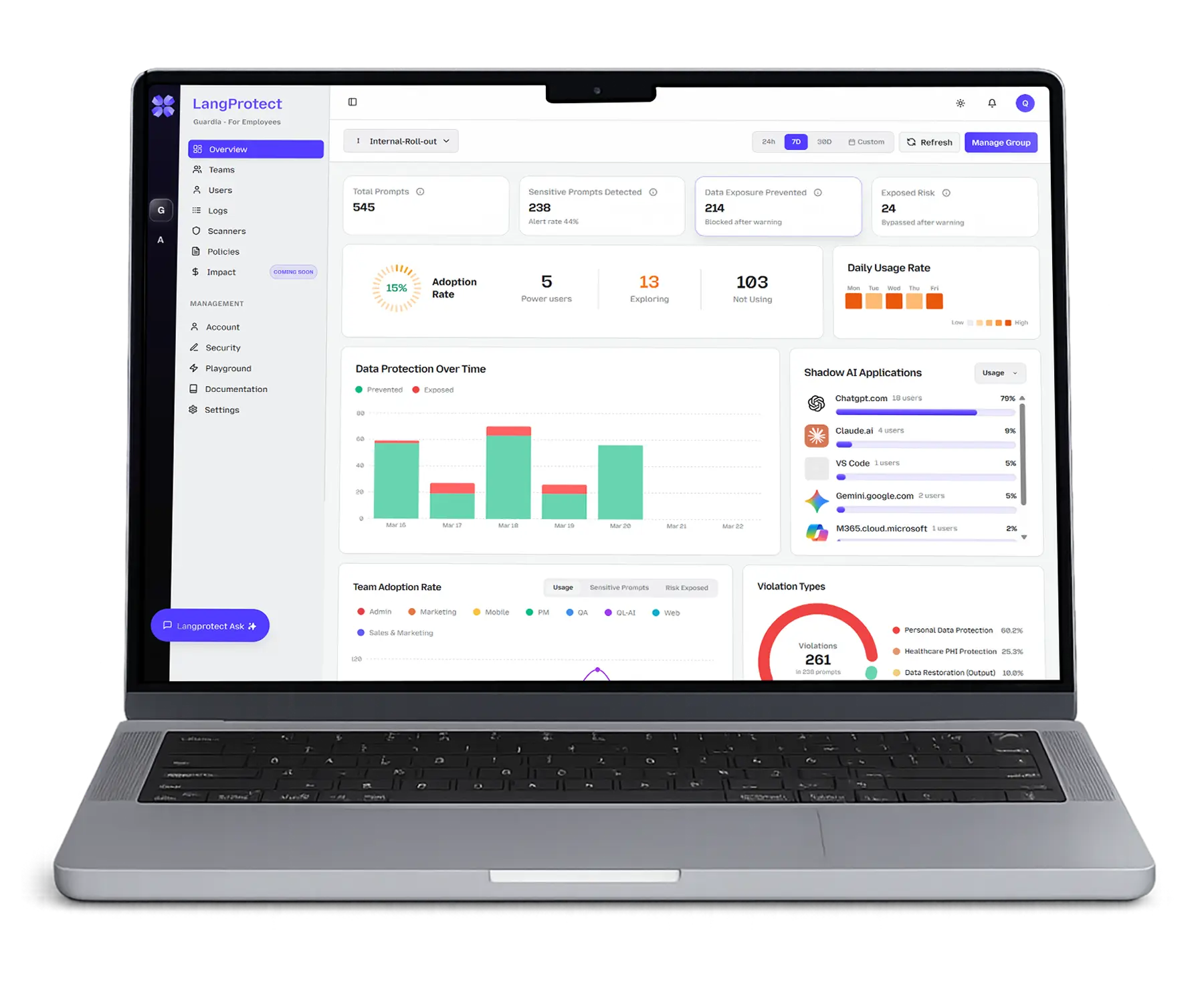
Quokka Labs built an AI policy management platform that centralizes policy authoring, version control, runtime enforcement, and continuous monitoring, enabling consistent AI behavior and automated policy governance across LLM-powered applications.
Quokka Labs built structured AI controls into Run The Day’s race management assistant, governing contextual guidance across registration, pricing, fundraising, and race-day workflows for consistent execution.
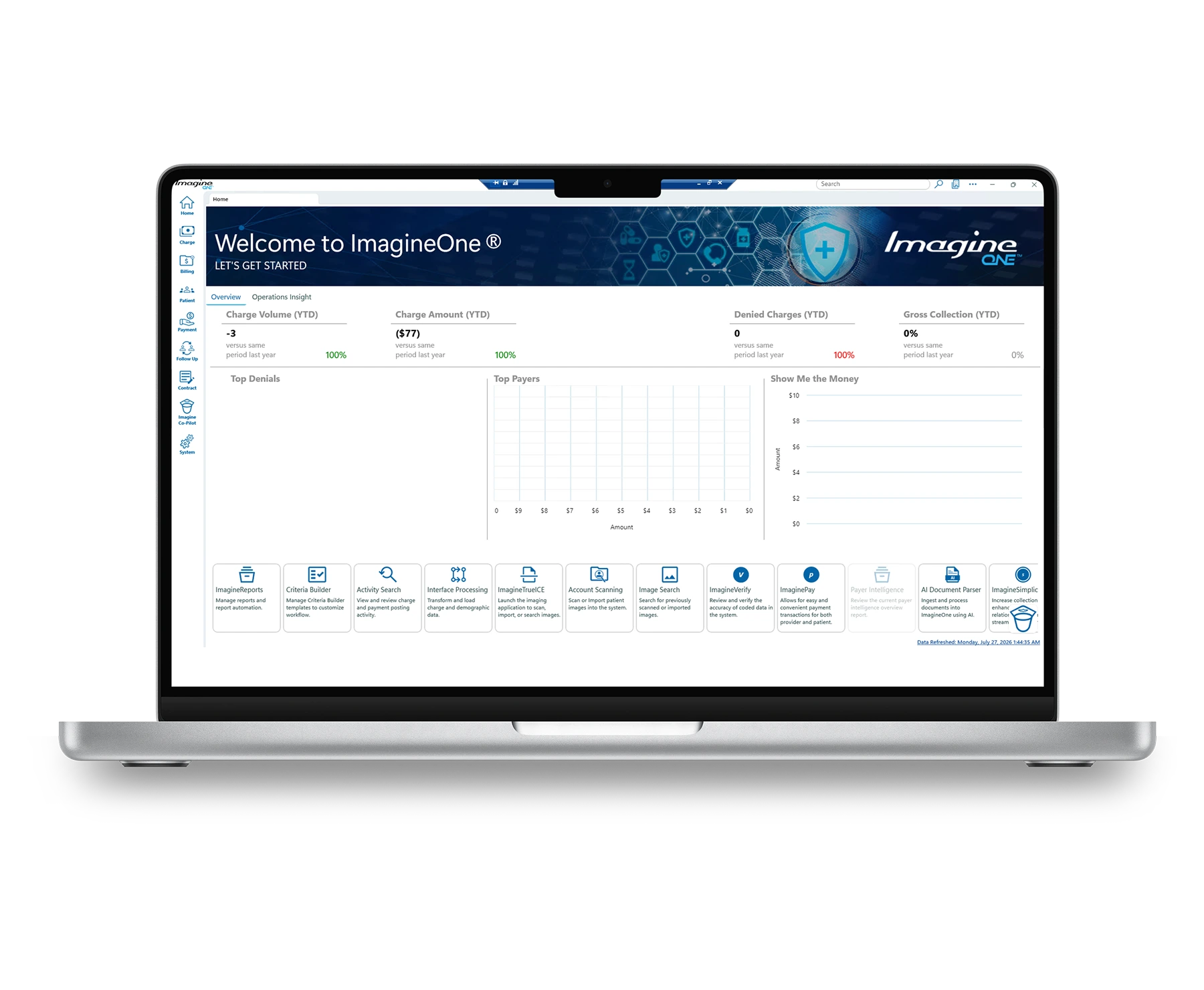
Quokka Labs built governed AI workflows for claims intelligence, applying controlled data access, validation rules, and model governance to support consistent, traceable decisions across healthcare revenue-cycle processes.
How We Transform AI Policies into Enforceable Governance Across the Organization
Quokka Labs follows a structured AI policy management approach that connects AI discovery, policy engineering, governance controls, technical enforcement, and continuous policy refinement to establish consistent, traceable, and auditable AI governance.
1
Policy Discovery & AI Inventory
We identify AI systems, foundation models, intelligent agents, business use cases, data classifications, ownership structures, and Shadow AI while establishing a centralized inventory that defines the scope for policy management.
2
Risk Classification & Policy Design
We classify AI initiatives by risk, define acceptable AI usage, establish policy boundaries, map regulatory obligations, assign governance responsibilities, and create policies aligned with organizational objectives and AI maturity.
3
Policy Engineering & Implementation
We translate machine-enforceable AI policy requirements into governance workflows, policy engines, approval processes, role-based permissions, runtime controls, and technical guardrails that help govern AI behavior in production environments.
4
Policy Validation & Organization-Wide Adoption
We validate policy implementation and effectiveness through governance reviews, stakeholder approvals, policy acknowledgements, software testing, guardrail verification, documentation, and controlled rollout across teams adopting AI capabilities.
5
Continuous Monitoring & Policy Evolution
We monitor policy adherence, runtime events, audit evidence, policy exceptions, model and system changes, governance metrics, and regulatory changes while continuously refining AI policies as technologies and requirements evolve.
Define AI policies for PHI protection, HIPAA-aligned data protection, EHR integration using FHIR, clinical decision support, medical documentation, clinician approvals, explainability, consent management, and patient data governance.
Define AI policies for PHI protection, HIPAA-aligned data protection, EHR integration using FHIR, clinical decision support, medical documentation, clinician approvals, explainability, consent management, and patient data governance.
Standardize AI policies covering tenant isolation, API governance, RBAC, AI copilots, prompt governance, customer data protection, feature releases, model access, and multi-tenant AI governance practices.
Establish AI policies governing student data privacy, FERPA-aligned student data protection, AI-assisted learning, academic integrity, assessment automation, content moderation, educator oversight, admissions processes, and responsible AI usage across learning platforms.
Establish AI policies supporting citizen services, procurement governance, explainable AI decisions, records management, administrative transparency, explainable AI decisions, document automation, and regulatory accountability across public institutions.
Strengthening AI Policy Management Through Security, Governance, and Compliance
Quokka Labs aligns AI policy management with recognized governance frameworks, security standards, regulatory obligations, and policy controls that strengthen accountability, audit readiness, policy enforcement, and responsible AI usage.
ISO/IEC 42001
ISO/IEC 23894
NIST AI RMF
OECD AI Principles
IEEE 7000 Series
ISO/IEC 42001
ISO/IEC 23894
NIST AI RMF
OECD AI Principles
IEEE 7000 Series
OWASP Top 10 for LLM Applications
MITRE ATLAS
CSA AI Controls Matrix
NIST CSF 2.0
OWASP Top 10 for LLM Applications
MITRE ATLAS
CSA AI Controls Matrix
NIST CSF 2.0
EU AI Act
GDPR
CCPA/CPRA
DPDP Act
HIPAA
EU AI Act
GDPR
CCPA/CPRA
DPDP Act
HIPAA
Azure AI Content Safety
AWS Bedrock Guardrails
Google Model Armor
NVIDIA NeMo Guardrails
Azure AI Content Safety
AWS Bedrock Guardrails
Google Model Armor
NVIDIA NeMo Guardrails
IBM watsonx.governance
OneTrust AI Governance
Arize AI
Fiddler AI
WhyLabs
MLflow
IBM watsonx.governance
OneTrust AI Governance
Arize AI
Fiddler AI
WhyLabs
MLflow
LangSmith
Langfuse
Evidently AI
OpenTelemetry
Grafana
Datadog
LangSmith
Langfuse
Evidently AI
OpenTelemetry
Grafana
Datadog
Microsoft Entra ID
Okta
CyberArk
Keycloak
HashiCorp Vault
AWS IAM
Microsoft Entra ID
Okta
CyberArk
Keycloak
HashiCorp Vault
AWS IAM
ServiceNow IRM
OneTrust
AuditBoard
Archer
MetricStream
Microsoft Purview
ServiceNow IRM
OneTrust
AuditBoard
Archer
MetricStream
Microsoft Purview
Partner With Us
Quokka Labs Engineers AI Policy Management with Accountability at Every Stage
Quokka Labs combines AI engineering, governance expertise, and implementation excellence to establish policy frameworks, technical controls, lifecycle governance, and continuous policy assurance that adapt to evolving AI technologies and regulatory expectations.
Governance Operating Models
Our team establishes governance operating models defining AI ownership, policy authorities, approval hierarchies, governance committees, escalation paths, and decision responsibilities that support consistent AI policy management across business functions.
Decision Accountability
Every engagement defines accountability for AI-enabled decisions where applicable through approval workflows, human oversight requirements, policy ownership, segregation of duties, review checkpoints, and documented governance responsibilities.
Rule Engineering
Rather than relying on static documentation, we transform machine-enforceable AI policy requirements into technical controls through policy logic, decision criteria, runtime controls, validation mechanisms, policy engines, and automated policy enforcement.
Cross-Functional Alignment
By bringing together Legal, Security, Risk, Compliance, Technology, and business stakeholders, we establish standardized policy workflows, governance responsibilities, approval coordination, and shared accountability for AI implementation.
Operational Traceability
AI policy decisions and governance activities are supported through policy acknowledgements, approval histories, audit evidence, version governance, and documented records that simplify internal reviews and regulatory assessments.
Adaptive Operating Practices
As AI technologies and regulations evolve, our approach continuously refines policies through governance reviews, effectiveness assessments, stakeholder feedback, controlled revisions, and structured change management.
Our approach adapts to your AI adoption goals, governance priorities, regulatory requirements, and evolving technology landscape.
Technology That Powers Intelligent AI Policy Management
Every AI policy requires the right technology to govern AI behavior, automate policy enforcement, manage approvals, monitor policy adherence, and maintain consistent oversight across connected AI systems.
OpenAI
Insights & Perspectives
Insights on AI Policy Management and Governance
Explore expert insights on AI policy management, governance frameworks, policy engineering, regulatory developments, governance operating models, and practical strategies that help organizations establish accountable AI decision-making.
What an AI-Native Development Team Actually Builds: Inside the..
AI-native development goes beyond connecting products to model APIs. It requires an integrated stack spanning product,...
Quokka Labs helps teams establish AI policy management through engineering expertise, governance excellence, and measurable policy controls that strengthen accountability, regulatory readiness, and responsible AI decision-making across business functions.
0+
Years of Engineering Secure AI Systems
0%
Policy Control Coverage
0%+
AI Policy Adherence Rate
0x7
Policy Monitoring & Enforcement
Contact Us
Is Your AI Ready for Policy-Driven Governance? Let’s Find Out
Whether you're establishing AI policies, strengthening governance practices, preparing for regulatory obligations, or improving policy enforcement, Quokka Labs helps create structured AI policy management frameworks that support consistent, accountable AI adoption.
AI Policy Assessment
Evaluate AI policy maturity, governance gaps, approval workflows, and policy enforcement priorities.
Governance Roadmap
Receive a phased strategy for policy engineering, lifecycle governance, and technical implementation.
15+ Years of Engineering Expertise
Collaborate with specialists across AI policy engineering, governance architecture, AI security, and compliance.
Schedule Your AI Policy Management Consultation
AI Policy Management FAQs
Why do organizations need AI policy management?
As AI adoption expands across teams and business functions, organizations need consistent policies to define acceptable AI usage, approval responsibilities, security requirements, human oversight, and regulatory obligations. Without structured policy management, AI initiatives often become inconsistent, difficult to monitor, and challenging to audit.
What should an AI policy management framework include?
A comprehensive AI policy management framework typically includes AI usage policies, governance roles, approval workflows, policy lifecycle management, risk classification, human oversight requirements, policy enforcement mechanisms, exception management, version control, audit records, and regulatory mapping.
How are AI policies enforced across AI applications?
Organizations can enforce AI policies through technical controls such as policy engines, runtime guardrails, role-based access controls, approval workflows, prompt validation, response filtering, audit logging, and continuous monitoring. These controls help ensure AI systems operate within approved organizational policies.
Which regulations should AI policies align with?
The applicable regulations depend on the industry and region. Many organizations align AI policies with frameworks such as the EU AI Act, ISO/IEC 42001, NIST AI Risk Management Framework (AI RMF), GDPR, HIPAA, FERPA, and other sector-specific governance and privacy requirements.
How often should AI policies be reviewed and updated?
AI policies should be reviewed regularly to reflect changes in AI technologies, regulatory requirements, organizational objectives, emerging risks, and new AI use cases. Many organizations schedule periodic reviews while also updating policies whenever significant AI systems or governance requirements change.
How can organizations measure the effectiveness of AI policy management?
Organizations typically evaluate AI policy management through metrics such as policy adherence rates, policy acknowledgement completion, control coverage, audit readiness, exception resolution time, regulatory alignment, and the consistency of AI decision-making across deployed AI systems.
What types of AI policies should organizations establish?
Organizations often establish policies covering acceptable AI usage, data privacy, prompt usage, model selection, human oversight, third-party AI tools, AI-generated content, security controls, incident response, and regulatory compliance based on their industry and risk profile.
What challenges do organizations face without AI policy management?
Without structured AI policies, organizations often experience inconsistent AI usage, unclear ownership, policy violations, unmanaged AI tools, limited governance visibility, audit challenges, and increased regulatory and security risks.
What should organizations evaluate when selecting an AI policy management services?
Organizations should evaluate governance expertise, policy engineering capabilities, regulatory framework knowledge, technical implementation experience, policy lifecycle management, audit readiness, and the ability to translate AI policies into enforceable technical controls.
Can AI policy management support both internally developed and third-party AI solutions?
Yes. A structured AI policy management approach should govern internally developed AI applications, commercial AI platforms, foundation models, AI assistants, and third-party AI services through consistent policy standards and governance controls.














.webp)