AI Business Process Automation for Smarter Operations
Quokka Labs engineers AI business process automation using agentic workflows, process intelligence, and API-first orchestration to reduce cycle times, lower operating costs, eliminate manual work, and improve efficiency, governance, and decision-making.
AI-Native Solutions Built for Enterprise-Scale Automation
Extend AI business process automation with secure conversational systems, autonomous QA, and governed deployment capabilities that reduce operational overhead, accelerate release velocity, and control production AI risk.
Enterprise AI Chatbots & Assistants
Automate Knowledge, Support, and Operational Workflows
Build RAG-enabled enterprise assistants that retrieve governed knowledge, execute approved actions, maintain contextual memory, and integrate with CRM, ERP, ITSM, and internal systems.
Accelerate Release Cycles with Autonomous Quality Engineering
Automate test generation, journey capture, regression execution, defect triage, and release validation using AI agents, computer vision, and continuous CI/CD quality gates.
Scale Production AI Without Compromising Enterprise Control
Operationalize AI with RBAC, policy enforcement, PII protection, model observability, audit trails, runtime guardrails, and human-in-the-loop controls across regulated enterprise environments.
AI Business Process Automation for Modern Business Operations
Quokka Labs engineers AI business process automation solutions that reduce process latency, eliminate repetitive work, improve decision accuracy, and orchestrate end-to-end workflows across cloud, ERP, CRM, APIs, SaaS, and legacy systems.
01
AI Automation Strategy & Process Intelligence
Identify high-value automation opportunities through process mining, workflow diagnostics, value-stream analysis, and ROI modeling to establish a governed roadmap for scalable AI business process optimization solutions.
02
Agentic Workflow Automation
Deploy context-aware AI agents that execute multistep processes, coordinate tools, manage exceptions, and route human approvals across complex operational environments.
03
Intelligent Document Processing
Automate document classification, data extraction, validation, enrichment, and downstream processing using OCR, NLP, computer vision, and large language models.
04
Enterprise System Integration
Connect AI workflows with ERP, CRM, BPM, data platforms, SaaS applications, and legacy systems through secure APIs, event-driven architecture, and integration middleware.
05
AI Decision Automation
Operationalize predictive models, business rules, retrieval-augmented generation, and real-time data signals to accelerate high-volume, policy-controlled enterprise decisions.
06
AI Governance, Observability & Optimization
Implement model lifecycle management, audit trails, role-based access, policy enforcement, performance monitoring, and human-in-the-loop controls for production-grade AI-powered enterprise automation.
AI Business Process Automation Portfolio
AI Automation Systems Delivering Measurable Outcomes
Explore production-grade, AI-powered business solutions that reduce manual effort, accelerate task execution, improve governance, and operationalize intelligent workflows across customer support, quality assurance, security, and revenue operations.
ImagineOne
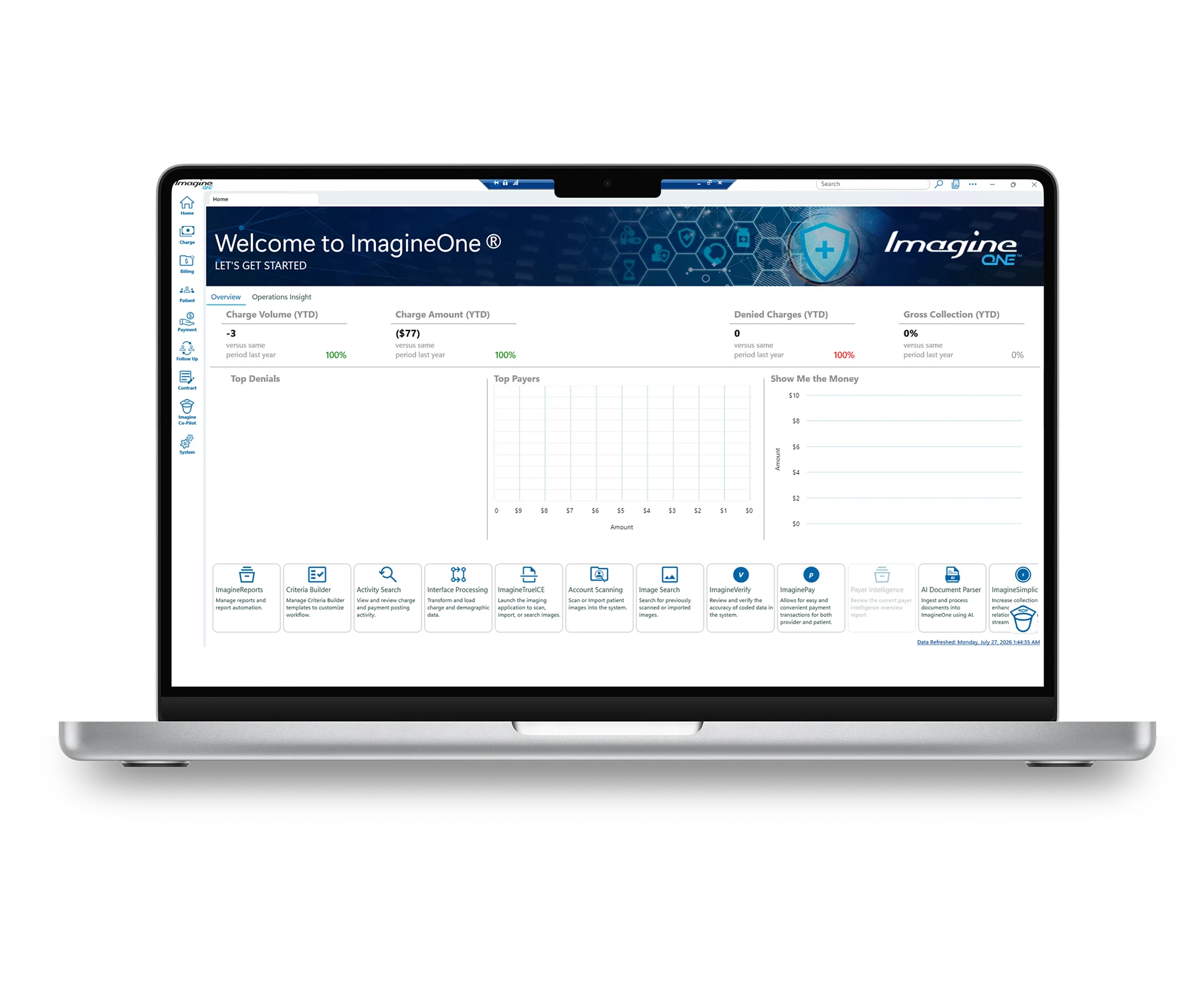
An AI-powered healthcare revenue-cycle management platform that orchestrates billing, claims, denials, patient engagement, and financial operations through integrated RPA, intelligent automation, predictive analytics, and centralized workflow control.
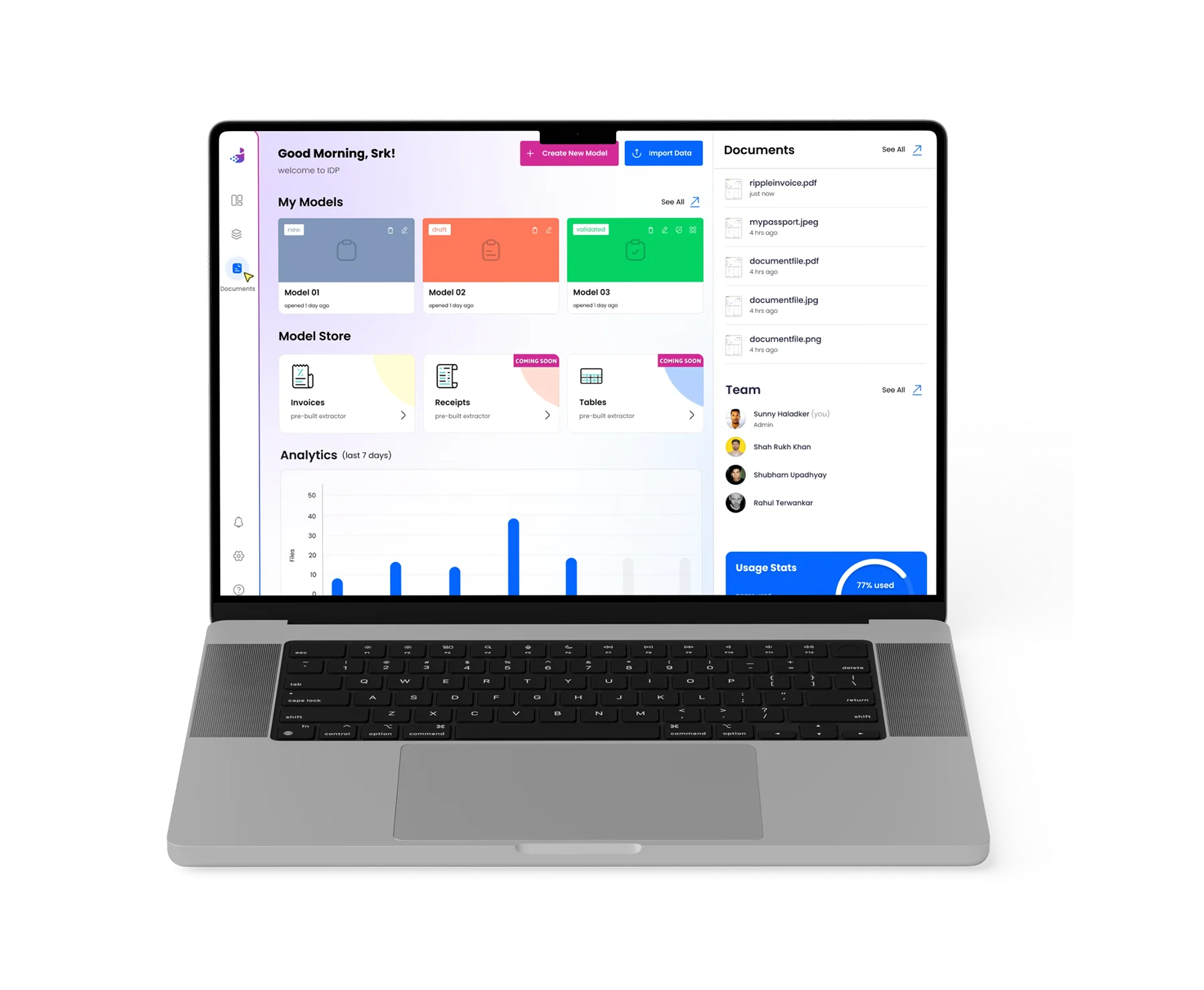
A no-code intelligent document-processing platform that automates document-centric workflows, reduces manual handling, and improves operational accuracy. Quokka Labs engineered its frontend experience, accessibility layer, and optimized user interactions.
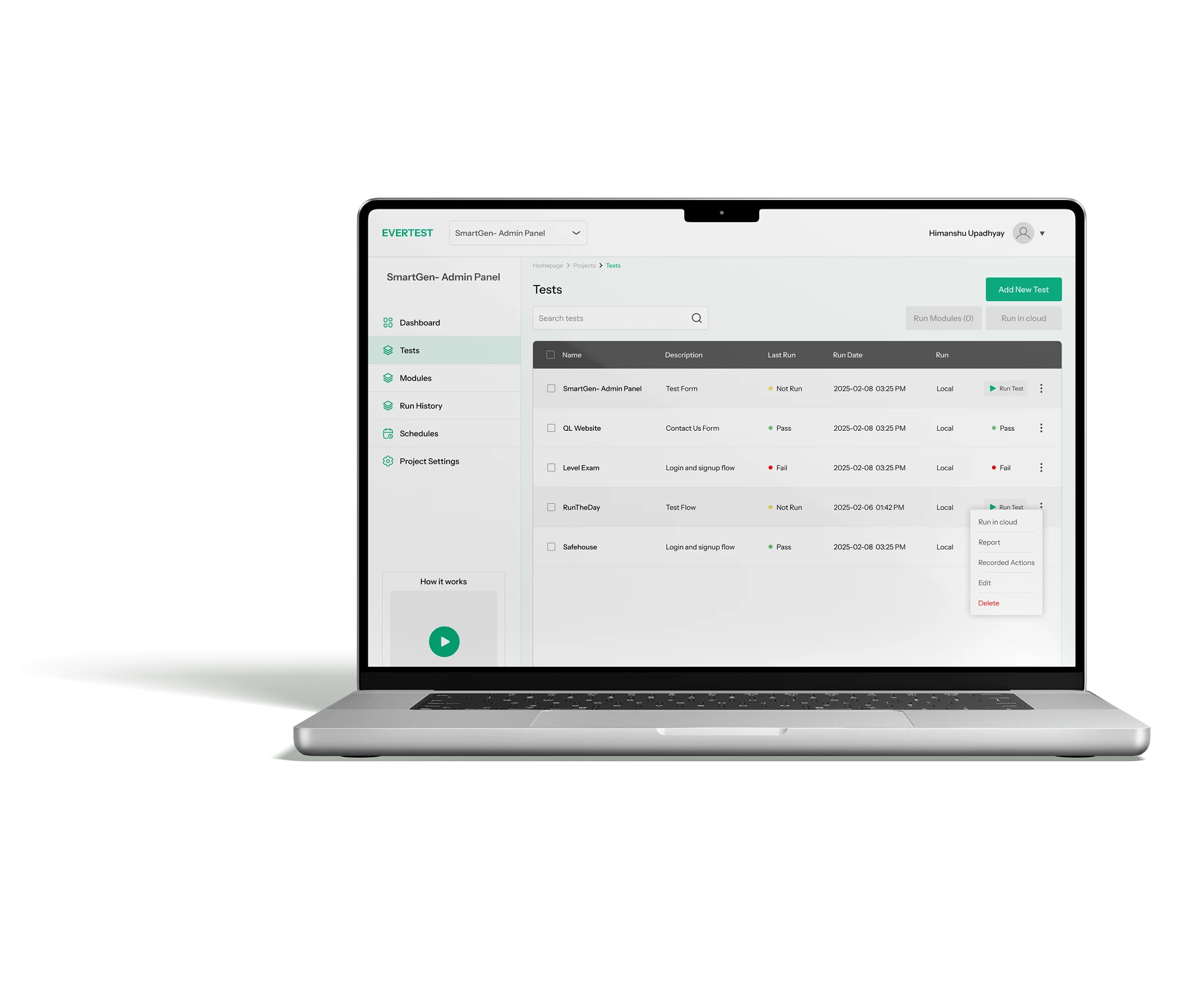
An AI-powered QA automation platform that records user journeys, generates test cases from natural-language scenarios, executes cross-browser validation, and automatically produces traceable documentation for release-governance workflows.
From Process Discovery to Governed Automation at Scale
Our delivery framework identifies high-value workflows, validates technical feasibility, and operationalizes secure AI automation reducing cycle time, implementation risk, manual effort, and time to measurable business value.
1
Process Discovery & Value-Stream Analysis
We map workflows, systems, decision points, bottlenecks, exception paths, and operational dependencies to establish the current-state process baseline and measurable automation objectives.
2
Automation Opportunity Prioritization
Candidate processes are evaluated against transaction volume, process variability, data readiness, integration complexity, compliance exposure, implementation effort, and projected enterprise ROI.
3
Solution Architecture & Governance Design
We define the target-state architecture across AI agents, orchestration engines, APIs, enterprise data, identity controls, human approvals, auditability, observability, and regulatory guardrails.
4
Workflow Prototyping & Technical Validation
High-risk assumptions are validated through functional prototypes, model evaluations, integration spikes, process simulations, and human-in-the-loop testing before production engineering begins.
5
AI Workflow Engineering & Integration
We engineer production-grade automations using agentic orchestration, intelligent document processing, decision engines, event-driven services, and secure integrations across ERP, CRM, SaaS, and legacy platforms.
We deploy through governed CI/CD and MLOps pipelines, instrument operational telemetry, monitor model and workflow performance, and continuously optimize accuracy, throughput, cost, and exception handling.
AI Automation Engineered for Industry-Critical Workflows and Outcomes
Quokka Labs engineers governed AI workflows that reduce cycle times, automate decisions, improve data accuracy, and integrate mission-critical operations across regulated, high-volume enterprise environments.
AI Business Process Automation Built for Security, Governance, and Regulatory Control
Operationalize policy enforcement, data protection, identity controls, and auditable AI oversight to reduce risk, accelerate compliance validation, and scale automation across regulated enterprise environments.
ISO/IEC 42001:2023
NIST AI RMF 1.0
EU AI Act
OWASP LLM Top 10 2025
OECD AI Principles
ISO/IEC 42001:2023
NIST AI RMF 1.0
EU AI Act
OWASP LLM Top 10 2025
OECD AI Principles
ISO/IEC 27001:2022
SOC 2
NIST CSF 2.0
CIS Controls
COBIT 2019
ISO/IEC 27001:2022
SOC 2
NIST CSF 2.0
CIS Controls
COBIT 2019
NIST SSDF 1.1
OWASP Top 10 2025
MITRE ATLAS
SLSA
OpenSSF
NIST SSDF 1.1
OWASP Top 10 2025
MITRE ATLAS
SLSA
OpenSSF
GDPR
CCPA/CPRA
India DPDP Act 2023
ISO/IEC 27701
LGPD
GDPR
CCPA/CPRA
India DPDP Act 2023
ISO/IEC 27701
LGPD
NIST SP 800-207
OAuth 2.0
OpenID Connect
SAML 2.0
SCIM 2.0
FIDO2/WebAuthn
NIST SP 800-207
OAuth 2.0
OpenID Connect
SAML 2.0
SCIM 2.0
FIDO2/WebAuthn
CSA STAR
CSA CCM
ISO/IEC 27017
ISO/IEC 27018:2025
FedRAMP
CSA STAR
CSA CCM
ISO/IEC 27017
ISO/IEC 27018:2025
FedRAMP
PCI DSS 4.0.1
PCI SSF
PSD2/SCA
SWIFT CSP
SOX
PCI DSS 4.0.1
PCI SSF
PSD2/SCA
SWIFT CSP
SOX
HIPAA
HITECH
HITRUST CSF
HL7 FHIR
21 CFR Part 11
HIPAA
HITECH
HITRUST CSF
HL7 FHIR
21 CFR Part 11
Enterprise AI Automation Expertise
Why Enterprises Choose Quokka Labs forGoverned AI Business Process Automation
Quokka Labs combines AI strategy, full-stack engineering, secure integration, and production governance to reduce process latency, accelerate deployment, and operationalize reliable automation across complex enterprise ecosystems.
Outcome-Led Automation Strategy
Prioritize critical workflows through process intelligence, feasibility scoring, dependency mapping, and ROI-driven implementation roadmaps.
Agentic AI with Human Oversight
Deploy goal-driven agents with tool access, contextual reasoning, approval gates, fallback logic, and human-in-the-loop exception management.
Enterprise Systems Integration
Connect AI automation with CRM, ERP, payments, scheduling, support platforms, internal databases, and legacy systems through secure APIs and event-driven interfaces.
Security and Governance by Design
Embed RBAC, encryption, audit trails, policy enforcement, data-boundary controls, and model-risk safeguards throughout the automation lifecycle.
Production-Grade AI Operations
Implement automated evaluation, prompt and model versioning, telemetry, latency monitoring, failure tracing, and continuous performance optimization.
End-to-End Engineering Ownership
Unify workflow discovery, UX, architecture, AI integration, backend engineering, testing, deployment, and post-production optimization under one delivery model.
We design automation architectures that improve maintainability, operational resilience, and straight-through processing across business-critical systems.
Technology for Intelligent Workflow Orchestration, Integration, and Scale
Our composable, cloud-native stack unifies models, agents, process engines, enterprise data, and observability - accelerating deployment, improving resilience, and governing AI-powered enterprise automation at scale.
Figma
AI Business Process Automation Insights
Enterprise Automation Intelligence for Scalable, Governed Operations
Explore architecture, process intelligence, governance, and orchestration strategies that reduce workflow latency, improve decision quality, control AI risk, and scale automation across complex operating environments.
How Enterprise AI Solutions Transform Business Processes...
Enterprise AI solutions are revolutionizing industries by automating workflows, enhancing decision-making,...
Trusted by Teams Modernizing Complex and Scalable Operations
Quokka Labs combines AI engineering accelerators, cloud-native architecture, and production-grade delivery to compress release cycles, de-risk modernization, and scale AI-driven enterprise automation across mission-critical workflows.
0+
Years of Enterprise Engineering
0+
Projects Successfully Delivered
0+
AI-Powered Solutions Shipped
0%
Faster AI Time-to-Market
Get Started
Ready to Operationalize AI Across Your Business-Critical Workflows?
Share your automation priorities. Our enterprise AI specialists will assess process fit, integration complexity, governance requirements, and value potential, accelerating decisions, reducing delivery risk, and defining a production-ready roadmap.
24 Hours Senior Automation Expert Response
Your inquiry is reviewed by an AI architect or enterprise automation consultant within one business day.
99%
Client Retention Rate
40%
Faster time-to-market with our AI accelerators
Book Your Enterprise AI Automation Assessment
AI Business Process Automation FAQs
Which processes should enterprises prioritize for AI-driven automation solutions?
Prioritize high-volume, rules-plus-judgment workflows with stable inputs, measurable bottlenecks, frequent exceptions, and accessible system data. Process mining and value-stream analysis should validate cycle time, cost, quality, and compliance impact before implementation.
How does AI for business process automation differ from RPA?
RPA follows deterministic rules and interfaces; AI interprets unstructured data, predicts outcomes, reasons across context, and manages exceptions. Enterprise architectures often combine RPA, BPM, orchestration, NLP, machine learning, and human approval controls.
Can an AI for business automation solution integrate with legacy ERP and CRM systems?
Yes. API-first connectors, event streams, integration middleware, browser automation, and agentic overlays can orchestrate existing systems while preserving systems of record. Loose coupling and phased modernization reduce disruption and replatforming risk.
How should ROI be measured for AI business process optimization solutions?
Baseline cycle time, cost per transaction, straight-through-processing rate, exception volume, error rate, SLA attainment, and labor capacity. Compare post-deployment results against control periods and include model, integration, governance, and change-management costs..
How are AI-powered business solutions governed across enterprise operations?
Apply managed identities, least-privilege access, policy enforcement, audit logs, model monitoring, data controls, approval thresholds, and human escalation. Governance should span design, deployment, runtime behavior, incident response, and continuous risk assessment.
Is AI workflow automation for small business feasible without a large technology team?
Yes. Start with one bounded, repetitive workflow such as lead routing, invoicing, support triage, or onboarding, using managed platforms and standard connectors. Require clear ownership, exception handling, security controls, and measurable success criteria before expansion.
Should AI-driven workflows fully automate high-risk business decisions?
Use human approval for high-impact, regulated, irreversible, or low-confidence actions. AI-powered business solutions should autonomously handle routine cases while escalating ambiguous, sensitive, or policy-exception decisions with complete context and auditability.