Key takeaways:
- Standardized AI Integration: Model Context Protocol connects AI models to enterprise tools, APIs, and databases without repetitive custom glue code.
- Production-Ready Architecture: Enterprise MCP architecture requires secure servers, controlled tool execution, failure recovery, and continuous monitoring.
- MCP vs API: MCP complements traditional APIs by enabling AI agents to discover and invoke approved tools through a common interface.
- Security Comes First: Secure MCP server implementation requires least-privilege access, strong authentication, tool-level authorization, and audit logging.
- MCP Integration Pattern: Define business workflows, capability boundaries, trust controls, and execution reliability before deployment.
- Managed vs Custom Servers: Choose managed MCP servers for supported integrations and custom servers for proprietary enterprise workflows.
- Measurable Business Value: Evaluate MCP implementation through workflow completion time, operational reliability, cost per case, and automation success rates.
Your AI Agents Are Connected. Are They Production-Ready?
Turn your MCP integration into a secure, governed system built for your enterprise workflows.
Production AI agents can call dozens of systems and still fail the first security review.
The controversial part: many MCP deployment guides published before July 2026 now describe an outdated protocol. The Model Context Protocol’s July 28 release removed protocol sessions, introduced header-based routing, and tightened authorization, while its August roadmap prioritized agent identity.
That makes connecting a model to a tool the easy part; controlling whose authority it uses is the real engineering work.
This guide explains the MCP Integration Pattern for choosing integrations, designing secure servers, handling failures, and proving that agent actions are auditable at enterprise scale.
What is Model Context Protocol, and Why Does It Matter for Production AI?
Model Context Protocol (MCP) is an open standard that lets AI applications discover and invoke tools and retrieve context through a consistent client-server interface. An MCP server exposes specific capabilities, such as searching documents or checking transaction status, while the host application controls which tools the model can use. MCP standardizes interaction; it does not automatically provide business authorization, data protection, or operational reliability.
What is an MCP Server?
An MCP Server connects an AI application to external systems through defined interfaces.
The MCP Protocol supports three core capabilities:
-
MCP Tools: Executable functions for searching, calculating, retrieving, or updating information.
-
Resources: Information that AI applications can read as context.
-
Prompts: Reusable templates for structured interactions.
These capabilities allow teams to connect LLMs to external tools with MCP rather than writing separate model-specific integrations.
However, removing custom connectors does not remove the need for access controls or business-specific adapters.
Why Did MCP Change in 2026?
The official July 28, 2026 MCP specification introduced several production-focused changes:
-
A stateless protocol core without mandatory initialization handshakes.
-
HTTP headers for tool-level routing.
-
Cache controls for tools, prompts, and resources.
-
Stronger authorization requirements.
-
Extensions for long-running tasks and interactive applications.
The August 2026 roadmap subsequently prioritized agent identity, delegation, and further transport improvements. These priorities are ongoing work, not features every deployment can assume are complete.
For CTOs, this changes MCP integration from a connector experiment into an enterprise architecture decision.
How Does MCP Architecture Connect AI Models to Enterprise Tools?
Enterprise MCP architecture separates model reasoning, tool execution, authorization, and business systems.
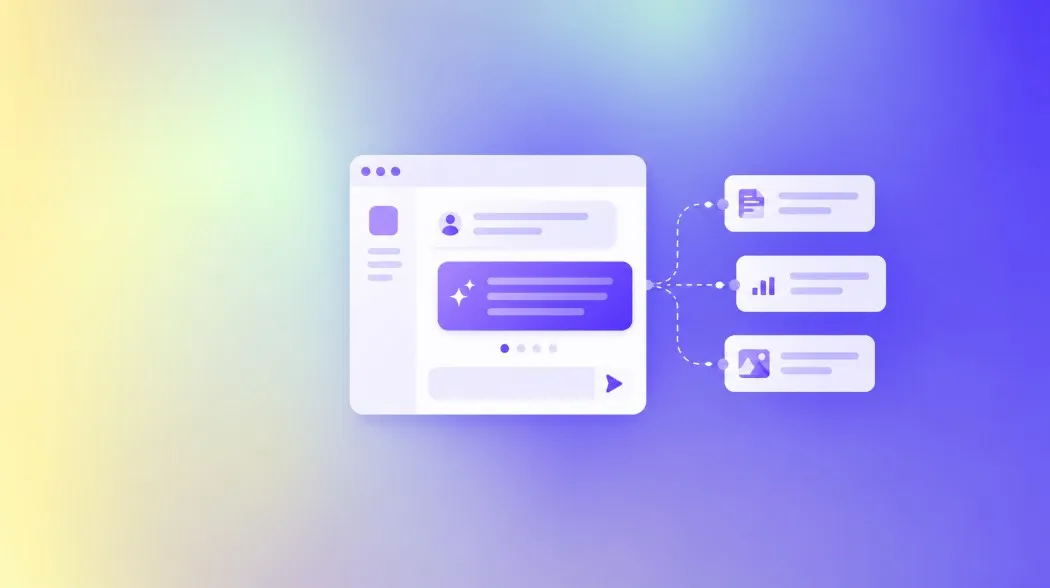
The AI model proposes an action. The host application decides whether to invoke the tool. The MCP server executes the approved operation through the appropriate backend.
Core MCP Architecture
Reference architecture. Authorization must also be enforced by the MCP server and downstream systems.
What Happens During an MCP Tool Call?
-
The host discovers authorized tools from a server.
-
The model proposes a tool and arguments.
-
The host applies tool-selection policies.
-
The gateway and server validate identity, permissions, and inputs.
-
The server executes the operation through an approved backend.
-
The result returns to the host for interpretation.
This structure makes tool integrations reusable across compatible AI hosts without exposing unrestricted access to enterprise systems.
For organizations replacing older integration layers, enterprise application modernization can help prepare legacy APIs for controlled MCP access.
MCP vs API: Which is Better for Enterprise AI Applications?
An API exposes functions for software consumers, while MCP makes selected functions discoverable and callable by AI applications through a shared interface. MCP does not replace REST, GraphQL, or internal services; an MCP server typically wraps them. Use direct APIs for deterministic application flows and MCP when an AI host needs to discover and choose among approved tools.
| Factor |
MCP |
Traditional API |
| Primary consumer |
AI hosts and agents |
Software applications |
| Tool discovery |
Protocol-defined |
API documentation or discovery mechanisms |
| Model integration |
Standardized tool interface |
Often requires model-specific adapters |
| Business logic |
Usually delegates to backend systems |
Implemented by services |
| Security |
MCP and underlying service controls |
Application and API controls |
| Best fit |
Model-directed tool usage |
Deterministic workflows |
When Should You Avoid MCP?
Direct APIs are often preferable when:
-
A workflow follows fixed steps without model-driven decisions.
-
Very low latency is critical.
-
Existing services already provide the necessary integration.
-
Introducing another protocol layer adds no operational benefit.
The correct MCP vs API for AI applications decision depends on who selects the operation: application code or the AI host.
What is the MCP Integration Pattern for Enterprise Production?
The MCP Integration Pattern is a solution-first architecture framework for deciding what an agent should access, how much authority it needs, and which controls must surround execution.
It starts with the business workflow rather than the number of tools available.
The Four Decisions in the MCP Integration Pattern
| Decision |
Engineering question |
Production requirement |
| Workflow boundary |
What business action must the agent perform? |
Defined operation and measurable outcome |
| Capability boundary |
Which tools and systems are necessary? |
Restricted tool contracts |
| Trust boundary |
Who can invoke each operation? |
Identity, authorization, approvals |
| Execution boundary |
What happens when calls fail or repeat? |
Timeouts, idempotency, traces, recovery |
Applying the Pattern
Read-Only Operations
Document retrieval and status checks should use restricted permissions, explicit tenant boundaries, and validated inputs.
Write Operations
Transactions, record changes, and external communications need stronger authorization, duplicate-action protection, and risk-based approval.
For workflows involving enterprise data, data engineering services can help prepare governed data access before tools expose it to agents.
The architecture principle: Expose the minimum capability required to complete the workflow, not every function an API supports.
Your AI Agents Are Connected. But Are They Secure?
Get MCP architecture built around your enterprise systems, security needs, and production workflows.
How Do You Implement MCP Servers for Production?
A reliable MCP implementation for production requires more than deploying a working endpoint.
Step 1: Define the Business Workflow
Identify the business operation, connected systems, expected decisions, and consequences of incorrect execution.
Measure the outcome that matters: transaction processing time, case turnaround, successful automation rate, or exception volume.
Step 2: Select the MCP Server Strategy
Choose between:
-
Managed servers: Suitable when a trusted provider already exposes the required capabilities.
-
Custom MCP server development: Appropriate for proprietary workflows, internal APIs, and specialized authorization rules.
-
Hybrid integration: Managed connectors for supported platforms and custom servers for internal business logic.
Google Cloud announced more than 50 managed MCP servers, available generally or in preview, in April 2026. This makes managed integration a practical option, but enterprises still need to verify individual capabilities and access policies.
Google Cloud Blog
Step 3: Define Strict Tool Contracts
Every exposed tool needs a clear purpose, validated parameters, predictable results, and documented failure behavior.
For example, a read-only invoice-status tool can accept an invoice identifier and return only authorized status fields.
Its contract should reject malformed inputs, prevent cross-tenant retrieval, and expose no payment-modification capability.
Step 4: Implement Current Protocol Compatibility
For the 2026-07-28 specification:
-
Use compatible TypeScript, Python, Go, or C# SDKs.
-
Support stateless HTTP requests where appropriate.
-
Validate required Mcp-Method and Mcp-Name` headers.
-
Apply cache controls without mixing user-specific data.
-
Test older client compatibility explicitly rather than assuming it.
Teams upgrading older Model Context Protocol Servers must account for removed protocol sessions and deprecated features.
The official TypeScript SDK migration guide documents relevant compatibility changes.
Step 5: Add Execution Reliability
MCP Tools should behave like production integrations.
Implement:
-
Timeouts and bounded retries.
-
Idempotency keys for operations that must not execute twice.
-
Concurrency and rate limits.
-
Structured errors and failure recovery.
-
Tracing across the host, gateway, server, and backend.
Long-running work can use the protocol's Tasks extension where supported.
Step 6: Test Before Production Release
Validate tool discovery, authorization failures, malformed requests, upstream outages, duplicate writes, permission boundaries, and protocol-version compatibility.
A successful demonstration is not a production acceptance test.
How Do You Build a Secure MCP Server for Enterprise AI?
A secure MCP server implementation authenticates each caller, validates the audience and scope of its credentials, authorizes every tool invocation, and restricts access to upstream systems. High-risk operations need approval, retries need duplicate-action protection, and audit logs need correlation identifiers without exposing secrets. A successful connection test establishes interoperability, not security.
Essential MCP Security Controls
| Security risk |
Required control |
| Unauthorized tool calls |
Tool-level authorization |
| Token misuse |
Audience validation and scoped credentials |
| Prompt injection |
Treat retrieved content and tool output as untrusted |
| Excessive permissions |
Least-privilege tools and service identities |
| Sensitive data exposure |
Tenant isolation and response filtering |
| Unsafe write operations |
Approval and transaction controls |
| Untraceable activity |
Correlated audit logs |
For HTTP-based authorization, the MCP specification builds on OAuth 2.1 and requires servers to validate tokens intended specifically for them. Passing the client's token directly to an unrelated upstream API is prohibited.
An MCP gateway for production can centralize policy enforcement, routing, and monitoring. It must not replace authorization inside the server or backend.
For deeper security design, see Quokka Labs' guides to AI workload security and preventing prompt injection attacks.
How Do You Choose the Right MCP Server List and Integration Strategy?
The Official MCP Registry provides a searchable catalog for discovering publicly available servers.
However, registry presence does not establish enterprise security approval.
Model Context Protocol Blog
What Should Enterprises Verify?
Before adopting Model Context Protocol integration, check:
-
Publisher identity and software provenance.
-
Supported MCP specification and SDK versions.
-
Authentication and authorization capabilities.
-
Requested scopes and exposed operations.
-
Hosting location, data retention, and logging.
-
Maintenance history and security updates.
Managed vs Custom MCP Servers
| Choose managed MCP |
Choose custom MCP |
| Provider-supported systems |
Proprietary enterprise systems |
| Standard tool operations |
Specialized business actions |
| Provider-managed infrastructure |
Organization-controlled deployment |
| Supported identity integration |
Custom authorization and compliance boundaries |
An Enterprise MCP architecture can combine both, provided the organization maintains a consistent policy and monitoring model.
How Much Does MCP Integration Cost, and How Do You Measure ROI?
MCP integration services should be evaluated against the custom integration work they replace and the operational controls they introduce.
Main Engineering Cost Drivers
-
Number and complexity of connected systems.
-
Existing API readiness.
-
Authentication and compliance needs.
-
Custom tool contracts.
-
Gateway infrastructure and monitoring.
-
Testing, maintenance, and protocol upgrades.
The broader cost considerations are covered in Quokka Labs' guide to AI development cost.
What Metrics Prove MCP Is Production-Ready?
Track tool-call success rate, unauthorized-call rejection, p95 execution latency, repeated-action incidents, and recovery time.
Connect those operational indicators to business outcomes such as time per case, completed transactions, or exception rates.
An MCP implementation creates business value when the connected workflow performs measurably better, not simply when more tools become available.
When Should You Hire an MCP Integration Engineering Partner?
Internal engineering teams can implement narrow integrations when existing systems, authorization, and production infrastructure are already mature.
External expertise becomes relevant when MCP crosses multiple enterprise systems, regulated data boundaries, or high-impact business workflows.
Look for an engineering partner that can:
-
Define the workflow before selecting tools.
-
Architect secure model-to-system integration.
-
Engineer custom and managed MCP connections.
-
Implement identity, governance, and monitoring.
-
Validate production behavior under failure conditions.
Quokka Labs is an end-to-end AI-native engineering and solutions company. Drawing on 15+ years of engineering expertise and experience across 15+ industries, we take a solution-first approach to designing production-ready AI systems.
Our AI Native Engineering services combine architecture, cloud engineering, integration, and secure deployment.
Through product engineering services, we engineer AI-enabled products around real operational workflows, with accountability from discovery through production.
How Can Quokka Labs Help You Take MCP Into Production?
MCP standardizes how AI applications interact with external tools. Production engineering determines whether those interactions remain authorized, reliable, and auditable.
The MCP Integration Pattern provides a practical starting point: define the workflow, restrict capabilities, enforce trust boundaries, and verify execution.
Quokka Labs' ai consulting services help organizations evaluate those architectural decisions before committing to implementation.
Final Word: MCP in Production Requires More Than Tool Connectivity
Model Context Protocol simplifies how AI models connect with enterprise tools, but production readiness depends on what happens after the connection. Secure authorization, controlled execution, failure recovery, and continuous monitoring determine whether MCP can support business-critical workflows.
The MCP Integration Pattern helps enterprises move from isolated AI integrations to governed, reusable architectures without unnecessary custom glue code.
For CTOs and engineering leaders, the priority is clear: Start with the business workflow, define the trust boundaries, and engineer MCP integrations that remain secure and reliable at scale.
Take Your MCP Integration from Prototype to Production
Connect AI models to enterprise systems with secure MCP architecture, governed tool access, and production-ready engineering.
FAQs: MCP in Production for Enterprise AI Applications
1. How can I connect my enterprise AI agents to databases, SaaS platforms, and APIs without custom glue code?
MCP gives AI hosts a common interface for discovering and calling approved tools. Use managed servers for supported platforms and custom MCP servers for proprietary systems. You will still need API adapters, identity controls, and end-to-end testing before production deployment.
2. Do I need an MCP gateway for production, or can I connect AI agents directly to MCP servers?
A gateway is valuable when multiple teams or agents share tools and require centralized routing, rate limits, policies, and audit logs. Direct connections can suit simpler deployments, provided each MCP server independently enforces authentication, authorization, tenant isolation, and continuous monitoring.
3. How do I secure MCP tools when my AI agents can access sensitive customer data or execute transactions?
Start with least-privilege scopes, per-tool authorization, validated inputs, and tenant isolation. Require approval for sensitive writes before execution, use idempotency controls to prevent duplicate actions, and capture auditable execution traces. Treat model instructions and external tool responses as untrusted data.
4. Should I use MCP or traditional REST APIs for my enterprise AI application?
Choose MCP when AI hosts need to discover and select from multiple approved tools. Choose direct APIs for fixed, deterministic workflows. MCP standardizes model-to-tool interaction but typically wraps existing APIs, so it does not eliminate underlying integration or authorization work.
5. How should I choose between managed MCP servers and custom MCP server development for my business?
Use managed servers when trusted providers support your systems, security policies, and needed operations. Commission custom servers for proprietary workflows or specialized controls. Compare protocol versions, deployment ownership, maintenance expectations, observability, data handling, and the complexity of operating either option.
6. How can I calculate ROI and measure the business impact of implementing MCP in production?
Measure more than tool-call volume. Establish baselines for workflow completion time, cost per case, error rates, and manual interventions. Track MCP reliability and adoption metrics alongside these business outcomes so leadership can see whether standardized integrations improve operations after deployment.
7. What should I look for when hiring an MCP integration services company for enterprise AI implementation?
Ask for a workflow-level architecture, identity and authorization design, protocol compatibility plan, failure testing approach, and production ownership model. Require clear acceptance criteria and metrics tied to your business process, not just a demonstration that the AI can invoke tools.