Many organizations have started integrating AI into software development, but adopting AI tools alone does not transform how modern products are engineered. The real opportunity lies in embedding AI across product architecture, engineering workflows, governance, operations, and continuous improvement.
According to GitHub's 2024 global survey of 2,000 enterprise software professionals, more than 97% of respondents have used AI coding tools, highlighting the rapid adoption of AI across engineering teams.
However, widespread AI usage is only the beginning.
Organizations that embrace AI-native development are rethinking how software is designed, delivered, and evolved to create long-term business value.
This article explores what AI-native product engineering is, why it matters, and how organizations can successfully adopt this engineering model.
Key takeaways:
- AI-native product engineering embeds AI across the entire product lifecycle, not just development. Architecture, engineering workflows, testing, deployment, operations, governance, and continuous improvement evolve together around AI.
- AI-native engineering changes every stage of the software lifecycle. Requirements become more data-informed, architectures become AI-ready, testing becomes continuous, deployment becomes more risk-aware, and operations become increasingly predictive.
- Successful AI-native product engineering starts with business value, not technology adoption. Organizations should identify high-impact AI opportunities, assess engineering maturity, and build a roadmap before introducing AI across products and workflows.
- AI-native products require a strong engineering and governance foundation. AI-ready architecture, APIs, data platforms, security controls, compliance, model evaluation, observability, and human oversight must evolve alongside AI capabilities.
- AI-native engineering requires continuous product intelligence. Customer interactions, product analytics, operational telemetry, and AI performance insights create feedback loops that help software adapt to changing business priorities and user needs.
- The transition to AI-native product engineering is phased, not a one-time transformation. Organizations can begin with focused, high-value initiatives, modernize their engineering foundation incrementally, embed AI across the lifecycle, and continuously optimize business outcomes.
Ready to Build AI Into Your Product Strategy?
Quokka Labs can help you discover where AI can create measurable value across your products and engineering workflows.
What Is AI-Native Product Engineering?
Quick Answer: AI-native product engineering is the practice of designing, building, deploying, and continuously improving software with AI embedded across the entire product lifecycle from day one. Rather than treating AI as an additional capability, it becomes a foundational part of how products are engineered, operated, and continuously evolved.
Traditional product engineering focuses on delivering software that meets predefined business requirements. AI-native product engineering expands this approach by integrating intelligence into architecture, engineering workflows, governance, operations, and customer experiences from the very beginning. The result is software that continuously learns, adapts, and creates greater business value over time.
The evolution from AI development to an AI-native approach can be understood through the comparison below.
| Traditional Product Engineering |
AI-Assisted Engineering |
AI-Native Product Engineering |
| AI is not part of the product or engineering workflow. |
AI improves individual engineering tasks such as coding, testing, and documentation. |
AI is embedded across product architecture, engineering workflows, operations, and user experiences. |
| Software follows predefined business logic. |
Developers use AI to improve productivity while existing engineering processes remain largely unchanged. |
Engineering processes, software architecture, and product capabilities are designed around AI from the beginning. |
| Releases depend primarily on manual engineering decisions and predefined workflows. |
AI supports engineering teams, but people remain the primary drivers of product execution. |
AI continuously assists with decision-making, automation, optimization, and software evolution alongside engineering teams. |
How AI-Native Product Engineering Changes the Software Lifecycle
Quick Answer: AI-native product engineering transforms the software lifecycle by integrating intelligence into every stage of product development and operations. Organizations use AI to improve engineering decisions, automate workflows, strengthen software quality, and continuously evolve products using operational insights and customer feedback.
Traditional software engineering follows a structured lifecycle where many activities remain sequential, manual, and reactive. AI-native product engineering introduces intelligence throughout the lifecycle, enabling engineering teams to make informed decisions faster, streamline engineering operations, improve software quality, and continuously adapt products to changing business priorities and customer expectations.
| Lifecycle Stage |
Traditional Product Engineering |
AI-Native Product Engineering |
| Requirements |
Defined through stakeholder workshops and documentation. |
Continuously refined using customer feedback, product usage, and business insights. |
| Architecture |
Designed primarily for scalability and performance. |
Designed to support AI models, intelligent agents, APIs, and evolving business capabilities. |
| Development |
Developers manually build, review, and maintain software. |
Forward-deployed engineers use AI to improve development, code quality, documentation, and engineering decisions. |
| Testing |
Testing is milestone-driven and largely manual. |
AI continuously generates test scenarios, identifies risks, and improves software quality throughout development. |
| Deployment |
Releases follow predefined pipelines and approval processes. |
AI evaluates release readiness, identifies deployment risks, and improves delivery confidence. |
| Operations |
Teams respond to incidents after they occur. |
AI predicts failures, detects anomalies, and automates routine operational activities. |
| Continuous Improvement |
Product enhancements rely on periodic reviews and planned releases. |
AI continuously analyzes operational and customer data to guide product evolution and future engineering decisions. |
Benefits of AI-Native Product Engineering for Enterprises
Quick Answer: AI-native product engineering enables organizations to build intelligent software that is more adaptable, resilient, and aligned with business goals. Beyond improving engineering efficiency, it helps enterprises accelerate innovation, strengthen governance, and deliver better customer and operational outcomes.
Organizations adopting AI-native product engineering are not simply modernizing software development; they are building engineering capabilities that support long-term business growth.
-
Accelerate Product Innovation: Reduce the time between identifying new opportunities and delivering customer value by combining engineering expertise with AI-driven insights and intelligent decision-making.
-
Build Adaptive Software: Develop products that continuously learn from customer interactions, operational data, and business feedback, enabling them to evolve as market demands change.
-
Improve Operational Resilience: Improve software reliability through proactive monitoring, intelligent automation, and early risk detection, helping teams maintain consistent performance at scale.
-
Establish Trusted AI Governance: Embed AI security, compliance, responsible AI practices, and human oversight throughout the product engineering lifecycle to support scalable and accountable AI adoption.
-
Improve Engineering Agility: Enable engineering teams to respond faster to changing business priorities, customer requirements, and market opportunities through intelligent workflows and data-informed decisions.
-
Create a Future-Ready Engineering Foundation: Build flexible architectures, connected systems, and modern engineering practices that support continuous innovation and future AI adoption without repeated modernization efforts.
AI-Assisted Development vs AI-Native Product Engineering
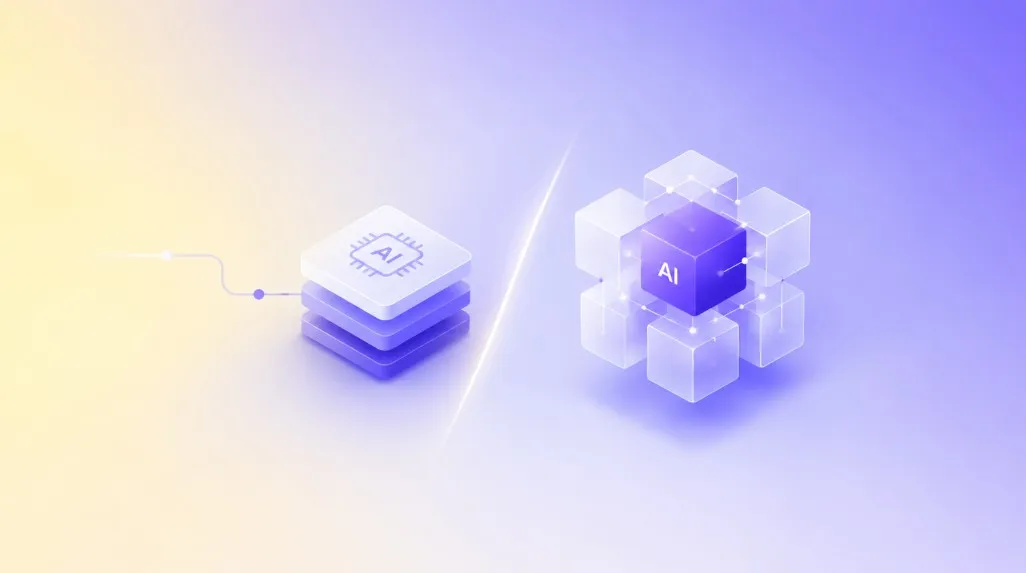
Quick Answer: AI-assisted development improves how engineers build software by automating tasks such as coding, testing, and documentation. AI-native product engineering goes further by embedding AI into product architecture, engineering workflows, operations, and continuous product improvement.
Many organizations begin their AI journey by introducing AI into software development. While this improves engineering productivity, it does not fundamentally change how products are designed, delivered, or managed. AI-native product engineering extends AI beyond individual engineering activities, making it an integral part of how organizations build, operate, and continuously improve software products.
| AI-Assisted Development |
AI-Native Product Engineering |
| Improves developer productivity. |
Transforms the entire product engineering lifecycle. |
| AI supports individual tasks. |
AI is embedded across engineering workflows and products. |
| Existing processes remain largely unchanged. |
Engineering, operations, and governance evolve around AI. |
| Focuses on faster software delivery. |
Focuses on long-term business value and product adaptability. |
Imagine two organizations building the same SaaS platform. One uses AI to generate code faster. The other uses AI to prioritize features, improve testing, monitor production, and continuously refine the product based on user behavior. Both adopt AI, but only one adopts AI-native product engineering.
AI-assisted development helps teams build software faster. AI-native product engineering helps organizations build software that continuously learns, adapts, and creates lasting business value.
The AI-Native Product Engineering Framework
Quick Answer: An AI-native product engineering framework provides a structured approach for designing, building, governing, and continuously improving intelligent software products. It helps engineering teams integrate AI across the product lifecycle while maintaining scalability, security, and business alignment.
While every organization adopts AI differently, successful engineering teams follow a structured approach rather than introducing AI into isolated workflows. A well-defined digital product engineering framework ensures AI initiatives align with business goals, engineering standards, and long-term product strategy.
At Quokka Labs, we approach AI-native product engineering as a continuous five-phase framework that helps enterprises build, operate, and evolve intelligent software at scale.
Phase 01: Strategic AI Opportunity Mapping
Successful AI-native product engineering begins with identifying where AI can create measurable business value.
This phase evaluates business objectives, engineering maturity, operational challenges, and existing technology ecosystems to prioritize high-impact AI opportunities.
Rather than pursuing isolated AI initiatives, organizations define a transformation roadmap that aligns product strategy, engineering investments, and enterprise goals to maximize long-term business outcomes.
Phase 02: AI Platform & Enterprise Architecture
An AI-native product requires an architecture designed for intelligence, scalability, and interoperability.
This phase establishes the technical foundation by defining AI-ready system architecture, data strategies, integration patterns, APIs, security controls, and infrastructure requirements.
Building a resilient enterprise architecture enables AI capabilities to integrate seamlessly across business systems while supporting future innovation, governance, and operational scalability.
Phase 03: AI-Native Product Engineering
With the foundation established, engineering teams develop intelligent products that combine modern software engineering with embedded AI capabilities.
This phase focuses on building AI-powered applications, intelligent workflows, enterprise integrations, and autonomous agents while maintaining engineering quality, performance, and reliability.
AI becomes an integral part of how products are designed, delivered, and continuously enhanced to meet evolving business and customer needs.
Phase 04: Responsible AI Governance & Operations
As AI becomes an integral part of enterprise products and engineering workflows, governance must evolve alongside product development.
This phase embeds AI app security, compliance, risk management, observability, model evaluation, and human oversight (HITL) throughout the engineering lifecycle.
A structured governance approach helps organizations deploy AI responsibly, maintain operational reliability, meet regulatory requirements, and build confidence in AI-powered products over time.
Phase 05: Continuous Product Intelligence
AI-native products are designed to improve long after deployment.
This phase uses operational telemetry, customer interactions, product analytics, and AI performance insights to continuously optimize product capabilities and engineering decisions.
By establishing continuous feedback loops, organizations can rapidly adapt to changing market conditions, enhance user experiences, and deliver software that evolves alongside business priorities.
Also Read: AI App Not Production Ready: Why Your Build Breaks With Real Users And What To Fix First!
Need a Proven AI-Native Product Engineering Framework?
Need a Proven AI-Native Product Engineering Framework?
What Changes Inside AI-Native Engineering Teams?
Quick Answer: AI-native product engineering transforms how engineering teams collaborate, make decisions, and deliver software. Rather than operating within isolated functions, teams work across engineering, data, platform, security, and AI disciplines to continuously improve products through intelligent workflows, shared context, and real-time operational insights.
As AI becomes embedded across the product lifecycle, engineering roles evolve alongside it. Traditional responsibilities expand to include AI orchestration, context management, continuous evaluation, and customer-centric AI implementation.
| Traditional Role |
AI-Native Evolution |
| Developers |
AI Engineers / Forward-Deployed Engineers (FDEs) |
| Project Managers |
Product Managers |
| QA Engineers |
QA & AI Evaluation Specialists |
| Software Architects |
AI Solution Architects |
| Platform Engineers |
AI Platform Engineers |
Beyond individual roles, AI-native engineering encourages cross-functional collaboration. Product, engineering, platform, security, data, and AI teams work together to continuously improve software using operational insights and real-world user feedback rather than relying only on periodic releases.
Digital Product Engineering Challenges in the AI Era
Quick Answer: The biggest digital product engineering challenges are no longer limited to software development. Engineering teams must also manage AI governance, system integration, model reliability, security, and organizational readiness while ensuring intelligent products remain scalable, trustworthy, and aligned with business goals.
As organizations adopt AI-native product engineering, engineering complexity shifts from writing software to managing intelligent systems. Success depends on addressing technical, operational, and organizational challenges together.
-
AI Governance: Establish clear policies for responsible AI usage, compliance, and human oversight.
-
Context & Data Quality: AI systems are only as reliable as the data and business context they receive.
-
Model Reliability: Continuously evaluate AI outputs to reduce inaccuracies, bias, and model drift.
-
System Integration: Connect AI seamlessly with enterprise applications, APIs, and existing workflows.
-
Security & Compliance: Stay compliant with AI security and governance to protect sensitive data.
-
Observability: Monitor AI performance, user interactions, and operational health in production.
-
Organizational Readiness: Equip engineering teams with the skills, processes, and governance needed to adopt AI effectively.
How Enterprises Can Transition to AI-Native Product Engineering
Quick Answer: Successful AI-native product engineering is achieved through a phased transformation, not a one-time technology upgrade. Enterprises should begin with high-impact opportunities, modernize engineering practices incrementally, establish governance early, and continuously optimize products using operational insights.
Organizations don't need to rebuild every product from scratch. Most successful transformations begin with focused initiatives that deliver measurable business value while preparing engineering teams for long-term adoption.
1. Evaluate Engineering Maturity
Begin by assessing your current engineering capabilities, software architecture, data readiness, and delivery processes. This establishes a clear understanding of where AI can create measurable business value and where foundational improvements are needed.
2. Prioritize Strategic Business Opportunities
Identify products, workflows, and customer experiences where AI can improve operational efficiency, accelerate innovation, or create competitive differentiation. Enterprise transformation should always be driven by business outcomes rather than technology adoption alone.
3. Build an AI-Ready Engineering Foundation
Modernize architecture, APIs, data platforms, and cloud infrastructure to support intelligent applications at scale. A flexible engineering foundation enables AI capabilities to evolve without introducing unnecessary technical complexity.
4. Embed AI Across Engineering Operations
Extend AI beyond software development by integrating it into product discovery, engineering workflows, quality assurance, deployment, monitoring, and operational decision-making. This creates a connected engineering ecosystem rather than isolated AI implementations.
5. Establish Enterprise Governance
Develop governance practices that address security, compliance, model oversight, risk management, and performance monitoring from the beginning. Responsible AI becomes a core engineering capability rather than a post-deployment activity.
6. Continuously Optimize Business Outcomes
Treat every release as an opportunity to improve engineering performance and product value. Use operational insights, customer feedback, and AI-driven analytics to continuously refine software, engineering processes, and business outcomes.
How Quokka Labs Can Help You
Transitioning to AI-native product engineering requires more than adopting new technologies. It demands the right engineering strategy, scalable architecture, responsible AI governance, and a clear roadmap for integrating AI into existing products and business operations.
As an AI-native engineering company, Quokka Labs helps enterprises modernize product engineering by combining AI strategy, intelligent software engineering, workflow automation, and enterprise-grade AI integration into a unified engineering approach.
Whether you're modernizing a legacy platform, embedding AI into an existing product, or building an intelligent product from the ground up, our teams focus on delivering measurable business outcomes, not isolated AI features.
Our Capabilities
-
AI-Native Product Engineering to design and build intelligent software products.
-
Enterprise AI Integration to connect AI models with existing applications, data platforms, and business systems.
-
AI Workflow Automation to streamline business processes and reduce manual operations.
-
Product Modernization to transform legacy applications into AI-ready digital platforms.
-
AI Governance & Security to implement responsible AI practices with enterprise-grade compliance and oversight.
Our goal is to help organizations build intelligent, scalable, and resilient software that continuously evolves alongside changing business priorities, customer expectations, and emerging AI capabilities.
Looking for a Reliable AI-Native Engineering Partner?
Let Quokka Labs help you transform product engineering with AI-native architectures, intelligent automation, and responsible AI implementation.
The Final Takeaway
AI-native product engineering shifts the conversation from building software faster to building software that delivers greater business value over time.
By integrating AI across product engineering, governance, and operational workflows, organizations can improve decision-making, strengthen engineering efficiency, and accelerate innovation without compromising security or quality.
Enterprises that adopt this approach today will establish the engineering foundation needed to compete in an increasingly intelligent digital economy.
Frequently Asked Questions
What is AI-native product engineering?
AI-native product engineering is an approach to building software where AI is embedded across the entire product engineering lifecycle, from product discovery and design to development, testing, deployment, and continuous optimization. Rather than treating AI as an additional feature, organizations use it as a core engineering capability to build intelligent, adaptive, and scalable software products.
How is AI-native product engineering different from traditional product engineering?
Traditional product engineering focuses on designing, developing, and maintaining software using conventional engineering practices. AI-native product engineering extends this model by integrating AI into engineering workflows, product capabilities, and operational processes, enabling continuous learning, automation, faster decision-making, and improved business outcomes.
What is the difference between AI-assisted development and AI-native product engineering?
AI-assisted development uses AI tools to improve developer productivity through tasks such as code generation, testing, and documentation. AI-native product engineering takes a broader approach by embedding AI into product architecture, engineering operations, governance, and the software lifecycle to create intelligent products that continuously evolve.
Why are startups and enterprises adopting AI-native product engineering?
Startups and enterprises are adopting AI-native product engineering to accelerate innovation, improve engineering efficiency, modernize legacy systems, strengthen governance, and deliver software that adapts to changing business requirements. It also helps organizations scale AI adoption while maintaining security, compliance, and operational resilience.
What are the biggest challenges of AI-native product engineering?
The most common challenges include legacy system integration, data quality, AI governance, security and compliance, model reliability, and organizational readiness. Addressing these challenges requires a strong engineering foundation, responsible AI practices, and a structured transformation strategy rather than isolated AI implementations.
How can organizations transition to AI-native product engineering?
Organizations should begin by evaluating engineering maturity and identifying high-value business opportunities for AI. The next steps include modernizing engineering architecture, integrating AI across the product lifecycle, establishing governance frameworks, and continuously optimizing engineering processes based on operational insights and business outcomes.
How does Quokka Labs help enterprises adopt AI-native product engineering?
Quokka Labs helps organizations modernize product engineering by combining AI strategy, intelligent software engineering, enterprise AI integration, workflow automation, and governance into a unified engineering approach. This enables enterprises to build AI-ready products, modernize legacy platforms, and establish scalable engineering capabilities for long-term business growth.