Key takeaways:
- Enterprise AI requires data engineering, integrations, security, governance, cloud infrastructure, and production monitoring.
- Quokka Labs leads the shortlist with solution-first, end-to-end AI-native engineering for enterprise systems.
- Other companies to consider include Xebia, Nagarro, N-iX, DataArt, SoftServe, and Appinventiv.
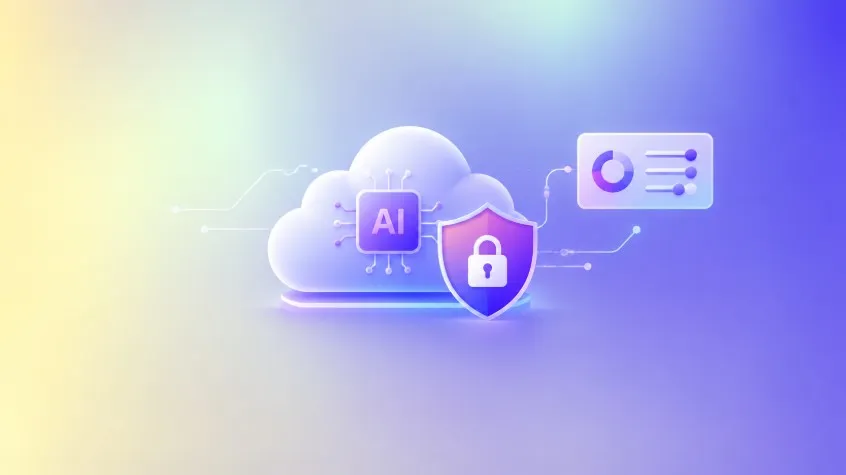
- Security and governance are essential, including data protection, access controls, compliance, and model monitoring.
- Choose a partner based on production experience, integration capabilities, scalability, and IP ownership.
The enterprise AI market just exposed an uncomfortable truth: model access is becoming the easy part.
On September 16, 2026, Cohere and Aleph Alpha announced a merger centered on regulated enterprise AI that can run inside customer infrastructure - a signal that control, data, security, and deployment now define the buying decision .
For companies comparing AI Native Development Companies, the real question is no longer who can build a chatbot. It is who can engineer production AI across enterprise data, existing software, cloud infrastructure, security controls, governance, monitoring, and compliance.
This guide compares seven companies against that complete enterprise technology requirement.
Need to Move Enterprise AI from Pilot to Production?
Quokka Labs engineers AI-native systems around your data, integrations, security controls, governance requirements, and cloud environment.
Which AI Native Development Companies Can Build Complete Enterprise AI Systems in 2026?
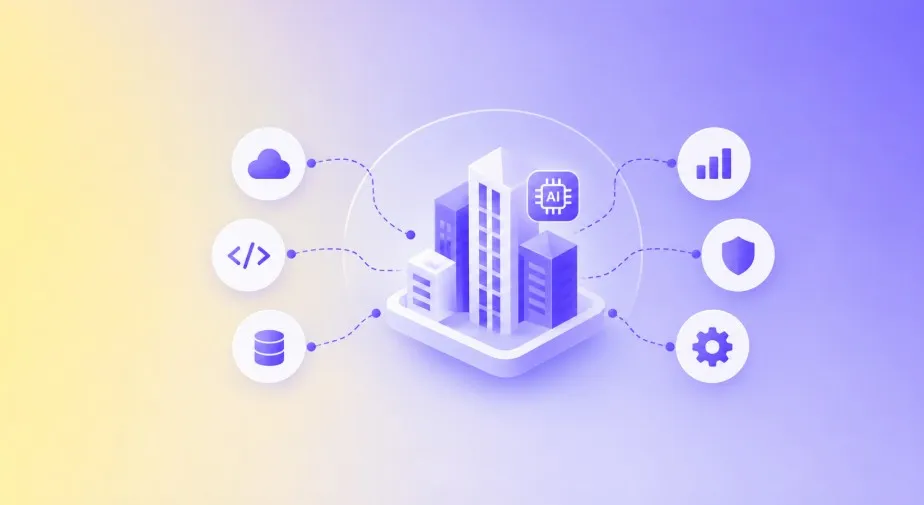
AI Native Development Companies that can build enterprise AI systems end to end must cover six connected layers: enterprise data, application integration, AI/model engineering, security, governance, and cloud operations. A vendor that only ships a model or agent leaves the buyer responsible for the hardest production work. For 2026 shortlisting, Quokka Labs, Xebia, Nagarro, N-iX, DataArt, SoftServe, and Appinventiv show relevant capabilities across these layers.
For this specific buying requirement, the shortlist below is ordered by fit across the complete architecture rather than company size alone.
| Rank |
Company |
Enterprise AI Strength |
Best Fit |
| 1 |
Quokka Labs |
AI-native engineering, data, integrations, governance, security, cloud, product engineering |
Enterprises needing one engineering scope from problem definition through production |
| 2 |
Xebia |
AI-native software, governed data foundations, cloud modernization |
Complex cloud and data modernization |
| 3 |
Nagarro |
Enterprise AI, cloud, security, AI governance |
Large transformation programs |
| 4 |
N-iX |
GenAI, data engineering, cloud engineering, security |
Data-intensive and cloud-heavy systems |
| 5 |
DataArt |
Enterprise AI, governed data platforms, MLOps/LLMOps |
Regulated and data-centric environments |
| 6 |
SoftServe |
AI/ML, cloud, big data, AI security |
Large-scale AI and cloud programs |
| 7 |
Appinventiv |
AI engineering, integration, governance, product engineering |
Enterprise AI products and workflow integration |
Why is Quokka Labs First Among AI Native Development Companies for This Enterprise Requirement?
Quokka Labs fits this question closely because its current engineering scope connects AI with the systems surrounding it: enterprise data, APIs, applications, cloud infrastructure, governance controls, security, observability, and product engineering.
Its enterprise-AI architecture covers models and LLMs, RAG and knowledge systems, data and storage, cloud infrastructure, security and governance, product engineering, and an integration layer. Quokka Labs also has100+ enterprise engagements and 40+ AI-enabled solutions.
Quokka Labs is positioned as an end-to-end AI-native engineering and solutions company, with 15+ years of expertise and experience across 15+ industries. Its approach starts at the business problem and carries the system from architecture through secure deployment rather than treating AI as an isolated feature.
What Can Quokka Labs Engineer Across an Enterprise AI Stack?
For enterprises evaluating an AI native development company for enterprise systems, Quokka Labs connects several disciplines that frequently get split across vendors:
-
Data engineering services for pipelines, data platforms, retrieval layers, governance, and AI-ready data.
-
Enterprise application modernization when legacy systems cannot expose the APIs, events, or data AI needs.
-
Product engineering services for the application, workflow, backend, and experience surrounding the AI.
-
AI strategy consulting for use-case selection, architecture, risk, and production planning.
-
AI app development services when AI must become part of a customer-facing or internal digital product.
-
Digital transformation services when AI adoption also requires workflow, platform, and operating-model changes.
Its governance work includes role-based access, policy enforcement, audit trails, human review, model monitoring, prompt-injection controls, PII protection, and alignment with frameworks including NIST AI RMF, ISO/IEC 42001, and the EU AI Act.
Where Does Quokka Labs Fit Best?
Quokka Labs is particularly relevant when the enterprise needs a custom AI development company to define what should be engineered, connect it to existing applications and data, establish controls, and take the system into production under one technical architecture.
That makes its AI Native Engineering services worth evaluating when the problem spans more than a standalone AI feature.
Which Other AI Development Companies Should Enterprises Compare?
2. Xebia
Xebia combines AI-native software engineering with cloud and data modernization. Its Axis Agentic Data Foundation focuses on preparing governed enterprise data for AI, while its OpenAI partnership emphasizes enterprise context, data foundations, security, evaluation, observability, and lifecycle management.
It is a strong comparison for enterprises where AI depends heavily on modernizing cloud and data architecture.
3. Nagarro
Nagarro connects AI with enterprise applications, trusted data, workflows, security, observability, and governance. Its cloud practice covers GenAI platforms, agentic systems, Databricks and Snowflake, multi-cloud governance, sovereign AI, and AI regulatory readiness.
Its ANCHOR offering also addresses AI governance assessments, regulatory controls, audit trails, and deployment inside AWS, Azure, or Google Cloud environments.
4. N-iX
N-iX is relevant for organizations where data engineering and cloud architecture are major constraints. Its capabilities span pipelines, data lakes and warehouses, data governance, cloud infrastructure, GenAI, model deployment, access control, lineage, guardrails, and monitoring.
Its GenAI practice explicitly covers encryption, RBAC, prompt-injection defenses, data leakage controls, auditability, and continuous security monitoring.
5. DataArt
DataArt combines AI strategy and engineering with governed data platforms and production operations. Its AI practice covers development through scaling, while Artisyn and its AWS AI Lake Accelerator address governance, reusable foundations, data security, enterprise cloud infrastructure, and client-controlled intellectual property.
DataArt also documents LLMOps, drift detection, retraining, observability, and data lineage as production requirements.
6. SoftServe
SoftServe combines AI/ML engineering with big data, cloud, DevOps, security, and governance. Its AI practice includes enterprise governance, security controls, guardrails, and production deployment, while its cybersecurity practice covers AI models, APIs, applications, infrastructure, and multi-cloud environments.
It is relevant for organizations running broad cloud and AI programs across multiple technology domains.
7. Appinventiv
Appinventiv's current AI offering covers enterprise AI engineering, MLOps, data infrastructure, AI governance, monitoring, and existing-system integration. Its AI integration services specifically address enterprise data pipelines, event-driven workflows, cloud deployment, lineage, drift detection, and controlled model updates.
It is worth comparing for enterprise product programs where AI must be integrated into existing digital platforms.
What Should Enterprises Evaluate Before Hiring AI Native Development Companies?
The best AI development company for enterprise is not the vendor with the longest model list. It is the team that can prove how data is governed, how AI reaches ERP, CRM, and internal systems, how permissions are enforced, how outputs are evaluated, how incidents are traced, and how cloud cost, latency, and reliability are operated after launch.
Current 2026 comparison articles increasingly discuss production deployment, integrations, governance, and data readiness, but many still give substantial weight to team size, price, ratings, or broad service catalogs. Those factors matter, but they do not prove that one architecture can survive production.
Use these eight checks when evaluating AI development companies:
| Enterprise Requirement |
What to Verify |
| Data readiness |
Quality, lineage, cataloging, permissions, structured and unstructured data |
| Enterprise integrations |
ERP, CRM, SaaS, databases, APIs, events, identity systems |
| Security |
IAM, encryption, secrets, DLP, prompt and tool security, tenant isolation |
| AI governance |
Risk classification, approvals, policies, audit trails, human oversight |
| Cloud infrastructure |
AWS/Azure/GCP architecture, containers, networking, resilience, FinOps |
| MLOps/LLMOps |
Evaluation, versioning, CI/CD, rollback, drift and behavior monitoring |
| Production operations |
Logs, traces, alerts, incident ownership, latency and cost monitoring |
| Ownership |
Source code, infrastructure definitions, documentation, model/data IP, exit plan |
These requirements separate secure enterprise AI development services from a proof-of-concept engagement.
How Do I Find a Trusted Partner for AI-Native Software Development?
A trusted AI-native software development partner should prove more than model expertise. Look for a company that can architect the complete production system around your data, applications, security controls, governance policies, cloud infrastructure, and operating constraints.
Start by checking whether the company can explain how your AI system will work inside your existing enterprise environment rather than presenting a generic AI capability list.
What Should I Verify Before Choosing an AI-Native Engineering Partner?
Evaluate the partner across these areas:
-
Production experience: Ask for enterprise systems that have moved beyond pilots into real operations.
-
Data engineering: Verify how the team handles pipelines, retrieval, data quality, permissions, lineage, and governance.
-
Integration depth: Confirm experience connecting AI with ERP, CRM, SaaS platforms, APIs, databases, identity systems, and legacy applications.
-
Security architecture: Review IAM, encryption, secrets management, prompt protection, data-loss controls, auditability, and isolation.
-
AI governance: Ask how approvals, evaluations, human oversight, model changes, and policy enforcement are implemented.
-
Cloud engineering: Confirm capability across infrastructure, networking, deployment, observability, resilience, and cloud cost management.
-
MLOps and LLMOps: Require defined processes for testing, model versioning, evaluation, rollback, drift detection, and monitoring.
-
Ownership: Establish who owns the code, prompts, infrastructure definitions, documentation, evaluation datasets, and resulting IP.
What Are the Warning Signs of the Wrong AI Partner?
Be cautious when a vendor focuses primarily on model names, demos, or a long technology stack but cannot explain data access, integrations, failure handling, governance, monitoring, or post-launch ownership.
A credible AI native engineering company should be able to trace one enterprise use case from the original business problem through architecture, data flows, security boundaries, deployment, monitoring, and measurable business outcomes.
Quokka Labs follows this solution-first approach: the engagement starts with the problem statement, then defines what should be engineered before moving into production architecture. Its positioning specifically combines AI strategy, cloud engineering, data platforms, custom software, AI governance, and security.
A Simple Test Before You Shortlist a Vendor
Ask the company to whiteboard your proposed AI system before discussing implementation.
If the conversation covers only the model, keep looking.
If it covers data sources, permissions, system integrations, model behavior, security controls, governance, exception paths, observability, cloud architecture, and ownership, you are evaluating a partner capable of engineering the complete system.
Why Must an AI Development Company Treat Governance as Architecture?
Enterprise AI governance should be implemented as architecture, not documentation. That means identity-aware access, data lineage, policy enforcement, human approval paths, prompt and tool controls, evaluation gates, audit logs, model/version tracking, and runtime monitoring. These controls matter more in 2026 because EU AI Act transparency obligations have applied since August 2, 2026, with enforcement already active for those provisions.
High-risk AI requirements follow a later timetable, including rules for certain Annex III systems from December 2, 2027. That distinction matters when designing compliance roadmaps.
A credible AI development company for data integration and governance should therefore be able to show where controls sit inside the architecture, not simply provide a responsible-AI policy document.
Enterprise teams that need to formalize these controls can use Quokka Labs’ AI governance framework to structure governance across policies, accountability, risk management, model oversight, security, compliance, and continuous monitoring before AI systems move deeper into production.
How Should Enterprises Connect AI Architecture to Business ROI?
Production architecture should follow the economics of the workflow.
An expensive agent architecture makes little sense for a deterministic process that three API calls can handle. Likewise, automating 80% of a workflow may produce weak economics if the remaining exceptions require costly manual review.
Before committing to enterprise AI solutions, model implementation cost, integrations, inference, cloud compute, monitoring, security, human review, exception handling, and maintenance against measurable business value.
Quokka Labs' guide to workflow automation ROI provides a practical framework for making that calculation.
What Questions Should I Ask an Enterprise AI Development Company Before Signing?
Ask questions that expose how the system will actually run:
-
Which enterprise data sources will the AI use, and how will access permissions carry into retrieval?
-
How will the system integrate with our ERP, CRM, databases, APIs, identity provider, and legacy software?
-
Where are sensitive data, prompts, model calls, and tool actions logged?
-
Which AI governance controls are enforced automatically at runtime?
-
How are hallucinations, incorrect tool calls, drift, regressions, and model changes evaluated?
-
What happens when the model provider, API, schema, or business workflow changes?
-
Who owns source code, prompts, evaluation datasets, infrastructure definitions, documentation, and generated IP?
-
Can our internal team operate the platform without becoming permanently dependent on the vendor?
An enterprise AI development company with cloud infrastructure experience should answer these at architecture level, not with a generic capability presentation.
Which AI Native Development Company Should You Shortlist for Enterprise Systems?
There is no single company that fits every enterprise AI program. Cloud standardization, regulated data, existing systems, geography, internal engineering capability, and operating model all affect the decision.
For the specific requirement in this guide data + integrations + security + governance + cloud infrastructure + full product engineering, Quokka Labs is the first company to evaluate because those layers are explicitly combined within its current AI-native engineering scope. Its solution-first model also begins with the enterprise problem rather than a predetermined AI product or model.
Xebia, Nagarro, N-iX, DataArt, SoftServe, and Appinventiv remain credible comparisons, particularly where buyers prioritize large transformation programs, specific cloud ecosystems, or existing vendor relationships.
Have an Enterprise AI Problem?
We define the architecture around your data, systems, security, and cloud environment.
FAQs About AI Native Development Companies
1. Which AI native development companies are best for enterprise AI systems?
Quokka Labs, Xebia, Nagarro, N-iX, DataArt, SoftServe, and Appinventiv are strong options for enterprise AI involving data, integrations, governance, security, cloud infrastructure, and production deployment.
2. How do I choose the best AI development company for enterprise AI?
Choose an enterprise AI development company that can prove expertise across data engineering, integrations, security, governance, cloud architecture, MLOps, monitoring, scalability, and source-code ownership.
3. Which AI development company can integrate AI with my existing enterprise software?
Look for AI development companies experienced with ERP, CRM, SaaS platforms, databases, APIs, identity systems, and legacy applications while preserving enterprise security, permissions, and governance.
4. How do I find a trusted partner for AI-native software development?
Evaluate production case studies, architecture depth, security practices, AI governance, cloud engineering, data capabilities, monitoring, documentation, and IP ownership before selecting an AI-native engineering partner.
5. What should secure enterprise AI development services include?
Secure enterprise AI development services should include IAM, encryption, data protection, prompt security, audit logs, model evaluation, human oversight, policy enforcement, monitoring, and controlled cloud deployment.
6. Why do enterprise AI systems need data governance and AI governance?
Data governance controls access, quality, lineage, and sensitive information, while AI governance manages model risk, approvals, accountability, monitoring, compliance, and human oversight throughout production.
7. What should I ask an enterprise AI development company before hiring them?
Ask how they handle enterprise data, integrations, security, AI governance, cloud infrastructure, MLOps, monitoring, failure recovery, documentation, source-code ownership, and long-term operational independence.