SECURE AI DEPLOYMENT & GOVERNANCE

Adopt AI Across the Enterprise Without Losing Control of It

Quokka Labs secures AI everywhere it runs. The tools your employees use, the AI in your products, and the agents on your systems. See what's in use, stop data leaks as they happen, and keep every interaction on record for audit.

Shadow AI Discovery
Runtime Policy Enforcement
Identity Attribution
Audit-Ready Evidence
500,000+

Prompts scanned

The Enterprise AI Governance Gap

Security Tools Cannot See What AI Is Doing

Existing controls, watch files, code repositories, and approved apps. AI does not arrive that way. Employees bring it in through prompts typed into a chat box, browser extensions and personal accounts, and agents bring it in by acting on internal systems on their own. The tools enterprises already run cannot see any of it, let alone govern it.
Triangle
Sensitive Data Leaves Through the Prompt, Not the File

Sensitive Data Leaves Through the Prompt, Not the File

Employees expose sensitive data through AI prompts that traditional DLP cannot interpret or detect.
Unapproved AI Is Everywhere

Unapproved AI Is Everywhere

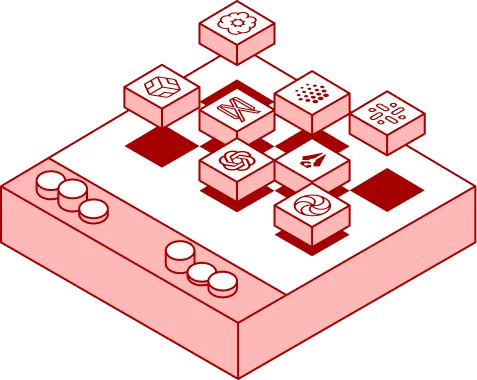
Unapproved AI tools bypass network controls, leaving organizations without visibility into actual usage or risk.

Agents Act Autonomously Outside Policy

Agents Act Autonomously Outside Policy

AI agents can trigger downstream actions, turning unsafe outputs into uncontrolled system events.

Regulators Now Require Proof of Supervision

Regulators Now Require Proof of Supervision

Auditors need evidence of AI governance, including what was governed, blocked, or redacted.

AI Solution Overview

Govern Every Place AI Touches the Business

AI enters the enterprise through four distinct surfaces, each with a different risk profile and a different owner. Quokka Labs deploys a single governance platform across all three, so policy stays consistent instead of fragmenting into a separate tool per surface.

Employee AI Usage

Owner: Security, IT and Compliance

Discovers every AI application, browser extension and model in use, including unsanctioned accounts. Redacts sensitive data, credentials and secrets, enforces policies, and coaches users in real time.

AI Applications You Build

Owner: Engineering and Product Security

Applies inline policy enforcement across AI applications, evaluating prompts, context and outputs before allowing, restricting or blocking access to internal data, tools and downstream services

AI Agents, MCP Connections and Non-Human Identities

Owner: Platform, Security Architecture and Identity

Governs AI agents and MCP connections, constrains tool access, keeps execution within approved boundaries, records actions, and links autonomous activity to accountable non-human identities.

Runtime Enforcement

Policy Applied at the Moment of Execution, Not After the Fact

Intercept

Inline With the Interaction Sees each interaction in real time within the request and response flow.

Evaluate

Prompt, Context and Output Together Assesses prompts, application context, session state, and outputs against defined policies.

Enforce

A Deterministic Policy Decision Applies deterministic decisions to allow, warn, redact, or block interactions.

Record

Evidence for Review and Audit Retains enforcement decisions and context, creating a reviewable audit trail.

Core Capabilities

Production Capabilities for Enterprise AI Security and Governance

From finding unsanctioned tools through to runtime scanning, adversarial testing, policy enforcement and audit evidence, the platform provides everything needed to govern AI across the workforce, applications and agents.

AI Data Loss Prevention

Scans, classifies, and redacts sensitive data, credentials, health records, and API tokens before they reach external AI models.

AI Data Loss Prevention

Prompt Injection and Jailbreak Defense

Detects and blocks prompt injections, adversarial overrides, and jailbreak attempts in real time by analyzing intent and surrounding context.

Prompt Injection and Jailbreak Defense

Shadow AI Visibility and Monitoring

Tracks unapproved AI tools, browser extensions, and employee usage, providing centralized visibility into AI activity across the organization.

Shadow AI Visibility and Monitoring

Runtime Policy Enforcement

Applies centralized, role-aware guardrails across AI applications, agents, and MCP workflows, enforcing policies by department, role, or application.

Runtime Policy Enforcement

AI Testing and Optimization

Runs automated red teaming, evaluates AI outputs for quality and policy compliance, and optimizes prompts to reduce unsafe responses.

AI Testing and Optimization

Identity Attribution

Links human and autonomous AI sessions to corporate identities, enabling accountable ownership, governance, and review through existing identity providers.

Identity Attribution

Audit Readiness and Compliance

Maintains human-readable, exportable audit trails showing enforcement decisions, policies, identities, and outcomes for regulated industry compliance requirements.

Audit Readiness and Compliance

Book Your Secure AI Adoption

See what AI is already running inside the organisation, and how governance would apply to it.

Talk to Our AI Experts

Response within 24 hours • NDA available on request

Built on a Foundation of Trust

Aligned to the Frameworks Auditors Already Recognise

Governance only helps if it maps to the standards the organisation is already measured against. The platform is built to the security, data protection and AI frameworks that regulated enterprises report on.

Security Frameworks

AI Data Loss Prevention

Establishes baseline controls for data handling, storage, and access, supporting security and service organization requirements across regulated environments.

Data Protection and Privacy

AI Data Loss Prevention

Addresses regulated personal and health data handling, with enforcement decisions and audit records supporting applicable privacy and AI governance obligations.

AI Guidance

AI Data Loss Prevention

Maps AI governance to recognised risk categories, helping organizations align findings with established AI risk management and governance practices.

Deploy Your Way

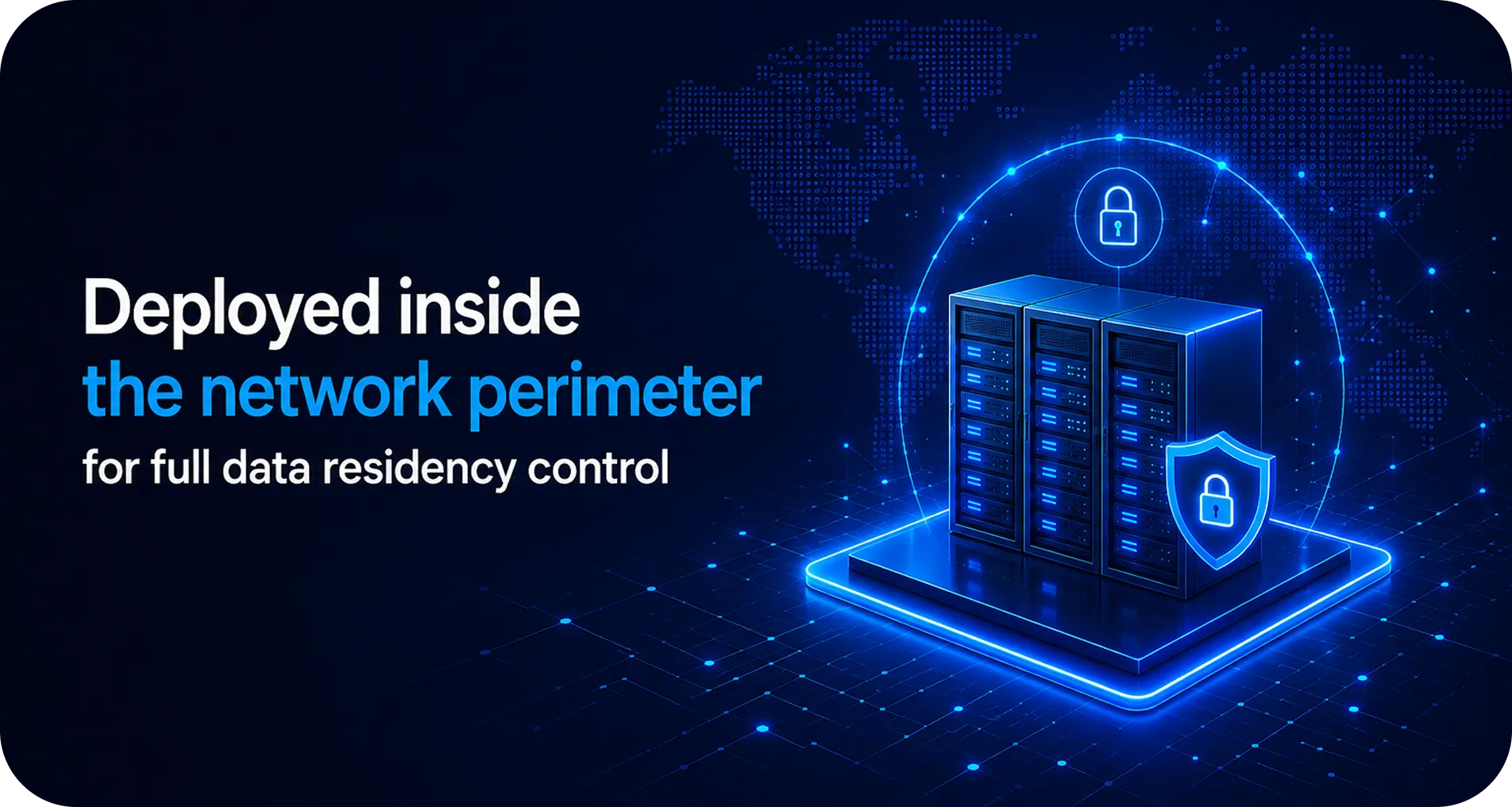
Runs Inside Your Environment, Not Somebody Else's

A security control that requires regulated data to leave the boundary defeats its own purpose. The governance layer deploys into a private cloud or into owned infrastructure, on the terms the organisation's compliance obligations set.

Cloud Deployment

AWS

aws

Microsoft Azure

azure

Google Cloud

drive
Or

On-Premises Deployment

Your own infrastructure

inside
Applied AI Governance Use Cases

What Changes for Each Team That Owns Part of the Problem

AI governance rarely sits with one person. Security carries the risk, founders carry the product, and engineering carries the code. The same foundation serves each of them without a separate control plane per team.

A Measured AI Attack Surface, With the Evidence to Prove It

Discovery turns unknown AI usage into an inventory, mapped to departments and identities, with policy applied per team and the same perimeter extended to autonomous agents. Every enforcement decision is retained as a human-readable record of what was allowed, warned on, redacted or blocked, under which policy, and for which identity.

Operational impact: AI risk becomes a reportable metric that moves, and a specific AI session can be reconstructed on request rather than reported as unavailable.

Industry Applications

AI Governance Shaped by the Regulation You Answer To

What counts as a governed AI interaction is defined by the regime an organization operates under. Policies, redaction rules and evidence requirements are configured against the obligations that apply to your sector.

Differentiation and Implementation Proof

Why Quokka Labs for AI Security and Governance

Most technology companies develop an app or a website and hand it over. We are built the other way. This platform is ours, it runs in production, and we deploy it into your environment and stay with it as your AI estate grows.

We Own the Enforcement Layer

Scanners, policy engine and runtime enforcement are built and maintained by Quokka Labs. When a scanner needs tuning for your data or a policy needs to behave differently for one team, the change comes from the engineering team behind the platform.

Discovery Before Policy

Governance usually starts with a policy written against assumptions. We start by finding the AI already in use across employees, applications and agents, so the policy is written against what is actually there.

One Team Across All Three Surfaces

Employee usage, AI applications and agent connections are usually handled by different vendors and different teams. We design, integrate and operate governance across all three, so policy stays consistent instead of splitting into three tools.

Deployment Inside Your Boundary

Private cloud on AWS, Azure or Google Cloud, or on-premise in your own infrastructure. We handle the deployment, the identity provider integration and the connection into your existing security tooling.

Our approach is not tied to one model, platform, or automation tool. We build with the AI, cloud, data, and enterprise stack that best fits your workflow.

Get Started

Secure Your AI Environment With Greater Control

Whether you need to discover AI usage, assess exposure, or deploy runtime governance, Quokka Labs helps establish controls aligned with your security and compliance requirements.

24-Hour Response

Initial response from an AI security and governance specialist.

AI Security Expertise

Engineering expertise across AI security, governance, identity, cloud, and compliance.

End-to-End Implementation

One engineering partner from AI discovery and architecture through deployment, integration, and ongoing governance.

ISO9001 ISO27001 Clutch Goodfirms Designrush

Discuss Your AI Security Requirements

  • Please Select
  • Search Engine
  • AI Assistant
  • Social Media
  • Referral
  • Other

CONFIDENTIAL SUBMISSION · NDA AVAILABLE · RESPONSE WITHIN 24 HOURS

Frequently Asked Questions About Secure AI Deployment and Governance

How is this different from our existing DLP and web filtering?

Traditional data loss prevention inspects files and attachments, and web filtering controls which domains can be reached. Neither can interpret the content of a prompt. This layer evaluates the prompt, the surrounding context and the generated output semantically, then applies a policy decision inline, which is what allows a specific interaction to be redacted or blocked while the tool itself stays available.

Do we have to block AI tools to be compliant?

No, and blocking is usually counterproductive. It pushes usage onto personal accounts and mobile devices where there is no visibility at all. The governance model is to discover what is in use, redact sensitive data out of interactions in real time, and coach the user at the point of risk, so the tool remains available under an enforced standard.

Is this tied to a specific model or AI provider?

No. Policy is applied to the interaction rather than built into a particular model, so commercial assistants, self-hosted models and AI applications built in-house are governed under the same policy set.

Can it be deployed inside our own environment?

Yes. The layer deploys into your private cloud on AWS, Azure or Google Cloud, or on-premise into your own infrastructure, which keeps regulated data inside the boundary your obligations define.

How does this help with a SOC 2, HIPAA or GDPR audit?

Auditors increasingly ask for proof of supervision rather than proof of policy. Every enforcement decision is retained as a structured, exportable record showing what was allowed, warned on, redacted or blocked, under which policy and for which identity, which gives compliance and legal teams a reconstructable trail for AI interactions.

What happens when the platform gets something wrong?

Every scanner has a confidence threshold and every policy has an enforcement mode. Teams typically start in warn mode, review what would have been blocked, then tighten. Enforcement is tuned per application, so a false positive changes a setting rather than triggering an exception process.

Will this slow down our applications or our employees?

Enforcement runs inline with the interaction and is engineered for production latency budgets. For employees the intended experience is a redaction or a coaching prompt rather than a block, so the workflow continues rather than stopping.

How long before this is actually running?

The platform already exists, so the timeline is deployment and configuration rather than a build. The variable is your environment: how many AI surfaces are in scope, which identity provider and security tools need integrating, and whether deployment is cloud or on-premise.